

What are the benefits and risks of intermittent fasting?
Poll Results
Please login to vote and see the results.
Sign up to our innovative Q&A platform to pose your queries, share your wisdom, and engage with a community of inquisitive minds.
Log in to our dynamic platform to ask insightful questions, provide valuable answers, and connect with a vibrant community of curious minds.
Forgot your password? No worries, we're here to help! Simply enter your email address, and we'll send you a link. Click the link, and you'll receive another email with a temporary password. Use that password to log in and set up your new one!
Please briefly explain why you feel this question should be reported.
Please briefly explain why you feel this answer should be reported.
Please briefly explain why you feel this user should be reported.
At Qukut, our mission is to bridge the gap between knowledge seekers and knowledge sharers. We strive to unite diverse perspectives, fostering understanding and empowering everyone to contribute their expertise. Join us in building a community where knowledge flows freely and growth is limitless.
What are the benefits and risks of intermittent fasting?
Please login to vote and see the results.

The Hyksos were a group of mixed Semitic-Asiatic people who settled in the eastern Nile Delta during the Second Intermediate Period of Egypt (around 1650–1550 BCE). The term "Hyksos" comes from the Egyptian phrase hekau khasut, meaning "rulers of foreign lands." Key Points about the Hyksos: 1. OrigiRead more
The Hyksos were a group of mixed Semitic-Asiatic people who settled in the eastern Nile Delta during the Second Intermediate Period of Egypt (around 1650–1550 BCE). The term “Hyksos” comes from the Egyptian phrase hekau khasut, meaning “rulers of foreign lands.”
Key Points about the Hyksos:
1. Origins: The Hyksos likely originated from regions in the Levant or the Near East. They were of Semitic origin, with cultural ties to the Canaanites.
2. Rise to Power: They gradually rose to power in Egypt, capitalizing on the weakened state of the Egyptian central government. Eventually, they established their rule over parts of Lower Egypt.
3. Capital: Their capital was Avaris, located in the eastern Nile Delta. Avaris served as a significant administrative and trade center.
4. Military Technology: The Hyksos introduced several military innovations to Egypt, including the horse-drawn chariot, the composite bow, and improved metal weapons, which the Egyptians later adopted.
5. Cultural Influence: Despite being foreign rulers, the Hyksos assimilated aspects of Egyptian culture and religion. They portrayed themselves as traditional Egyptian rulers and adopted the titles of the pharaohs.
6. Decline: The Hyksos rule ended when Ahmose I, a native Egyptian pharaoh, launched a successful campaign against them, ultimately driving them out of Egypt around 1550 BCE. This victory marked the beginning of the New Kingdom of Egypt.
7. Historical Impact: The Hyksos’ influence on Egypt was significant in terms of military technology and trade, and their expulsion contributed to the unification and strengthening of Egypt during the New Kingdom period.
The Hyksos period is often viewed as a time of foreign domination but also as a period of cultural exchange and technological advancement in ancient Egyptian history.
See lessWhat are the benefits of crop rotation in sustainable farming?


The meaning of Crop rotation is the practice of growing different crops in a specific order on the same land over multiple seasons. The goal of crop rotation is to maintain the soil's productivity by preventing it from being used for only one set of nutrients. Crop rotation can have many benefits, iRead more
The meaning of Crop rotation is the practice of growing different crops in a specific order on the same land over multiple seasons. The goal of crop rotation is to maintain the soil’s productivity by preventing it from being used for only one set of nutrients.
Crop rotation can have many benefits, including:
Soil health: Improves soil structure, fertility, and organic matter
Pest and disease control: Breaks the life cycle of pests and diseases, reducing the need for chemical pesticides
Weed growth: Reduces weed growth
Crop yield: Increases crop yield
Labor efficiency: Distributes labor more evenly throughout the seasons
A simple rotation might involve two or three crops, while a complex rotation might include a dozen or more. For example, a farmer might plant beans after harvesting corn because corn uses a lot of nitrogen and beans return nitrogen to the soil.
An electric circuit works by allowing electric current to flow through a closed loop of conductive materials, enabling devices to operate. Here's a breakdown of how it functions: 1. Basic Components of an Electric Circuit Power Source: Provides the energy needed to move electrons (e.g., a battery orRead more
An electric circuit works by allowing electric current to flow through a closed loop of conductive materials, enabling devices to operate. Here’s a breakdown of how it functions:
An electric circuit operates based on the principles of voltage, current, and resistance, as described by Ohm’s Law:
Where is voltage, is current, and is resistance. This relationship helps in designing and understanding circuits.
Is it possible that aliens have already visited Earth in the past?

The idea that aliens may have visited Earth in the past is a popular topic in both science fiction and some speculative theories. While there is no concrete scientific evidence to support this claim, it's a possibility that intrigues many people. Here are some points to consider: Ancient Astronaut TRead more
The idea that aliens may have visited Earth in the past is a popular topic in both science fiction and some speculative theories. While there is no concrete scientific evidence to support this claim, it’s a possibility that intrigues many people. Here are some points to consider:
In conclusion, while the idea is fascinating and not entirely beyond the realm of possibility, there is no scientific evidence to confirm that aliens have visited Earth in the past. The search for extraterrestrial life continues through scientific means such as the study of exoplanets and the search for extraterrestrial intelligence (SETI).
See lessConsider the following statements: ...Read more
Please login to vote and see the results.
Infrastructure Investment Trusts (InVITs) gather funds from investors, which are subsequently directed into infrastructure projects. As pooled investment vehicles, they function similarly to mutual funds. However, while mutual funds predominantly invest in stocks and bonds, InVITs focus on infrastruRead more
Infrastructure Investment Trusts (InVITs) gather funds from investors, which are subsequently directed into infrastructure projects. As pooled investment vehicles, they function similarly to mutual funds. However, while mutual funds predominantly invest in stocks and bonds, InVITs focus on infrastructure-related ventures. The returns generated by InVITs are distributed to investors through four primary methods: interest on capital, dividends, rental income, and repayment of capital. Previously, interest, dividends, and rental income earned by unit holders were taxable, but repayment of capital was exempt from tax. However, the Finance Act of 2023 introduced a provision to tax certain portions of capital repayment in specific cases, making Statement 1 incorrect. Additionally, the Finance Act of 2021 amended the SARFAESI Act of 2002 to recognize pooled investment vehicles, including REITs and InVITs, as borrowers under the Act, making Statement 2 correct.
Therefore, the correct answer is Statement-I is incorrect but Statement-II is correct.
See lessThe three laws of motion, formulated by Sir Isaac Newton, are fundamental principles describing the relationship between the motion of an object and the forces acting on it. They are: First Law (Law of Inertia): An object at rest stays at rest, and an object in motion continues in motion at a constaRead more
The three laws of motion, formulated by Sir Isaac Newton, are fundamental principles describing the relationship between the motion of an object and the forces acting on it. They are:
These laws form the foundation of classical mechanics and are essential for understanding the behavior of objects in various physical situations.
See less
The concept of karma is rooted in several religious and philosophical traditions, such as Hinduism, Buddhism, Jainism, and Sikhism. It is often described as the law of cause and effect, where a person’s actions (both good and bad) influence their future experiences. What is Karma? Karma, in its esseRead more
The concept of karma is rooted in several religious and philosophical traditions, such as Hinduism, Buddhism, Jainism, and Sikhism. It is often described as the law of cause and effect, where a person’s actions (both good and bad) influence their future experiences.
Karma, in its essence, refers to the idea that every action, thought, or intention has consequences. These consequences can manifest immediately, in this lifetime, or in future lives, depending on the belief system. It is a moral and ethical principle suggesting that individuals create their destiny through their actions.
Whether karma is “real” depends on individual beliefs:
Even if one doesn’t believe in the metaphysical aspects of karma, the principle aligns with observable social dynamics:
In essence, karma, whether viewed spiritually or pragmatically, encourages mindfulness, responsibility, and integrity in actions and intentions.
See lessHimani Mor is a notable Indian tennis player and the wife of Olympic javelin champion Neeraj Chopra. Here’s a concise overview of her life and career: Born on June 26, 1999, in Larsauli village, Sonipat, Haryana, Himani was encouraged to pursue tennis from a young age. She attended Little Angels SchRead more
Himani Mor is a notable Indian tennis player and the wife of Olympic javelin champion Neeraj Chopra. Here’s a concise overview of her life and career:
Born on June 26, 1999, in Larsauli village, Sonipat, Haryana, Himani was encouraged to pursue tennis from a young age. She attended Little Angels School and later studied Political Science and Physical Education at Miranda House, Delhi University. She furthered her education in Sports Management at Franklin Pierce University in the United States.
Himani has made significant contributions to Indian tennis, achieving rankings of 42nd in singles and 27th in doubles according to the All India Tennis Association (AITA). Her competitive journey includes participation in various national and international tournaments.
In addition to her playing career, she has taken on coaching roles. Himani served as a Volunteer Assistant Tennis Coach at Franklin Pierce University and is currently a Graduate Assistant at Amherst College, where she manages the women’s tennis team.
Himani gained media attention after marrying Neeraj Chopra on January 18, 2025. Their relationship symbolizes a union of two celebrated athletes, attracting significant public interest.
At just 25 years old, Himani Mor exemplifies dedication in both sports and academics. Her journey inspires many young athletes, particularly women, as she balances her professional aspirations with her new role as a supportive partner to Neeraj Chopra.
See lesswhat are trade tarriffs and how do they work?
Trade tariffs are taxes or duties imposed by a government on goods and services imported from other countries. They are a common tool in international trade policy and serve various economic and political purposes. Here's a detailed breakdown of what tariffs are and how they work: Types of Tariffs ARead more
Trade tariffs are taxes or duties imposed by a government on goods and services imported from other countries. They are a common tool in international trade policy and serve various economic and political purposes. Here’s a detailed breakdown of what tariffs are and how they work:
Trade tariffs are a powerful but often controversial tool in economic policy. While they can protect domestic industries and generate revenue, they may also lead to higher consumer costs and strained international relations.
See lessWhat are the main advantages of using cold-start data in DeepSeek-R1’s training process

The integration of cold-start data into DeepSeek-R1’s training process offers several strategic advantages, enhancing both performance and adaptability. Here’s a structured breakdown of the key benefits: Enhanced Generalization: Cold-start data introduces the model to novel, unseen scenarios, enabliRead more
The integration of cold-start data into DeepSeek-R1’s training process offers several strategic advantages, enhancing both performance and adaptability. Here’s a structured breakdown of the key benefits:
Cold-start data empowers DeepSeek-R1 to be more versatile, fair, and resilient, ensuring it performs effectively across diverse and evolving challenges.
See lessHow can self-healing materials based on bio-inspired polymer networks be engineered for aerospace applications, considering constraints like extreme temperature variations, mechanical fatigue resistance, and the integration of autonomous damage detection and repair systems without compromising structural integrity?
Engineering self-healing materials based on bio-inspired polymer networks for aerospace applications involves a multidisciplinary approach that combines material science, bioengineering principles, and advanced system integration. Given the stringent constraints of extreme temperature variations, meRead more
Engineering self-healing materials based on bio-inspired polymer networks for aerospace applications involves a multidisciplinary approach that combines material science, bioengineering principles, and advanced system integration. Given the stringent constraints of extreme temperature variations, mechanical fatigue resistance, and the need for autonomous damage detection and repair systems, the design of these materials must address several critical factors while maintaining the structural integrity of aerospace components. Here’s a detailed framework for achieving this:
1. Bio-Inspired Polymer Networks
Bio-inspired materials mimic natural processes, such as the healing mechanisms seen in biological systems, to autonomously repair damage and restore functionality. In aerospace applications, bio-inspired polymers must be engineered with specific properties to perform under extreme conditions.
Polymer Matrix Design: The base polymer network should be thermally stable and capable of withstanding the broad temperature variations typical in aerospace environments, ranging from high temperatures during re-entry to low temperatures at high altitudes. For this purpose, high-performance thermosetting polymers, such as epoxies, polyimides, or phenolic resins, can be modified with bio-inspired strategies to improve their resilience to thermal stresses.
Bio-Inspired Healing Mechanism: A typical bio-inspired approach involves incorporating microcapsules or vascular networks within the polymer matrix. These microcapsules contain healing agents (e.g., epoxy resins, self-healing adhesives) that are released when the material undergoes mechanical damage. Alternatively, a vascular network filled with healing agents like liquid polymers or hydrogel solutions can be embedded into the material. Upon crack formation, the healing agent flows to the damaged area, triggers polymerization, and restores the material’s integrity.
2. Extreme Temperature Variations
Aerospace materials are exposed to extreme thermal cycling due to the rapidly changing environmental conditions during flight. Materials must be engineered to ensure that the healing process can still occur under such conditions without compromising the overall material strength.
Thermal Stability of Healing Agents: The healing agents used in self-healing materials should be selected for their high thermal stability and ability to remain liquid or semi-fluid at low temperatures but able to quickly polymerize or bond when exposed to heat. For example, healing agents can be chosen based on their viscosity-temperature relationship to ensure flowability in colder conditions and rapid curing at higher temperatures.
Thermo-responsive Polymers: Integrating thermo-responsive or shape-memory polymers into the material structure can facilitate healing at specific temperatures. These polymers can change their state when heated, allowing them to flow into cracks or damaged areas and facilitate self-healing under the appropriate temperature conditions.
3. Mechanical Fatigue Resistance
Aerospace components experience significant mechanical fatigue, leading to microcracks and eventual failure if not properly addressed. For self-healing materials to be effective, they must not only repair these cracks but also maintain their fatigue resistance over multiple cycles.
Reinforcement with Nanomaterials: Incorporating nanomaterials like carbon nanotubes (CNTs), graphene, or nanofibers into the polymer matrix can enhance the mechanical properties of the self-healing material. These reinforcements improve the fatigue resistance, tensile strength, and flexibility of the polymer network, making it more resistant to damage and fatigue over time.
Adaptive Healing Mechanism: The healing agents must be tailored to restore mechanical properties after crack formation. This could involve using nanoparticle-based healants that fill and reinforce the damaged area at the molecular level, improving the material’s resistance to fatigue.
4. Autonomous Damage Detection and Repair Systems
For self-healing materials to function effectively, they must include an autonomous damage detection and repair mechanism that detects when and where healing is needed and activates the healing process accordingly.
Integrated Sensing Systems: Incorporate embedded sensors (such as piezoelectric sensors or optical fibers) that can continuously monitor the integrity of the material. These sensors can detect damage, such as cracks or deformations, by measuring changes in the material’s electrical, thermal, or optical properties.
Smart Polymers for Detection and Repair: Use smart polymers that change color, transparency, or texture when damage occurs. These polymers can indicate where healing is required, providing visual cues to the system or triggering the release of healing agents. Conductive polymers can also detect mechanical stress and trigger a repair response when damage is sensed.
Energy-Efficient Healing Activation: Autonomous systems can leverage local heating (using integrated micro-heaters or laser sources) to activate the healing process in the damaged area, ensuring that the energy required for healing is efficiently delivered only when needed. This minimizes energy consumption while ensuring optimal healing performance.
5. System Integration and Structural Integrity
To maintain the structural integrity of aerospace materials, the self-healing system must be well-integrated into the material without compromising the strength, weight, or performance of the material.
Distributed Healing Networks: The self-healing system must be designed to distribute healing agents across the material in a way that does not compromise the material’s load-bearing capacity. Vascular or networked systems of microcapsules or channels should be designed to minimize disruption to the mechanical properties of the material while ensuring that healing agents can flow to damaged regions quickly and effectively.
Multiscale Design: The material design should employ a multiscale approach, integrating both macro-structural properties (such as the overall geometry and strength of the component) and micro-structural properties (such as the local behavior of polymers and nanomaterials at the molecular level). This approach ensures that self-healing capabilities are integrated seamlessly into the overall material structure without causing unnecessary weight penalties or compromising other performance metrics.
6. Lifecycle and Long-Term Performance
Aerospace materials must not only perform well in the short term but must also retain their self-healing properties over long durations, often in extreme environments.
Long-Term Durability of Healing Agents: Healing agents should be chosen for their long-term stability and ability to withstand degradation over the operational life of the aerospace component. The material’s self-healing properties must be durable even after multiple healing cycles.
Environmental Compatibility: The self-healing material should be designed to operate in a range of environmental conditions (e.g., radiation, moisture, temperature cycling) without losing its self-healing capacity. Biodegradable or recyclable materials should also be considered for sustainability.
Conclusion
Designing self-healing materials for aerospace applications that can withstand extreme temperature variations, mechanical fatigue, and integrate autonomous damage detection and repair requires a careful balance of material science, bio-inspired design principles, and advanced system integration. By using high-performance bio-inspired polymers, reinforcement with nanomaterials, adaptive healing mechanisms, integrated sensor systems, and energy-efficient activation methods, it is possible to create materials that not only repair themselves but also ensure the long-term integrity and safety of aerospace structures.
See lessThe Buddha’s teachings are related to:
Please login to vote and see the results.
The Buddha's teachings are primarily related to practice and sanctity of conduct (moral and ethical living). His philosophy emphasizes right conduct, mindfulness, wisdom, and compassion as the path to enlightenment. Why Practice and Sanctity of Conduct? The Buddha taught the Noble Eightfold Path, whRead more
The Buddha’s teachings are primarily related to practice and sanctity of conduct (moral and ethical living). His philosophy emphasizes right conduct, mindfulness, wisdom, and compassion as the path to enlightenment.
Why Practice and Sanctity of Conduct?
The Buddha taught the Noble Eightfold Path, which includes right speech, right action, and right livelihood— all focusing on ethical and moral behavior.
His teachings emphasize Sīla (moral discipline), which is the foundation for spiritual progress.
The Five Precepts (not killing, not stealing, not lying, not indulging in sexual misconduct, and not consuming intoxicants) highlight the importance of purity in conduct.
Why Not the Other Options?
Self-relating dispute: While Buddhist philosophy addresses conflict resolution through mindfulness and compassion, it does not focus on “self-relating disputes” as a core teaching.
Brahmachari (Celibacy): Though Buddhist monks follow celibacy, lay followers are not required to, making it just one aspect of the monastic path, not the essence of Buddhism.
Religious rituals or practices: Buddhism de-emphasizes rituals, focusing more on wisdom and self-realization rather than external ceremonies.
Conclusion
The Buddha’s teachings primarily focus on the peactice and sanctity of conduct, encouraging ethical living, compassion, and wisdom as the means to liberation.
See lessWhich books are known to broaden one’s perspective?
Books That Broaden Perspectives: A Thoughtful Selection 1. “Sapiens: A Brief History of Humankind” by Yuval Noah Harari Why it broadens perspective: Offers a sweeping, interdisciplinary look at human history, combining anthropology, biology, and economics to question how societies and civilizationsRead more
Why it broadens perspective: Offers a sweeping, interdisciplinary look at human history, combining anthropology, biology, and economics to question how societies and civilizations evolved.
Unique insight: Challenges the reader to rethink human progress, culture, and the meaning of happiness.
Why it broadens perspective: Explores the dual systems of human thought — intuitive vs. analytical — shedding light on cognitive biases and decision-making.
Unique insight: Reveals how our minds work and why we often err, fostering self-awareness and critical thinking.
Why it broadens perspective: Combines Eastern philosophy and Western psychology to explore what true happiness means.
Unique insight: Encourages empathy, compassion, and mindfulness as tools for personal and collective growth.
Why it broadens perspective: Investigates the environmental and geographical reasons behind the unequal development of human societies.
Unique insight: Challenges simplistic explanations of history, emphasizing complex global interconnections.
Why it broadens perspective: A philosophical novel exploring absurdism and existentialism.
Unique insight: Invites readers to confront meaning, alienation, and individual freedom in a seemingly indifferent universe.
Why it broadens perspective: A memoir blending humor and tragedy, revealing the complexities of apartheid and post-apartheid South Africa.
Unique insight: Offers a deeply personal view of systemic racism, identity, and resilience.
Why it broadens perspective: Foundational feminist text analyzing the social construction of gender.
Unique insight: Provokes rethinking of gender roles, equality, and personal freedom.
Why it broadens perspective: Stoic philosophy from a Roman emperor’s personal reflections on life, duty, and virtue.
Unique insight: Promotes resilience, ethical living, and clarity of thought.
Why it broadens perspective: A historical novel narrated by Death, exploring humanity during WWII.
Unique insight: Highlights the power of words and the complexity of human morality amid conflict.
Why it broadens perspective: Addresses African American identity and invisibility in society.
Unique insight: Unpacks race, individuality, and social injustice in mid-20th-century America.
Cross-cultural understanding: They expose readers to diverse histories, philosophies, and social realities.
Critical thinking: They challenge ingrained biases and encourage questioning assumptions.
Emotional intelligence: They foster empathy through personal stories and ethical reflections.
Philosophical depth: They engage with existential questions about meaning, identity, and society.
Read actively: Take notes, reflect on themes, and connect ideas to current world events.
Discuss with others: Sharing perspectives enriches understanding.
Apply insights: Let the ideas inform your personal and professional life.
What is the smallest continent by land area?
The smallest continent by land area is Australia. Key Details: Land Area: Approximately 8.6 million square kilometers (3.3 million square miles). Features: It is the flattest and driest inhabited continent. Often referred to as the "island continent" because it is surrounded by water. Includes mainlRead more
The smallest continent by land area is Australia.
Despite being the smallest continent, Australia is home to unique biodiversity, vast deserts, and vibrant cities.
See lessConsider the following statements: ...Read more
Please login to vote and see the results.
On evaluating each statement one by one: Jhelum River passes through Wular Lake: This is correct. The Jhelum River flows into the Wular Lake, which is one of the largest freshwater lakes in India, located in Jammu and Kashmir. Krishna River directly feeds Kolleru Lake: This is incorrect. Kolleru LakRead more
On evaluating each statement one by one:
Based on the evaluation, two of the statements are correct. The correct answer is: Only two
See lessWhat is the role of the kidneys in the human body?
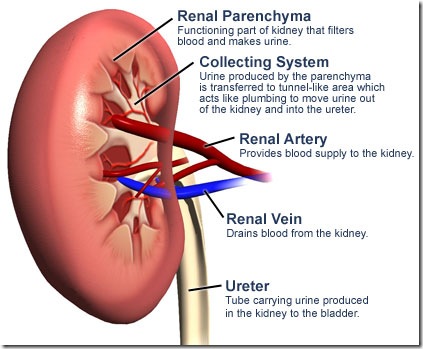
The kidneys are a pair of organs in the abdomen that perform many important functions in the human body, including: Filtering blood: The kidneys remove waste products and extra water from the blood, which is then excreted as urine. Balancing chemicals: The kidneys help maintain a healthy balance ofRead more
The kidneys are a pair of organs in the abdomen that perform many important functions in the human body, including:
Filtering blood: The kidneys remove waste products and extra water from the blood, which is then excreted as urine.
Balancing chemicals: The kidneys help maintain a healthy balance of chemicals like sodium, potassium, calcium, and phosphorus in the blood.
Regulating blood pressure: The kidneys release hormones that help control blood pressure.
Stimulating red blood cell production: The kidneys produce hormones that stimulate the bone marrow to make red blood cells.
Maintaining pH balance: The kidneys help keep the body’s pH stable by reabsorbing and producing bicarbonate from urine.
Activating vitamin D: The kidneys help activate vitamin D from diet and sunlight to keep bones and muscles healthy.
Making glucose: The kidneys make sugar (glucose) if the blood doesn’t have enough sugar.
The kidneys are located below the ribs toward the middle of the back.
Consider the following organizations/ bodies in India: [2023]1. The National Commission ...Read more
Please login to vote and see the results.
The correct answer is Only one. Explanation: Out of the given organizations/bodies, only the National Commission for Backward Classes is a constitutional body. It was given constitutional status by the 102nd Constitutional Amendment Act, 2018, under Article 338B. The National Human Rights CommissionRead more
The correct answer is Only one.
Explanation: Out of the given organizations/bodies, only the National Commission for Backward Classes is a constitutional body. It was given constitutional status by the 102nd Constitutional Amendment Act, 2018, under Article 338B.
Thus, only one of the listed bodies is a constitutional body.
See lessThe law of inertia, also known as Newton's First Law of Motion, states that an object will remain at rest or move in a straight line at a constant speed unless acted upon by an external force. This law highlights the concept that objects tend to maintain their current state of motion. Key Points ofRead more
The law of inertia, also known as Newton’s First Law of Motion, states that an object will remain at rest or move in a straight line at a constant speed unless acted upon by an external force. This law highlights the concept that objects tend to maintain their current state of motion.
The law of inertia explains why no force is needed to keep an object moving at a constant velocity and why forces are required to change the motion of objects.
See lessIn the five factor model of personality which one of the following focuses on the individual’s ability in organizing, taking responsibility and being efficient? a) extraversion b) agreeableness c) Conscientiousness d) Openness to experience
Have you ever had a learning experience outside the classroom that impacted you?
One of the most impactful learning experiences I had outside the classroom was during my transition from being a teacher to becoming an engineer. Teaching taught me patience, adaptability, and the art of breaking down complex ideas into simpler ones—a skill that proved invaluable in my engineering jRead more
One of the most impactful learning experiences I had outside the classroom was during my transition from being a teacher to becoming an engineer. Teaching taught me patience, adaptability, and the art of breaking down complex ideas into simpler ones—a skill that proved invaluable in my engineering journey. The shift pushed me out of my comfort zone, challenging me to learn new technical skills while relying on the foundational qualities I developed as a teacher.
This experience taught me that true learning happens when we embrace change, remain curious, and carry forward the lessons of our past roles into new ones. It’s a journey that has shaped not only my career but also my perspective on the limitless nature of growth.
See less
La Niña is a natural climate pattern that occurs when the ocean surface temperatures in the central and eastern equatorial Pacific cool below normal
La Niña is a natural climate pattern that occurs when the ocean surface temperatures in the central and eastern equatorial Pacific cool below normal
See lessWhat is the role of the skeletal system in movement?

The skeletal system provides support and works with muscles to enable movement.
The skeletal system provides support and works with muscles to enable movement.
See lessWhat is the difference between kinetic and potential energy?
The difference between kinetic energy and potential energy lies in the type of energy each represents and how they are stored or used: Aspect Kinetic Energy Potential Energy Definition The energy possessed by an object due to its motion. The energy stored in an object due to its position or configurRead more
The difference between kinetic energy and potential energy lies in the type of energy each represents and how they are stored or used:
| Aspect | Kinetic Energy | Potential Energy |
|---|---|---|
| Definition | The energy possessed by an object due to its motion. | The energy stored in an object due to its position or configuration. |
| Formula | , where m is mass and v is velocity. | , where m is mass, g is acceleration due to gravity, and h is height. |
| Dependence | Depends on the object’s mass and its velocity. | Depends on the object’s mass, height, and gravitational force. |
| Type of Energy | Energy in motion (dynamic energy). | Stored energy (static energy). |
| Examples | A moving car, a running athlete, a falling rock. | A rock on a hill, a stretched spring, a compressed gas. |
| Transfer | Can be transferred to other objects through collisions or friction. | Can be converted into kinetic energy when the object moves or falls. |
| Condition | Present when an object is moving. | Present when an object is stationary but at a certain height or in a certain position. |
See less
Jaipur became known as “The Pink City” when, in 1876, Maharaja Ram Singh had most of the buildings painted pink—the color of hospitality—in preparation for a visit by Britain's Queen Victoria. Today, the city is known for its bazaars, forts, temples, palaces, and wildlife sanctuaries.
Jaipur became known as “The Pink City” when, in 1876, Maharaja Ram Singh had most of the buildings painted pink—the color of hospitality—in preparation for a visit by Britain’s Queen Victoria. Today, the city is known for its bazaars, forts, temples, palaces, and wildlife sanctuaries.
See lessWhat valuable knowledge can I acquire in 10 minutes that will benefit me lifelong?
1. The 80/20 Principle (Pareto Principle) Lesson: 80% of results often come from 20% of efforts.Use it for life: Identify the small actions that lead to big outcomes. Focus on high-impact tasks in work, learning, and relationships.Learn in 10 minutes → Apply every day → Gain lifelong efficiency. 2.Read more
Lesson: 80% of results often come from 20% of efforts.
Use it for life:
Identify the small actions that lead to big outcomes.
Focus on high-impact tasks in work, learning, and relationships.
Learn in 10 minutes → Apply every day → Gain lifelong efficiency.
Lesson: Thoughts are mental events, not always truths.
Use it for life:
Helps manage overthinking and anxiety.
Supports mindfulness and emotional regulation.
A 10-minute mindset shift that rewires how you relate to stress and identity.
Lesson: If something takes less than 2 minutes, do it now.
Use it for life:
Keeps your to-do list short.
Builds momentum and avoids procrastination.
Small completions lead to big progress.
Lesson: Money grows exponentially when interest is earned on interest.
Use it for life:
Save early. Invest wisely. Let time do the heavy lifting.
Applicable to habits and learning too — small improvements compound.
Albert Einstein called it the “8th wonder of the world” for a reason.
Lesson: If you can’t explain it simply, you don’t understand it well.
Use it for life:
Learn the concept.
Explain it in simple language.
Identify gaps.
Refine and repeat.
Ten minutes of effort → Deeper understanding, faster retention.
Lesson: Saying no protects your time, energy, and goals.
Use it for life:
Practice saying: “Let me get back to you,” or “That doesn’t align with my priorities right now.”
Learn to say “no” → Say “yes” to what truly matters.
Lesson: Focus only on what you can control; let go of the rest.
Use it for life:
Lowers anxiety.
Sharpens decisions.
Reduces wasted energy.
A mental filter that promotes peace and power simultaneously.
Lesson:
Inhale 4 seconds → Hold 7 seconds → Exhale 8 seconds.
Use it for life:
Instantly lowers heart rate and anxiety.
Helps in stressful moments, interviews, and before sleep.
Ten minutes of practice → Lifelong emotional reset tool.
Lesson: Feedback reveals perception, not necessarily truth.
Use it for life:
Accept what helps, ignore what doesn’t.
Use it as a tool, not a label.
Reframe feedback, and you’ll fear it less and grow more.
Lesson: We overestimate how much others notice our flaws or actions.
Use it for life:
Frees you from self-consciousness.
Encourages bolder decisions and self-expression.
In 10 minutes, shed a lifetime of unnecessary anxiety.
In just 10 minutes, you can absorb a micro-idea that becomes a macro-upgrade in your thinking, living, and growing. These aren’t just “tips” — they are mental frameworks that serve as tools for decision-making, clarity, and resilience.
See lessExplain the Gupta period public administration
The public administration of the Gupta period (4th–6th century CE) represents one of the most efficient and organized administrative systems of ancient India. Under rulers like Chandragupta I, Samudragupta, and Chandragupta II, governance combined strong central authority with significant local autoRead more
The public administration of the Gupta period (4th–6th century CE) represents one of the most efficient and organized administrative systems of ancient India. Under rulers like Chandragupta I, Samudragupta, and Chandragupta II, governance combined strong central authority with significant local autonomy. This structure helped maintain political stability, economic prosperity, and administrative efficiency across a large empire.
Below is a structured explanation of the Gupta public administration system.
The Gupta administrative system was monarchical but decentralized.
This balance between central control and local autonomy distinguished Gupta administration from earlier empires like the Mauryas.
The king (Maharajadhiraja) was the highest authority.
Powers of the King
Kings such as Samudragupta strengthened imperial authority through military expansion and political alliances.
Council of Ministers
The king was assisted by a council of ministers, which helped in policy decisions and administration.
Important officials included:
| Official Title | Function |
| Mantri | Chief minister or advisor |
| Sandhivigrahika | Minister of war and peace (foreign affairs) |
| Mahadandanayaka | Chief judicial officer and military commander |
| Kumaramatya | High-ranking administrative officials |
These officers often belonged to noble families and sometimes held both civil and military responsibilities.
The Gupta Empire was divided into provinces for administrative convenience.
Administrative Hierarchy
| Administrative Unit | Officer | Function |
| Bhukti (Province) | Uparika | Provincial governor |
| Vishaya (District) | Vishayapati | District administrator |
| Vithi / Pathaka | Local officials | Sub-district administration |
| Village (Gram) | Gramika / Gramadhyaksha | Village head |
The Uparika was appointed by the king and supervised provincial governance, tax collection, and law and order.
The Vishaya (district) was an important administrative unit.
The Vishayapati managed:
District administration often included local advisory councils consisting of:
This shows that local participation played a role in governance.
The village was the smallest administrative unit and functioned with considerable independence.
Key Officials
Responsibilities
Village administration ensured efficient grassroots governance.
The main source of state income was land revenue.
Important Revenue Sources
The Gupta period witnessed agricultural expansion, which increased state revenue.
The judicial system was relatively mild and humane compared to earlier periods.
Judicial Structure
Types of courts included:
Punishments were generally less severe, and fines were common instead of harsh penalties.
The Guptas maintained a powerful army to protect the empire.
The army consisted of:
Important military officers included:
The strong army helped rulers like Samudragupta expand and maintain the empire.
A distinctive feature of Gupta administration was the feudatory system.
However, this system later contributed to political fragmentation after the Gupta decline.
The Gupta administrative system had several notable characteristics:
The public administration of the Gupta period was well-organized, flexible, and decentralized, ensuring stability across the empire. While the king held supreme authority, provincial governors, district officials, and village councils played crucial roles in governance. This administrative balance contributed significantly to the political stability, economic prosperity, and cultural achievements of the Gupta Age, often referred to as the “Golden Age of Ancient India.”
See less
Why is Lord Rama referred to as “Maryada Purushottam”?
Lord Rama is referred to as “Maryada Purushottam” because he is considered the ideal man (Purushottam) who upheld the highest standards of dharma, ethics, and responsibilities (Maryada) in every aspect of his life. This title reflects his embodiment of virtue, self-discipline, and unwavering commitmRead more
Lord Rama is referred to as “Maryada Purushottam” because he is considered the ideal man (Purushottam) who upheld the highest standards of dharma, ethics, and responsibilities (Maryada) in every aspect of his life. This title reflects his embodiment of virtue, self-discipline, and unwavering commitment to righteousness. Here’s an explanation of why this title is attributed to Lord Rama:
The title “Maryada Purushottam” symbolizes Lord Rama’s role as the ultimate human being who followed dharma in every facet of life. He serves as a timeless role model, embodying the virtues of honesty, compassion, humility, and selflessness, inspiring people to strive for moral and ethical excellence.
See lessHow does deforestation impact biodiversity and what are the broader environmental consequences?
Deforestation significantly impacts biodiversity by destroying habitats that are critical for various species. When forests are cleared, many plants, animals, insects, and microorganisms lose their homes, leading to a decline in species richness. This loss of biodiversity disrupts ecosystems and weaRead more
Deforestation significantly impacts biodiversity by destroying habitats that are critical for various species. When forests are cleared, many plants, animals, insects, and microorganisms lose their homes, leading to a decline in species richness. This loss of biodiversity disrupts ecosystems and weakens their resilience, making them more vulnerable to disturbances like climate change, diseases, and natural disasters. Deforestation also contributes to soil erosion, reduces the land’s ability to store carbon, and increases greenhouse gas emissions, exacerbating global warming. The broader environmental consequences include altered rainfall patterns, decreased soil fertility, and a loss of ecosystem services like water filtration and air purification, which are vital for human survival.
See lessConsidering that dark matter does not emit, absorb, or reflect light, propose a theoretical mechanism by which dark matter might interact with baryonic matter through a fifth fundamental force, and how such an interaction could be tested using gravitational lensing ...Read more
Proposing a theoretical mechanism for dark matter to interact with baryonic matter through a fifth fundamental force involves extending our current understanding of fundamental interactions beyond the four known forces (gravity, electromagnetism, weak, and strong forces). Here’s a step-by-step outliRead more
Proposing a theoretical mechanism for dark matter to interact with baryonic matter through a fifth fundamental force involves extending our current understanding of fundamental interactions beyond the four known forces (gravity, electromagnetism, weak, and strong forces). Here’s a step-by-step outline of how such a mechanism could be conceptualized and tested:
A fifth fundamental force interacting with dark matter could lead to detectable deviations in gravitational lensing patterns and CMB anisotropies, providing a pathway for indirect detection and deeper insight into the nature of dark matter.
See less
A few years ago, “content creation” meant a writer staring at a blank document, a designer starting from a blank canvas, or a video editor sifting through hours of raw footage to shape into something watchable. Today, a growing share ...

The expression ” You Can’t Step in a Boat Twice “, credited to the old Greek logician Heraclitus, highlights a significant truth about the idea of presence: the main consistent in life is change. By stretching out this relationship to ...
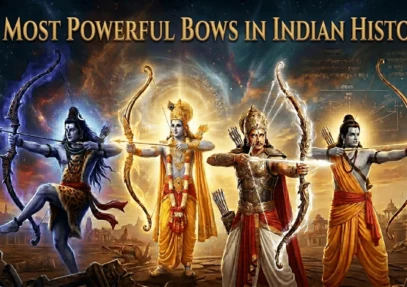
Introduction: 10 most powerful bows In the modern world, we look to particle accelerators and nuclear payloads to define the limits of destructive power. But thousands of years ago, the thinkers of the Indian subcontinent conceptualized a terrifyingly advanced form ...

The Ken-Betwa Link Project (KBLP) is no longer just a blueprint on a map; it is a massive, active engineering reality that serves as the vanguard for India’s National Perspective Plan (NPP) for inter-basin water transfer. Aimed at ending the ...

Patriot vs Nationalist: Introduction The words patriot and nationalist are often used as if they mean the same thing. Both express a strong connection to one’s country, both evoke pride, and both can inspire people to act in the name ...
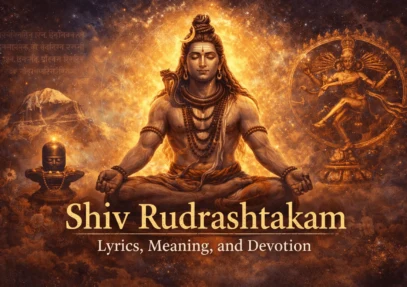
Introduction: The Eternal Hymn of Detachment and Devotion Shiv Rudrashtakam is one of the most profound Sanskrit hymns dedicated to Lord Shiva, the supreme yogi, destroyer of ignorance, and embodiment of pure consciousness. Composed by Adi Shankaracharya, this eight-verse stotra ...


Benefits of Intermittent Fasting Intermittent fasting has been shown to provide several potential health benefits: Weight loss and fat burning: Fasting puts your body into a fat-burning state and may slightly boost metabolism, leading to weight loss. Reduced insulin resistance and blood sugar levelsRead more
Benefits of Intermittent Fasting
Intermittent fasting has been shown to provide several potential health benefits:
Risks and Considerations
In summary, while intermittent fasting shows promise for weight loss and improved health markers, more research is needed on its long-term sustainability and effects. It’s important to consult with a healthcare provider before starting any new diet, especially if you have a medical condition or are in a high-risk group.
See less