What has a face and two hands but no arms or legs?
Poll Results
Please login to vote and see the results.
Sign up to our innovative Q&A platform to pose your queries, share your wisdom, and engage with a community of inquisitive minds.
Log in to our dynamic platform to ask insightful questions, provide valuable answers, and connect with a vibrant community of curious minds.
Forgot your password? No worries, we're here to help! Simply enter your email address, and we'll send you a link. Click the link, and you'll receive another email with a temporary password. Use that password to log in and set up your new one!
Please briefly explain why you feel this question should be reported.
Please briefly explain why you feel this answer should be reported.
Please briefly explain why you feel this user should be reported.
At Qukut, our mission is to bridge the gap between knowledge seekers and knowledge sharers. We strive to unite diverse perspectives, fostering understanding and empowering everyone to contribute their expertise. Join us in building a community where knowledge flows freely and growth is limitless.
What has a face and two hands but no arms or legs?
Please login to vote and see the results.
What is Contingent Risk Buffer?
What is a Contingent Risk Buffer? A Contingent Risk Buffer is a financial or policy mechanism set aside by institutions, particularly governments, international organizations, or large corporations, to absorb potential losses from low-probability but high-impact risks. These are often risks that areRead more
A Contingent Risk Buffer is a financial or policy mechanism set aside by institutions, particularly governments, international organizations, or large corporations, to absorb potential losses from low-probability but high-impact risks. These are often risks that are uncertain and cannot be precisely predicted or quantified but could have severe consequences if they materialize.
| Feature | Description |
|---|---|
| Nature of Risk | Uncertain, contingent, and non-quantifiable in traditional risk models |
| Purpose | To maintain financial stability during crises or shocks |
| Deployment Trigger | Activated only when a specific adverse event occurs |
| Examples | Natural disasters, pandemics, political upheavals, financial contagion |
| Format | Can be in the form of reserves, guarantees, insurance, or special funds |
Contingent risk buffers are vital because:
Traditional risk management tools often fail to capture “black swan” events.
These buffers enhance resilience and help ensure continuity of operations.
They reduce the need for emergency borrowing or reactive policymaking.
The International Monetary Fund (IMF) uses the term in the context of countries preparing for unforeseen macroeconomic shocks.
They may recommend a buffer to protect economies from external volatility like commodity price shocks or capital flight.
Multinational companies may hold contingent buffers to manage currency fluctuations, geopolitical risks, or supply chain disruptions.
Governments may create buffers (like sovereign wealth funds or contingency reserves) to manage natural disasters, pandemics, or legal liabilities.
Before the COVID-19 pandemic, few countries had sufficient contingent buffers in health systems. Those that did (e.g., South Korea, Singapore) responded more swiftly and effectively due to pre-established contingency planning.
The Contingent Risk Buffer is a forward-looking and prudent financial safety net designed to tackle the unknown unknowns—events that are hard to foresee but potentially catastrophic. It reflects a shift from reactive to proactive risk management and is increasingly essential in today’s volatile global environment.
See lessThe village known as "The Most Haunted Village of India" is Kuldhara, located near Jaisalmer in Rajasthan. Kuldhara is often referred to as a ghost village due to its abandoned state and the legends surrounding its desolation. According to local lore, the village was once home to the Paliwal BrahminRead more
The village known as “The Most Haunted Village of India” is Kuldhara, located near Jaisalmer in Rajasthan. Kuldhara is often referred to as a ghost village due to its abandoned state and the legends surrounding its desolation. According to local lore, the village was once home to the Paliwal Brahmins, who fled overnight in 1825 to escape the oppressive demands of a local minister, leaving behind a curse that no one would ever be able to inhabit the village again.
While Kuldhara is recognized for its haunted reputation, it’s worth noting that Bhangarh Fort is frequently cited as the most haunted place in India, although it was not included in your options. The stories and eerie atmosphere surrounding both locations attract many visitors interested in the supernatural.
See lessHow do plants produce oxygen during photosynthesis?
Plants produce oxygen during photosynthesis, a process in which they convert light energy into chemical energy stored in glucose. Here's how oxygen is produced: Step-by-Step Explanation Light Absorption: Chlorophyll in the chloroplasts absorbs light energy from the Sun. This energy is used to splitRead more
Plants produce oxygen during photosynthesis, a process in which they convert light energy into chemical energy stored in glucose. Here’s how oxygen is produced:
National Technology Day is celebrated annually on May 11 in India. It marks the anniversary of the Pokhran-II nuclear tests conducted in 1998, showcasing India's technological advancements. The day also highlights the contributions of Indian scientists, engineers, and innovators in the field of techRead more
National Technology Day is celebrated annually on May 11 in India.
It marks the anniversary of the Pokhran-II nuclear tests conducted in 1998, showcasing India’s technological advancements. The day also highlights the contributions of Indian scientists, engineers, and innovators in the field of technology and science.
See lessAre we alive? Because we are made from atom and atoms are not the living things..
This is a profound and thought-provoking question! Here's an explanation: At a fundamental level, you're correct that atoms themselves are not "alive." Atoms are the building blocks of matter, composed of protons, neutrons, and electrons, and they follow the laws of physics and chemistry. However, lRead more
This is a profound and thought-provoking question! Here’s an explanation:
At a fundamental level, you’re correct that atoms themselves are not “alive.” Atoms are the building blocks of matter, composed of protons, neutrons, and electrons, and they follow the laws of physics and chemistry. However, life emerges from the complex organization and interactions of these atoms.
When atoms combine to form molecules, and molecules organize into cells—the basic unit of life—they create systems capable of processes like metabolism, growth, reproduction, and response to stimuli. This intricate arrangement of non-living atoms and molecules gives rise to the phenomenon we call “life.”
In essence:
Atoms are not alive individually.
Life is a property of complex systems that arise when these atoms are organized in highly specific ways, such as in living organisms.
So, while the components of our bodies are non-living, the sum of their organization and interactions results in the emergence of life. This is a key idea in biology, often referred to as “emergent properties” of life.
See lessThe "large-scale structure" (LSS) of the universe refers to the distribution of galaxies, clusters, superclusters, and voids across the cosmos. These structures provide critical insights into the nature of dark matter (DM), as it is thought to play a fundamental role in the formation and evolution oRead more
The “large-scale structure” (LSS) of the universe refers to the distribution of galaxies, clusters, superclusters, and voids across the cosmos. These structures provide critical insights into the nature of dark matter (DM), as it is thought to play a fundamental role in the formation and evolution of these structures. The presence of dark matter (including various models like cold dark matter (CDM) and self-interacting dark matter (SIDM)) has significant implications for LSS, and discrepancies between the predictions of cosmological simulations and actual observations have raised important questions about the properties of dark matter. Below, I explore how the LSS challenges our understanding of dark matter properties, particularly in the context of SIDM, and how future surveys like the EUCLID mission can help resolve these tensions.
The EUCLID mission, set to launch in the near future, will be one of the most important tools for resolving tensions between cosmological simulations and observations of large-scale structure. Here’s how it will help:
The large-scale structure of the universe presents a critical challenge to our understanding of dark matter, particularly in terms of the formation of superclusters and voids. The tension between predictions from cold dark matter (CDM) simulations and actual observations of galactic clustering and the distribution of voids has led to the exploration of alternative models, such as self-interacting dark matter (SIDM).
Future surveys, particularly the EUCLID mission, will play a pivotal role in resolving these tensions. By providing detailed measurements of the distribution of galaxies, voids, and galaxy clusters, along with weak lensing data, EUCLID will offer new insights into the nature of dark matter, testing the predictions of both SIDM and CDM models. Ultimately, these findings will help to refine our understanding of the cosmological parameters that govern the growth of structures in the universe and lead to a better grasp of dark matter’s role in shaping the cosmos.
See lessConsider the following statements in the context of interventions being undertaken under Anaemia Mukt Bharat Strategy: ...Read more
Please login to vote and see the results.
Here’s a breakdown of the statements in the context of the Anaemia Mukt Bharat (AMB) Strategy: Prophylactic calcium supplementation: Incorrect: AMB focuses on iron and folic acid supplementation, not calcium supplementation. Calcium supplementation is addressed under other maternal and child healthRead more
Here’s a breakdown of the statements in the context of the Anaemia Mukt Bharat (AMB) Strategy:
Thus, statements 2, 3, and 4 are correct, and only statement 1 is incorrect.
See lessThe ‘Buddhist Circuit’ includes which of the following major sites?
Please login to vote and see the results.
What is the difference between kinetic and potential energy?
The difference between kinetic energy and potential energy lies in the type of energy each represents and how they are stored or used: Aspect Kinetic Energy Potential Energy Definition The energy possessed by an object due to its motion. The energy stored in an object due to its position or configurRead more
The difference between kinetic energy and potential energy lies in the type of energy each represents and how they are stored or used:
| Aspect | Kinetic Energy | Potential Energy |
|---|---|---|
| Definition | The energy possessed by an object due to its motion. | The energy stored in an object due to its position or configuration. |
| Formula | , where m is mass and v is velocity. | , where m is mass, g is acceleration due to gravity, and h is height. |
| Dependence | Depends on the object’s mass and its velocity. | Depends on the object’s mass, height, and gravitational force. |
| Type of Energy | Energy in motion (dynamic energy). | Stored energy (static energy). |
| Examples | A moving car, a running athlete, a falling rock. | A rock on a hill, a stretched spring, a compressed gas. |
| Transfer | Can be transferred to other objects through collisions or friction. | Can be converted into kinetic energy when the object moves or falls. |
| Condition | Present when an object is moving. | Present when an object is stationary but at a certain height or in a certain position. |
See less
Consider the investments in the following assets: ...Read more
Please login to vote and see the results.
Let's examine each asset: Brand recognition: This is considered an intangible asset. It represents the value associated with a brand's reputation and customer awareness, but it has no physical presence. Inventory: This is not considered an intangible asset. Inventory refers to the goods a company hoRead more
Let’s examine each asset:
Thus, three of the four are intangible investments. The correct answer is Only three.
See lessWhat are the basic principles of electrical engineering?
Basic Principles of Electrical Engineering 1. Ohm's Law Statement: V=IR Description: Ohm's Law relates voltage VV, current I, and resistance R in an electrical circuit. It states that the current through a conductor between two points is directly proportional to the voltage across the two points andRead more
Statement:
IR
Description: Ohm’s Law relates voltage V, current I, and resistance R in an electrical circuit. It states that the current through a conductor between two points is directly proportional to the voltage across the two points and inversely proportional to the resistance.
Statement: The total current entering a junction in a circuit is equal to the total current leaving the junction.
Description: KCL is based on the principle of conservation of electric charge.
Statement: The sum of all the voltages around a closed loop in a circuit is equal to zero. Description: KVL is based on the principle of conservation of energy.
Statement:
Description: Coulomb’s Law describes the electrostatic force between two charged particles. The force is directly proportional to the product of the magnitudes of the charges and inversely proportional to the square of the distance between them.
Statement:
Description: Faraday’s Law states that a change in magnetic flux through a coil induces an electromotive force (EMF) in the coil. This principle is the basis for electric generators, transformers, and inductors.
Statement: The direction of the induced current (or EMF) is such that it opposes the change in magnetic flux that caused it.
Description: Lenz’s Law ensures that energy conservation is maintained in electromagnetic systems.
Statement: The total electric flux through a closed surface is equal to the charge enclosed divided by the permittivity of the medium:
Description: Gauss’s Law explains the relationship between electric charge and electric field.
Statement: Energy can neither be created nor destroyed, only converted from one form to another.
Description: In electrical systems, energy is typically converted between electrical, mechanical, and thermal forms, governed by this principle.
Description: Maxwell’s equations describe how electric and magnetic fields propagate and interact. They govern the behavior of electromagnetic waves, which are essential in communication systems, antennas, and waveguides. The four key equations are:
Statement: In a linear system, the response caused by two or more stimuli is the sum of the responses that would have been caused by each stimulus individually.
Description: The principle of superposition is used in the analysis of linear circuits to simplify the study of complex circuits with multiple sources.
Description: Capacitance is the ability of a system to store electric charge. It is defined by the relationship:
CV
,where C is the capacitance, Q is the charge, and
Description: Inductance is the ability of a conductor to store energy in the form of a magnetic field when current flows through it. The induced EMF is given by:
I is the current.
Description: Impedance is the opposition to the flow of alternating current (AC) and is the combination of resistance, inductive reactance, and capacitive reactance. Impedance is represented as a complex quantity:
R+jX
=VI
, where P V is the voltage, and I is the current.
In AC circuits, power is divided into:
The power factor plays a key role in determining the efficiency of power transfer in AC systems.
Description: A transformer transfers electrical energy between two or more circuits through electromagnetic induction. The relationship between primary and secondary voltages is governed by the turn ratio of the transformer.
See lessHow do different schools of Hinduism view the concept of karma?
With reference to ancient South India, Korkai, Poompuhar and Muchiri were well known as [2023]
Please login to vote and see the results.
Puhar, also called Kaveripoompattinam, served as the chief port of the Cholas. Korkai was the principal harbor for the Pandyas, while the Chera kingdom relied on key ports such as Tondi and Muchiri for trade and commerce.
See lessWhat is the role of mitochondria in energy production?
Mitochondria, often referred to as the "powerhouses of the cell," play a crucial role in energy production by converting nutrients into a form of energy that cells can use, primarily adenosine triphosphate (ATP). This process occurs through a series of complex biochemical reactions, primarily in theRead more
Mitochondria, often referred to as the “powerhouses of the cell,” play a crucial role in energy production by converting nutrients into a form of energy that cells can use, primarily adenosine triphosphate (ATP). This process occurs through a series of complex biochemical reactions, primarily in the presence of oxygen. Here’s a breakdown of their role:
Mitochondria are the central organelles where cellular respiration occurs, a multi-step process involving the breakdown of glucose, fatty acids, and other nutrients to produce ATP. The key stages include:
a. Glycolysis (Occurs in the Cytoplasm)
Mitochondria are indispensable for efficient energy production in eukaryotic cells. By generating ATP through cellular respiration, they support nearly all energy-dependent processes that sustain life.
See lessConsider the following statements: ...Read more
Please login to vote and see the results.
Statement 1 is accurate: Carbon markets, once considered ineffective, have finally emerged as one of the most prominent mechanisms in the battle against climate change. By the end of 2021, over 21% of global emissions were subject to some form of carbon pricing, an increase from 15% in 2020. More anRead more
Statement 1 is accurate: Carbon markets, once considered ineffective, have finally emerged as one of the most prominent mechanisms in the battle against climate change. By the end of 2021, over 21% of global emissions were subject to some form of carbon pricing, an increase from 15% in 2020. More and more businesses are required to compensate regulators for the privilege of emitting a ton of carbon dioxide. Investor interest is also rising, as trading volumes in these markets surged by 164% last year, reaching €760 billion ($897 billion).
Statement 2 is also accurate. Carbon markets play a crucial role in mobilizing financial resources and minimizing costs, thereby providing countries and corporations the flexibility to transition to low-carbon economies. It is projected that carbon credit trading could lower the expense of fulfilling Nationally Determined Contributions (NDCs) by over 50%—potentially saving as much as $250 billion by 2030. In the long run, however, carbon markets may become obsolete as countries achieve net-zero emissions, reducing the necessity for emission trading.
Therefore, the correct answer is Both Statement-I and Statement-II are correct and Statement-II is the correct explanation for Statement-I.
See lessWeber Protestant ethic and spirit of capitalism ?
The concept of the "Protestant Ethic and the Spirit of Capitalism" was introduced by German sociologist Max Weber in his seminal work published in 1905. It explores the relationship between religious beliefs and the rise of modern capitalism in Western society. Here's an overview: 1. Key Idea WeberRead more
The concept of the “Protestant Ethic and the Spirit of Capitalism” was introduced by German sociologist Max Weber in his seminal work published in 1905. It explores the relationship between religious beliefs and the rise of modern capitalism in Western society. Here’s an overview:
1. Key Idea
Weber argued that certain aspects of Protestantism, particularly Calvinism, played a crucial role in fostering the development of capitalism. Specifically:
Work Ethic: Protestants, especially Calvinists, emphasized hard work, discipline, and frugality as religious virtues.
Ascetic Lifestyle: Wealth accumulation was seen as a sign of divine favor, but lavish spending was discouraged. This led to reinvestment in businesses and economic growth.
Predestination: Calvinist belief in predestination—that one’s fate (salvation or damnation) is determined by God—encouraged people to seek signs of salvation through worldly success.
2. The “Spirit of Capitalism”
Weber described the “spirit of capitalism” as:
A rational pursuit of economic gain.
A focus on efficiency, organization, and innovation.
A cultural shift where accumulating wealth became a moral and practical virtue rather than a sin or vice.
This mindset, Weber argued, aligned closely with Protestant ethics, creating fertile ground for the emergence of modern capitalism.
3. Historical Context
Weber’s thesis challenges earlier views that capitalism was merely the result of economic or material conditions. He linked capitalism’s rise to cultural and religious transformations during the Reformation period (16th century), which reshaped attitudes toward work and wealth.
4. Criticism and Influence
Criticism:
Some scholars argue that capitalism existed in various forms before Protestantism.
Others believe Weber overemphasized religion and underplayed economic and political factors.
Influence:
Weber’s work remains a foundational text in sociology, influencing studies of economic behavior, religion, and culture.
Conclusion
Weber’s Protestant Ethic and the Spirit of Capitalism highlights how religious beliefs can shape economic systems and societal values, providing a deeper understanding of the interplay between culture, religion, and economics.
See lesswhat is fiction ? how many types of fiction are there ?
Fiction refers to literature created from the imagination, rather than based strictly on facts or real events. It often tells stories about characters, events, and settings that are invented, though it can include elements inspired by reality. Fiction can be expressed in various forms, such as novelRead more
Fiction refers to literature created from the imagination, rather than based strictly on facts or real events. It often tells stories about characters, events, and settings that are invented, though it can include elements inspired by reality. Fiction can be expressed in various forms, such as novels, short stories, plays, or movies.
Types of Fiction
There are many ways to categorize fiction, but it is commonly divided into genres and forms. Here’s an overview:
1. Based on Genre
Genres are the thematic or stylistic categories of fiction, including:
• Literary Fiction: Focuses on complex characters, themes, and stylistic writing. Examples: To Kill a Mockingbird by Harper Lee.
• Historical Fiction: Set in the past, often incorporating real historical events. Examples: The Book Thief by Markus Zusak.
• Science Fiction (Sci-Fi): Focuses on futuristic concepts, technology, space exploration, or alternate realities. Examples: Dune by Frank Herbert.
• Fantasy: Features magical elements, mythical creatures, or imaginary worlds. Examples: The Hobbit by J.R.R. Tolkien.
• Mystery: Revolves around solving a crime or uncovering secrets. Examples: The Girl with the Dragon Tattoo by Stieg Larsson.
• Thriller/Suspense: Centers on tension, danger, and high-stakes scenarios. Examples: Gone Girl by Gillian Flynn.
• Romance: Focuses on love and relationships. Examples: Pride and Prejudice by Jane Austen.
• Horror: Intended to frighten or unsettle readers. Examples: It by Stephen King.
• Dystopian Fiction: Explores societies with oppressive or flawed systems. Examples: 1984 by George Orwell.
• Adventure: Emphasizes action and exploration. Examples: The Count of Monte Cristo by Alexandre Dumas.
2. Based on Form
Forms are the structure or length of the story:
• Novel: A long, detailed narrative. Example: War and Peace by Leo Tolstoy.
• Novella: A shorter narrative, longer than a short story. Example: The Metamorphosis by Franz Kafka.
• Short Story: A brief narrative focusing on a single event or theme. Example: The Lottery by Shirley Jackson.
• Flash Fiction: Very short stories, often under 1,000 words. Example: “For sale: baby shoes, never worn.”
3. Other Types of Fiction
• Realistic Fiction: Stories that could plausibly happen in real life. Example: The Fault in Our Stars by John Green.
• Magical Realism: Combines realistic settings with magical elements. Example: One Hundred Years of Solitude by Gabriel García Márquez.
• Speculative Fiction: Encompasses genres like sci-fi, fantasy, and dystopia, exploring “what if” scenarios.
• Satirical Fiction: Uses humor and irony to critique society. Example: Animal Farm by George Orwell.
Fiction evolves with creativity and cultural shifts, making its types diverse and ever-expanding.
See lessHow does the immune system protect the body from disease?
The immune system protects the body from disease by identifying, neutralizing, and eliminating harmful invaders like bacteria, viruses, fungi, and parasites. It also detects and removes damaged or abnormal cells, including cancerous cells. Here’s how it works: 1. First Line of Defense: Physical andRead more
The immune system protects the body from disease by identifying, neutralizing, and eliminating harmful invaders like bacteria, viruses, fungi, and parasites. It also detects and removes damaged or abnormal cells, including cancerous cells. Here’s how it works:
By working through these layers of defense, the immune system protects the body from infections and promotes overall health.
See lessHow can advanced control algorithms leveraging machine learning be integrated into multi-agent robotic systems for real-time adaptive path planning in dynamic, uncertain environments, while ensuring robustness, fault tolerance, and minimal computational overhead?
Integrating advanced control algorithms leveraging machine learning (ML) into multi-agent robotic systems for real-time adaptive path planning in dynamic, uncertain environments involves a strategic combination of several techniques to address key challenges such as robustness, fault tolerance, andRead more
Integrating advanced control algorithms leveraging machine learning (ML) into multi-agent robotic systems for real-time adaptive path planning in dynamic, uncertain environments involves a strategic combination of several techniques to address key challenges such as robustness, fault tolerance, and computational efficiency. Here’s a detailed approach to achieve this:
1. Dynamic, Uncertain Environments
In dynamic environments, the obstacles, agent states, and tasks are constantly changing. Uncertainty can arise due to sensor noise, unpredictable agent behavior, or external factors. To handle these challenges:
Reinforcement Learning (RL): Use RL algorithms, such as Deep Q-Learning (DQN) or Proximal Policy Optimization (PPO), for agents to learn optimal path planning strategies based on experience. The RL framework helps adapt the agents’ behavior in response to environmental changes by continuously improving their decision-making policy.
Model Predictive Control (MPC): Incorporate MPC to optimize the agents’ future path while accounting for constraints, dynamic obstacles, and uncertainties. MPC can be adapted by incorporating real-time learning, enabling it to handle unmodeled dynamics and disturbances in the environment.
2. Real-Time Adaptive Path Planning
Real-time path planning is essential to dynamically adjust the agents’ movements to the constantly changing environment.
Federated Learning: Multi-agent systems can adopt federated learning, where agents individually train models based on their local observations and share only the model updates, preserving privacy and reducing communication costs. This ensures that path planning models remain adaptable to each agent’s specific environment.
Multi-Agent Coordination: Use centralized or decentralized coordination algorithms like Consensus-based Approaches, Game Theory, or Distributed Optimization to allow agents to adapt their trajectories in real-time without conflicts while considering global and local objectives.
3. Robustness and Fault Tolerance
Ensuring robustness against environmental disturbances, model inaccuracies, or communication failures is critical.
Adaptive Robust Control: Incorporate adaptive robust control techniques where the system dynamically adjusts to handle model mismatches and external disturbances, improving stability despite uncertainties.
Fault Detection and Recovery: Implement fault detection algorithms using anomaly detection via unsupervised learning techniques like autoencoders or one-class SVM. Once a fault is detected, the system should be able to switch to a backup policy or reconfigure the agent’s path without significant disruption.
Redundancy and Multi-Path Planning: Design algorithms with fault tolerance in mind by allowing agents to fall back on alternate paths or collaboration strategies in case of failure, ensuring continued operation.
4. Minimal Computational Overhead
Reducing the computational burden is crucial for real-time systems, especially in multi-agent setups.
Model Compression and Pruning: Use model compression techniques (e.g., quantization, weight pruning) to reduce the complexity and size of the ML models, making them more computationally efficient without sacrificing performance.
Edge Computing: Instead of relying on a central server, deploy lightweight ML models on edge devices (such as onboard computers or sensors), allowing for decentralized decision-making and reducing latency in path planning.
Event-Driven Execution: Use event-driven algorithms where computations are only triggered when significant changes occur (e.g., when new obstacles are detected or when a deviation from the planned path is necessary), reducing unnecessary computations.
5. Integration of Control Algorithms with ML
The integration of traditional control algorithms with machine learning can further enhance the adaptability and robustness of the multi-agent system.
Control-Learning Hybrid Approaches: Combine classical control algorithms (like PID controllers or LQR) with ML-based strategies. For instance, ML can be used to tune or adapt parameters of traditional controllers based on real-time data to improve path planning performance.
Transfer Learning: Use transfer learning to quickly adapt trained models from one environment to another, enabling faster learning when agents are deployed in different but similar environments, enhancing efficiency in large-scale systems.
Sim-to-Real Transfer: Incorporate simulation-based learning where models are first trained in a simulated environment with known uncertainties and then transferred to the real world using domain adaptation techniques. This approach minimizes the risk of failure in the real-world deployment.
6. Collaborative Learning and Decision Making
Collaboration among multiple agents ensures efficient path planning while mitigating the effects of uncertainties and faults.
Cooperative Path Planning Algorithms: Use swarm intelligence or cooperative control strategies where agents share information and adjust their paths to achieve a common goal, even in the presence of obstacles, environmental uncertainty, and dynamic changes.
Self-Organizing Maps (SOM) and Graph-based Techniques: Incorporate graph-based algorithms such as A or Dijkstra’s algorithm* combined with SOM for spatial reasoning, enabling agents to optimize their trajectories in real-time.
By integrating advanced control algorithms like MPC, RL, and hybrid control-learning approaches with machine learning techniques such as federated learning and reinforcement learning, multi-agent robotic systems can achieve adaptive path planning in dynamic, uncertain environments. Ensuring robustness and fault tolerance is accomplished through fault detection, redundancy, and robust control techniques. To maintain minimal computational overhead, techniques like model pruning, edge computing, and event-driven execution are employed. This combination allows for the real-time, efficient operation of multi-agent systems while ensuring safety and reliability in uncertain environments.
See lessGiven that dark matter interacts gravitationally but not electromagnetically, how could future quantum field theories reconcile the existence of a hypothetical dark matter particle with the Standard Model of particle physics, considering gauge symmetry, supersymmetry constraints, and potential interactions through ...Read more
Reconciling the existence of dark matter with the Standard Model (SM) of particle physics involves extending the current framework to account for new particles and interactions. Here are some key approaches future quantum field theories might take, considering gauge symmetry, supersymmetry (SUSY) coRead more
Reconciling the existence of dark matter with the Standard Model (SM) of particle physics involves extending the current framework to account for new particles and interactions. Here are some key approaches future quantum field theories might take, considering gauge symmetry, supersymmetry (SUSY) constraints, and potential new forces or mediators:
Each of these approaches integrates dark matter into the broader framework of particle physics by either extending the symmetry structure, introducing new particles, or proposing novel interactions that maintain consistency with existing observations while providing pathways to detect dark matter. Future experiments in astrophysics, cosmology, and high-energy physics will be crucial in distinguishing which, if any, of these theoretical frameworks correctly describe the nature of dark matter.
See lessWhat is Nitrogen Narcosis?
Who was India’s first female astronaut?
India's first female astronaut was Kalpana Chawla, who, despite being born in India, was a U.S. citizen. She became the first woman of Indian origin in space as a NASA astronaut. Key Facts about Kalpana Chawla: Born: March 17, 1962, in Karnal, Haryana, India. NASA Career: Kalpana Chawla first flew iRead more
India’s first female astronaut was Kalpana Chawla, who, despite being born in India, was a U.S. citizen. She became the first woman of Indian origin in space as a NASA astronaut.
Key Facts about Kalpana Chawla:
Born: March 17, 1962, in Karnal, Haryana, India.
NASA Career: Kalpana Chawla first flew into space in 1997 aboard the Space Shuttle Columbia on mission STS-87. Her second mission was in 2003, again aboard Columbia on STS-107.
Tragic End: On February 1, 2003, during her second mission, the Space Shuttle Columbia disintegrated upon re-entry into Earth’s atmosphere, tragically ending the lives of all seven crew members.
Although Kalpana Chawla was an American citizen, her Indian heritage has made her an iconic figure in India. She remains a symbol of inspiration for people from India and around the world, particularly for women aspiring to excel in fields like science, technology, and space exploration.
See lessWhat is a chromosome, and how does it relate to DNA?
A chromosome is a long, thread-like structure made of DNA (deoxyribonucleic acid) and proteins, primarily histones. Chromosomes carry the genetic information necessary for the growth, development, functioning, and reproduction of living organisms. They are found in the nucleus of eukaryotic cells anRead more
A chromosome is a long, thread-like structure made of DNA (deoxyribonucleic acid) and proteins, primarily histones. Chromosomes carry the genetic information necessary for the growth, development, functioning, and reproduction of living organisms. They are found in the nucleus of eukaryotic cells and are responsible for organizing and packaging DNA in a compact form.
In short, chromosomes are the packaging units of DNA, ensuring that genetic material is properly maintained and passed on through generations.
See lessThe Red Fort is located in which city?
Please login to vote and see the results.
Consider the following fauna: ...Read more
Please login to vote and see the results.
Lion-tailed Macaque: This species is primarily diurnal, meaning it is active during the day and rests at night. They are known for their distinctive mane and tail tuft, and they inhabit the rainforests of the Western Ghats in India. Malabar Civet: The Malabar Civet is generally nocturnal. It is mostRead more
Given this information, two of the listed fauna (Malabar Civet and Sambar Deer) are generally nocturnal or most active after sunset. Therefore, the correct answer is: Only two.
See lessh(x)= (4x³ -7x +8)/x
To differentiate the function \( h(x) = \frac{4x^3 - 7x + 8}{x} \) ,here's the step-by-step process: Given: \[ h(x) = \frac{4x^3 - 7x + 8}{x} \] Step 1: Simplify the function First, simplify the function by dividing each term in the numerator by \( x \): \[ h(x) = \frac{4x^3}{x} - \frac{7x}{x} + \frRead more
To differentiate the function \( h(x) = \frac{4x^3 – 7x + 8}{x} \) ,here’s the step-by-step process:
Given:
\[
h(x) = \frac{4x^3 – 7x + 8}{x}
\]
Step 1: Simplify the function
First, simplify the function by dividing each term in the numerator by \( x \):
\[
h(x) = \frac{4x^3}{x} – \frac{7x}{x} + \frac{8}{x}
\]
This simplifies to:
\[
h(x) = 4x^2 – 7 + \frac{8}{x}
\]
Step 2: Differentiate each term
Now, differentiate \( h(x) \) with respect to \( x \):
1. Differentiate \( 4x^2 \):
\[
\frac{d}{dx}(4x^2) = 8x
\]
2. Differentiate \( -7 \)(a constant):
\[
\frac{d}{dx}(-7) = 0
\]
3. Differentiate \( \frac{8}{x} \):
Rewrite \( \frac{8}{x} \) as \( 8x^{-1} \).
\[
\frac{d}{dx}(8x^{-1}) = -8x^{-2}
\]
Step 3: Combine the derivatives
Finally, combine the derivatives:
\[
h'(x) = 8x + 0 – \frac{8}{x^2}
\]
Or, simply:
\[
h'(x) = 8x – \frac{8}{x^2}
\]
This is the derivative of the given function \( h(x) = \frac{4x^3 – 7x + 8}{x} \).
See lessWhat is the meaning of life?
The meaning of life is a question that has intrigued philosophers, scientists, and thinkers throughout history. The answer varies depending on cultural, religious, and personal beliefs: Philosophical Perspective: Philosophers like Aristotle saw the meaning of life as achieving happiness or flourishiRead more
The meaning of life is a question that has intrigued philosophers, scientists, and thinkers throughout history. The answer varies depending on cultural, religious, and personal beliefs:
Ultimately, the meaning of life can be deeply personal, shaped by each person’s experiences, beliefs, and values.
See lessHow sand volcanos are formed?
Sand volcanoes, also known as sand boils, are formed when pressurized water and sand are forced upward through overlying layers of soil, creating cone-shaped mounds that resemble miniature volcanoes. This phenomenon typically occurs in areas affected by seismic activity or where there is rapid loadiRead more
Sand volcanoes, also known as sand boils, are formed when pressurized water and sand are forced upward through overlying layers of soil, creating cone-shaped mounds that resemble miniature volcanoes. This phenomenon typically occurs in areas affected by seismic activity or where there is rapid loading on water-saturated soils. Here’s a detailed explanation of the process:
1. Presence of Saturated Soil
Sand volcanoes form in areas with loose, water-saturated sandy soils, such as riverbanks, coastal regions, or areas with shallow water tables.
2. Application of Pressure
Seismic Activity: During an earthquake, seismic waves generate intense shaking, increasing the pressure in pore water between sand grains.
Rapid Loading: Sudden heavy loads, like construction or flooding, can also create high pore water pressure.
3. Liquefaction
The increase in pore water pressure can cause the soil to lose its strength and behave like a liquid—a process known as soil liquefaction.
4. Ejection of Water and Sand
As the pressure builds, water and sand are forced upward through weak points in the overlying soil, creating fissures or vents.
The ejected materials pile up around the vent, forming a small cone-shaped mound, resembling a miniature volcano.
5. Formation of the Cone
The sand and water eventually settle, leaving a cone-shaped structure made of sand. Sometimes, fine sediments are deposited in and around the vent, forming a crater-like depression.
6. Post-Event Features
Sand volcanoes often leave behind circular or elongated patterns on the ground surface, providing evidence of past seismic activity.
Examples of Sand Volcano Formation
Earthquake-Triggered: During major earthquakes, such as the 1964 Alaska earthquake or the 1995 Kobe earthquake, numerous sand volcanoes were observed in liquefied areas.
Human-Induced: Sand boils can also occur during construction projects involving rapid soil loading.
These formations are not dangerous in themselves but often indicate underlying soil instability, which can pose significant risks to infrastructure and buildings in the affected area.
See lessDr. Vikram Sarabhai is widely regarded as the "Father of the Indian Space Program." He was an exceptional scientist, visionary, and institution builder who played a pivotal role in laying the foundation of space research and development in India. Key Contributions: 1. Establishment of ISRO: Dr. SaraRead more
Dr. Vikram Sarabhai is widely regarded as the “Father of the Indian Space Program.” He was an exceptional scientist, visionary, and institution builder who played a pivotal role in laying the foundation of space research and development in India.
Key Contributions:
1. Establishment of ISRO:
Dr. Sarabhai was instrumental in establishing the Indian Space Research Organisation (ISRO) in 1969, envisioning space technology as a tool for national development.
2. Vision for Space Science:
He believed in harnessing space technology for the benefit of common people, focusing on applications like communication, weather forecasting, and education.
3. Launch of India’s First Satellite:
Under his guidance, India began the work that eventually led to the successful launch of Aryabhata, the country’s first satellite, in 1975.
4. Institution Building:
He established premier institutes like the Physical Research Laboratory (PRL) in Ahmedabad, which became a hub for space and atmospheric research.
He was also involved in setting up the Indian Institute of Management (IIM), Ahmedabad.
5. International Collaboration:
Dr. Sarabhai was instrumental in securing support from NASA for the Satellite Instructional Television Experiment (SITE), a landmark project to bring education to remote areas using satellite technology.
Awards and Honors:
Padma Bhushan (1966)
Padma Vibhushan (posthumously, 1972)
Dr. Vikram Sarabhai’s legacy continues to inspire ISRO and the nation, making him a towering figure in India’s scientific and technological achievements.
See less
The Ken-Betwa Link Project (KBLP) is no longer just a blueprint on a map; it is a massive, active engineering reality that serves as the vanguard for India’s National Perspective Plan (NPP) for inter-basin water transfer. Aimed at ending the ...
Patriot vs Nationalist: Introduction The words patriot and nationalist are often used as if they mean the same thing. Both express a strong connection to one’s country, both evoke pride, and both can inspire people to act in the name ...
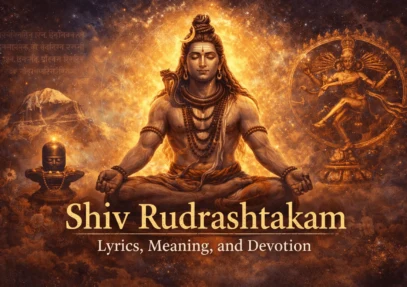
Introduction: The Eternal Hymn of Detachment and Devotion Shiv Rudrashtakam is one of the most profound Sanskrit hymns dedicated to Lord Shiva, the supreme yogi, destroyer of ignorance, and embodiment of pure consciousness. Composed by Adi Shankaracharya, this eight-verse stotra ...
A Prime-Adam Number is defined as a positive number that fulfills two conditions simultaneously: it is a prime number and also an Adam number. For example, take the number 13; its reverse is 31. The square of 13 is 169, and the ...
Introduction The 74th Miss Universe pageant, held on November 21, 2025, at the Impact Challenger Hall in Nonthaburi, Thailand, set a new benchmark in global beauty contests. Not merely a showcase of beauty and fashion, this year’s event stood as ...
A Keith number is an n-digit number that appears as a term in a sequence, where the first n terms are its own digits, and each following term is the sum of the previous n terms. For example, 197 is ...
A clock! It has a face (the clock face) and two hands (the hour and minute hands) but no arms or legs.
See less