Select any one of the options given above.
Poll Results
Please login to vote and see the results.
Sign up to our innovative Q&A platform to pose your queries, share your wisdom, and engage with a community of inquisitive minds.
Log in to our dynamic platform to ask insightful questions, provide valuable answers, and connect with a vibrant community of curious minds.
Forgot your password? No worries, we're here to help! Simply enter your email address, and we'll send you a link. Click the link, and you'll receive another email with a temporary password. Use that password to log in and set up your new one!
Please briefly explain why you feel this question should be reported.
Please briefly explain why you feel this answer should be reported.
Please briefly explain why you feel this user should be reported.
At Qukut, our mission is to bridge the gap between knowledge seekers and knowledge sharers. We strive to unite diverse perspectives, fostering understanding and empowering everyone to contribute their expertise. Join us in building a community where knowledge flows freely and growth is limitless.
Select any one of the options given above.
Please login to vote and see the results.
who made world first camera?
The world’s first camera was created by Joseph Nicéphore Niépce, a French inventor, in 1816. He developed a device using a primitive photographic process called the camera obscura to capture images. His most significant achievement came in 1826 or 1827, when he produced the first permanent photograpRead more
The world’s first camera was created by Joseph Nicéphore Niépce, a French inventor, in 1816. He developed a device using a primitive photographic process called the camera obscura to capture images. His most significant achievement came in 1826 or 1827, when he produced the first permanent photograph known as “View from the Window at Le Gras” using a process he called heliography.
Niépce’s invention paved the way for modern photography, with further advancements made by inventors like Louis Daguerre and William Henry Fox Talbot.
See lessRamanujacharya is related to….
Please login to vote and see the results.
How can I improve my communication skill?
Improving communication skills is an ongoing process that requires practice, reflection, and intention. Here are some practical strategies to help you enhance your communication abilities: 1. Active Listening Focus on the speaker: Give your full attention to the person speaking without interruptingRead more
Improving communication skills is an ongoing process that requires practice, reflection, and intention. Here are some practical strategies to help you enhance your communication abilities:
1. Active Listening
Focus on the speaker: Give your full attention to the person speaking without interrupting or thinking about your response while they talk.
Ask clarifying questions: This helps you better understand their message and shows you’re engaged.
Give feedback: Nod or use brief acknowledgments like “I see” or “That’s interesting” to show you’re listening.
2. Expand Your Vocabulary
Read regularly: Reading books, articles, or blogs helps expose you to new words and phrases, improving your ability to express yourself clearly.
Learn a word a day: Try learning and using a new word every day to build your vocabulary gradually.
3. Practice Public Speaking
Join groups like Toastmasters: This provides a structured environment for practicing speaking in front of others.
Record yourself: Listening to recordings of your speeches or presentations can help you identify areas for improvement, such as pacing, tone, or clarity.
4. Clarity and Brevity
Be concise: Focus on delivering your message in the most straightforward way, avoiding unnecessary details.
Organize your thoughts: Plan what you want to say before speaking, whether it’s a casual conversation or a formal presentation.
5. Non-Verbal Communication
Improve body language: Pay attention to posture, gestures, and facial expressions, as these can convey confidence and clarity.
Maintain eye contact: This shows you are engaged and builds trust with the listener.
6. Work on Tone and Pitch
Control your tone: The way you say something can impact how it’s received. Practice adjusting your tone to suit different situations.
Avoid monotony: Vary your pitch and tone to keep your message dynamic and engaging.
7. Be Empathetic
Understand others’ perspectives: Try to see things from the other person’s point of view to improve your response and reactions.
Acknowledge emotions: When appropriate, acknowledge feelings in conversations to show empathy and create a connection.
8. Seek Constructive Feedback
Ask for feedback: Regularly ask for feedback from friends, family, or colleagues about your communication style.
Self-reflection: After important conversations or presentations, reflect on what went well and what could be improved.
9. Practice Active Engagement
Engage in discussions: Participate in discussions or debates on various topics to refine your ability to present ideas and listen critically.
Join forums or clubs: Places like book clubs, study groups, or social organizations provide opportunities for regular communication practice.
10. Adapt to Your Audience
Adjust your language: Tailor your language to suit the audience, whether you’re speaking with professionals, friends, or people from different cultures.
Be mindful of cultural differences: Be aware of cultural norms in communication, especially in international settings.
By consistently practicing these strategies and staying open to feedback, you will gradually improve both your verbal and non-verbal communication skills.
See lessHow does the adminstration done on the Public during the Gupta period
During the Gupta period (approximately 320 to 550 CE), administration was characterized by a highly organized and efficient system that contributed to the prosperity and stability of the empire. Here are the main aspects of how administration was conducted: 1. Central Administration Monarchical SystRead more
During the Gupta period (approximately 320 to 550 CE), administration was characterized by a highly organized and efficient system that contributed to the prosperity and stability of the empire. Here are the main aspects of how administration was conducted:
1. Central Administration
Monarchical System: The Gupta Empire was ruled by a king, often considered divine or semi-divine, who held supreme authority. The king was the central figure in governance, with ultimate control over the military, judiciary, and administrative functions.
Council of Ministers: The king was assisted by a council of ministers (Mantriparishad), who advised on various matters of state. These ministers were often from noble families or scholars well-versed in administrative affairs.
2. Provincial Administration
Division into Provinces: The empire was divided into provinces (Bhukti), each governed by a provincial governor (Uparika), who acted as the king’s representative.
Viceroys: Often, members of the royal family were appointed as viceroys to ensure loyalty and effective governance in these provinces.
Districts and Villages: Provinces were further divided into districts (Vishaya), governed by district officers (Vishayapati). These districts comprised multiple villages, which were the smallest administrative units.
3. Local Administration
Village Autonomy: Villages had a considerable degree of autonomy, with village councils (Grama Sabha) managing local affairs, including the collection of taxes and maintenance of law and order. These councils included elders and local leaders who were respected members of the community.
Tax Collection: Villages were responsible for collecting taxes, which were then forwarded to the district authorities. Taxes were often paid in kind, such as grains, cattle, or produce.
4. Judicial Administration
King as Chief Justice: The king was the highest judicial authority, with the power to pass final judgments. However, local disputes were typically resolved by village assemblies or district courts.
Dharma and Smriti: The judicial system was based on Dharma (moral law) and Smriti (legal texts), which were interpretations of ancient scriptures and customs.
Role of Officials: Officers like Mahadandanayaka (chief judicial officer) and Amatya (minister) played significant roles in judicial matters.
5. Military Administration
Standing Army: The Gupta Empire maintained a well-organized standing army to protect the empire and expand its territories. The military included infantry, cavalry, chariots, and elephants.
Feudal Lords: Local chiefs and feudal lords often provided additional military support in exchange for land grants or other privileges.
6. Revenue Administration
Land Revenue: The primary source of revenue was land tax, which was usually a share of the produce. The rate could vary depending on the fertility of the land and local customs.
Other Taxes: In addition to land revenue, taxes were collected on trade, irrigation, and professional services. Merchants and artisans contributed to the state’s income through these levies.
7. Economic and Trade Administration
Flourishing Trade: The Gupta period saw significant trade, both inland and overseas, which was facilitated by efficient road networks and ports.
Regulation: Trade and commerce were regulated to ensure the prosperity of the empire. Guilds played a crucial role in economic administration, managing the production and trade of goods.
The Gupta administration was a blend of centralization and decentralization, ensuring both control and flexibility, which contributed to the overall stability and prosperity of the empire during its golden age.
See lessWhat is the difference between renewable and non-renewable energy?
Aspect Renewable Energy Non-Renewable Energy Definition Energy from replenishable natural resources (e.g., sunlight, wind). Energy from finite resources that take millions of years to form (e.g., coal, oil). Availability Virtually inexhaustible; naturally replenished. Limited; depletes over time andRead more
| Aspect | Renewable Energy | Non-Renewable Energy |
| Definition | Energy from replenishable natural resources (e.g., sunlight, wind). | Energy from finite resources that take millions of years to form (e.g., coal, oil). |
| Availability | Virtually inexhaustible; naturally replenished. | Limited; depletes over time and cannot be replenished quickly. |
| Examples | Solar, wind, hydropower, geothermal, biomass. | Coal, oil, natural gas, nuclear (uranium, plutonium). |
| Environmental Impact | Minimal; low greenhouse gas emissions; eco-friendly. | High; significant greenhouse gas emissions and pollution. |
| Cost and Infrastructure | High initial investment but low operational costs; requires storage solutions. | Established infrastructure, cheaper initially but costly long-term due to environmental damage. |
| Sustainability | Sustainable for long-term use if managed responsibly. | Unsustainable due to finite reserves and environmental consequences. |
| Global Impact | Promotes energy security, widely available resources. | Dependence on finite resources can lead to energy crises. |
See less
What is the process of fermentation?
Fermentation is a biological process in which microorganisms, such as bacteria, yeast, or molds, break down organic compounds—typically sugars—into simpler compounds like alcohol or acids, in the absence of oxygen (anaerobic conditions). It is an energy-producing process that allows cells to generatRead more
Fermentation is a biological process in which microorganisms, such as bacteria, yeast, or molds, break down organic compounds—typically sugars—into simpler compounds like alcohol or acids, in the absence of oxygen (anaerobic conditions). It is an energy-producing process that allows cells to generate ATP (adenosine triphosphate) for energy when oxygen is not available for aerobic respiration. The specific outcome of fermentation depends on the type of organism and the substrate involved.
While fermentation does not generate as much energy (ATP) as aerobic respiration, it allows organisms to survive and produce energy in oxygen-deprived environments.
Fermentation is an anaerobic metabolic process where cells convert glucose into simpler molecules like alcohol or lactic acid, producing ATP without the need for oxygen. It plays a crucial role in energy production under low-oxygen conditions and has wide applications in food production and biotechnology.
See less“Which skills should I start learning now to stay ahead as a cloud developer in the future?” “भविष्य में एक क्लाउड डेवेलपर के रूप में आगे रहने के लिए मुझे अभी कौन-कौन सी स्किल्स सीखनी चाहिए?”
Skills to Learn Now to Stay Ahead as a Future-Ready Cloud Developer 1. Deep Cloud Platform Expertise Master at least one major cloud provider:Focus on platforms like AWS, Microsoft Azure, or Google Cloud Platform (GCP). Gain proficiency in core services: Compute (EC2, Azure VMs, Compute Engine) StorRead more
Master at least one major cloud provider:
Focus on platforms like AWS, Microsoft Azure, or Google Cloud Platform (GCP). Gain proficiency in core services:
Compute (EC2, Azure VMs, Compute Engine)
Storage (S3, Azure Blob, Cloud Storage)
Networking (VPC, Load Balancers)
Security (IAM, KMS)
Serverless (AWS Lambda, Azure Functions)
Learn multi-cloud strategies:
Understand how to architect and manage applications across multiple cloud platforms to avoid vendor lock-in and improve resilience.
Learn tools like Terraform, AWS CloudFormation, Azure ARM Templates, or Pulumi to automate cloud infrastructure deployment.
IaC enables repeatability, consistency, and scalability — a must-have for efficient cloud operations.
Master Docker for containerizing applications.
Dive deep into Kubernetes — the de facto standard for container orchestration.
Learn Helm Charts for Kubernetes application packaging.
Understand service meshes (e.g., Istio) and cloud-native patterns.
Learn to build automated CI/CD pipelines with tools like Jenkins, GitLab CI, GitHub Actions, Azure DevOps.
Understand continuous integration, continuous delivery, and continuous deployment principles.
Familiarize yourself with monitoring tools like Prometheus, Grafana, and logging with ELK Stack.
Explore serverless computing to build highly scalable, cost-effective applications.
Get hands-on with AWS Lambda, Azure Functions, and Google Cloud Functions.
Understand event-driven architectures and microservices patterns.
Study cloud security fundamentals — identity and access management (IAM), encryption, secure networking, compliance (e.g., GDPR, HIPAA).
Learn about Zero Trust Architecture and how to implement it in cloud environments.
Practice using security tools and services like AWS GuardDuty, Azure Security Center.
Understand how to design cloud-native apps optimized for scalability, availability, and resilience.
Learn about 12-factor app methodology, microservices, API gateways, and service discovery.
Cloud developers increasingly need skills in data pipelines, ETL, and analytics.
Learn cloud data services: AWS Glue, BigQuery, Azure Data Factory.
Explore how to integrate AI/ML services like AWS SageMaker, Azure ML, or Google AI Platform into your applications.
Be proficient in languages commonly used in cloud environments such as Python, Go, JavaScript/TypeScript, or Java.
Automate workflows using shell scripting or Python scripts.
Develop strong problem-solving and communication skills.
Understand business needs and translate them into technical solutions.
Stay adaptable, curious, and ready to learn new technologies quickly.
Edge Computing: Learn how cloud extends to the edge, including IoT integration.
GitOps: Automating infrastructure and deployments via Git repositories.
Cloud Cost Management: Optimizing cloud spend with tools and strategies.
Quantum Computing in Cloud: Early but growing area in providers like AWS Braket.
| Skill Area | Why It Matters | Recommended Tools/Technologies |
|---|---|---|
| Cloud Platform Expertise | Foundation for all cloud development | AWS, Azure, GCP |
| Infrastructure as Code | Automation & scalability | Terraform, CloudFormation |
| Containers & Orchestration | Efficient app deployment & management | Docker, Kubernetes, Helm |
| DevOps & CI/CD | Speed & reliability in software delivery | Jenkins, GitHub Actions, GitLab CI |
| Serverless Architectures | Cost-effective & scalable apps | AWS Lambda, Azure Functions |
| Cloud Security | Protect data & apps | IAM, KMS, GuardDuty, Zero Trust |
| Cloud-Native Development | Build resilient & scalable apps | Microservices, API Gateways |
| Data & AI/ML Integration | Enhance apps with data insights & AI | AWS SageMaker, BigQuery, Azure ML |
| Programming & Scripting | Core development & automation | Python, Go, JavaScript |
| Soft Skills & Business Acumen | Align tech solutions with business needs | Communication, problem-solving |
The cloud landscape evolves rapidly, so continuous learning is vital. Building a strong foundation now with these skills will position you as a versatile, future-proof cloud developer ready to innovate and lead.
See lessFind the next term in the series 2, 6, 12, 20, 30, ?
Could humans survive on Mars without terraforming?
Humans cannot survive on Mars without significant life-support systems. The planet’s thin atmosphere (95% carbon dioxide), extreme cold, lack of liquid water, and harmful radiation make it inhospitable. Terraforming would be required for long-term, large-scale habitation.
See less
What is the structure of an atom?
The structure of an atom is made up of three particles: protons, neutrons, and electrons: Protons: Positively charged particles located in the nucleus Neutrons: Uncharged particles located in the nucleus Electrons: Negatively charged particles that orbit the nucleus in shells The nucleus is a dense,Read more
The structure of an atom is made up of three particles: protons, neutrons, and electrons:
Protons: Positively charged particles located in the nucleus
Neutrons: Uncharged particles located in the nucleus
Electrons: Negatively charged particles that orbit the nucleus in shells
The nucleus is a dense, positively charged part of the atom that contains more than 99.9% of its mass, even though it’s usually less than one ten-thousandth the size of the atom.
The arrangement and number of these particles in an atom determine its properties. For example, a hydrogen atom has one proton, one electron, and no neutrons.
To draw an atom structure, you can:
Draw a small circle to represent the nucleus
Write the number of protons and neutrons in the nucleus
Calculate the number of electrons in the atom
Draw the atom’s shells
Fill the shells with the correct number of electrons for the element
The number of protons and neutrons in an atom can be found on the periodic table. The top number is the mass number, which is the sum of the number of protons and neutrons. The bottom number is the atomic number, which is the number of protons.
Which is best iphone or android?
The "best" smartphone depends entirely on your individual needs and preferences. Both iPhone (running iOS) and Android offer a wide range of features and capabilities. Here's a breakdown to help you decide: iPhone: * Pros: * Seamless Ecosystem: iPhones integrate seamlessly with other Apple devices lRead more
The “best” smartphone depends entirely on your individual needs and preferences. Both iPhone (running iOS) and Android offer a wide range of features and capabilities. Here’s a breakdown to help you decide:
iPhone:
* Pros:
* Seamless Ecosystem: iPhones integrate seamlessly with other Apple devices like Macs, iPads, and Apple Watches.
* Strong Security: Apple has a strong reputation for device and software security.
* User-Friendly Interface: iOS is known for its intuitive and easy-to-use interface.
* High-Quality Camera: iPhones consistently rank among the best smartphone cameras.
* Excellent Resale Value: iPhones tend to hold their value better than many Android phones.
* Cons:
* Limited Customization: Compared to Android, iOS offers less flexibility for customization.
* Higher Price Point: iPhones generally have a higher price tag than comparable Android devices.
* App Store Limitations: The App Store has fewer apps than the Google Play Store, and some apps may have limited functionality on iOS.
Android:
* Pros:
* Wide Variety of Choices: Android offers a vast selection of devices from various manufacturers at different price points.
* Customization: Android allows for extensive customization, from launchers and widgets to themes and icon packs.
* Open Source: Android’s open-source nature fosters innovation and a wider range of features.
* Google Integration: Deep integration with Google services like Gmail, Maps, and Assistant.
* More Affordable Options: Android offers a wider range of budget-friendly options.
* Cons:
* Fragmentation: The wide variety of Android devices can lead to inconsistencies in software updates and performance.
* Security Concerns: While improving, Android has historically faced more security challenges than iOS.
* Bloatware: Some Android phones come pre-loaded with unwanted apps.
Here’s a simple guide to help you choose:
* Prioritize simplicity and seamless integration: Choose an iPhone.
* Want more customization and a wider range of choices: Choose Android.
* On a budget: Android offers more affordable options.
* Value camera quality and a premium experience: Consider an iPhone.
Ultimately, the best way to decide is to try out both platforms if possible and see which one you prefer. You can also research specific models within each ecosystem to find the one that best suits your needs.
In the five factor model of personality which one of the following focuses on the individual’s ability in organizing, taking responsibility and being efficient? a) extraversion b) agreeableness c) Conscientiousness d) Openness to experience
With reference to the Earth’s atmosphere, which one of the following statements is correct? [2023]
Please login to vote and see the results.
Correct Answer: Infrared waves are largely absorbed by water vapor that is concentrated in the lower atmosphere. Explanation: "The total amount of insolation received at the equator is roughly about 10 times that received at the poles." Incorrect. While there is a significant difference in insolatioRead more
Correct Answer: Infrared waves are largely absorbed by water vapor that is concentrated in the lower atmosphere.
What are the building blocks of proteins?
The building blocks of proteins are amino acids, which are small organic molecules. Amino acids are linked together by peptide bonds to form long chains called polypeptides. Many polypeptides join to form a protein. The sequence of amino acids in a protein is called its primary structure. Proteins aRead more
The building blocks of proteins are amino acids, which are small organic molecules.
Amino acids are linked together by peptide bonds to form long chains called polypeptides. Many polypeptides join to form a protein. The sequence of amino acids in a protein is called its primary structure.
Proteins are important for many functions in the body, including:
Structural elements: Proteins provide many of the structural elements of a cell and help bind cells together into tissues
Chemical reactions: Proteins catalyze most of the chemical reactions that occur in a cell
Transport: Proteins transport nutrients
Hormones and enzymes: Proteins function as hormones and enzymes
The word ‘Denisovan’ is sometimes mentioned in media in reference to?
The word Denisovan refers to an extinct group of archaic humans that lived in parts of Asia around 50,000 to 200,000 years ago. They are named after the Denisova Cave in Siberia, where their fossils and genetic material were first discovered in 2008. Denisovans are closely related to Neanderthals anRead more
The word Denisovan refers to an extinct group of archaic humans that lived in parts of Asia around 50,000 to 200,000 years ago. They are named after the Denisova Cave in Siberia, where their fossils and genetic material were first discovered in 2008. Denisovans are closely related to Neanderthals and modern humans, and their DNA has been found in some modern populations, particularly among Melanesians, Aboriginal Australians, and some Southeast Asian groups.
In media, the term is often mentioned in discussions about human evolution, genetics, and the interbreeding between different human species in ancient times.
See lessWhat are the types of simple machines?
In which one of the following regions was Dhanyakataka, which flourished as a prominent Buddhist centre under the Mahasanghikas, located? ...Read more
Please login to vote and see the results.
Dhanyakataka was a significant ancient city that emerged as a prominent Buddhist center, particularly under the Mahasanghikas, an early Buddhist sect. This city is primarily associated with the region of Andhra. Historical Context Location and Significance: Dhanyakataka is believed to have been locaRead more
Dhanyakataka was a significant ancient city that emerged as a prominent Buddhist center, particularly under the Mahasanghikas, an early Buddhist sect. This city is primarily associated with the region of Andhra.
Historical Context
The correct answer to the question “In which one of the following regions was Dhanyakataka, which flourished as a prominent Buddhist center under the Mahasanghikas, located?” is Andhra. The city’s historical and cultural significance, combined with its role as a center of Buddhist learning and practice, highlights its importance in the broader context of Indian history and the spread of Buddhism.
See lessIf we can’t take water for 1week what are changes in our body ?
Water is essential for the proper functioning of the human body. If you go without water for a week, severe physiological changes occur, leading to life-threatening consequences. Here's what happens at different stages: Day 1–2: Early Signs of Dehydration Mild Dehydration Symptoms: Dry mouth and thrRead more
Water is essential for the proper functioning of the human body. If you go without water for a week, severe physiological changes occur, leading to life-threatening consequences. Here’s what happens at different stages:
Going without water for a week is typically fatal. Symptoms progressively worsen from mild dehydration to severe, culminating in organ failure and death. If water deprivation is unavoidable, it’s critical to seek emergency medical care as soon as possible.
See lessWhen was the first airplane invented?
The first successful powered airplane was invented by Wilbur and Orville Wright, commonly known as the Wright Brothers. They achieved the first controlled, sustained flight of a powered, heavier-than-air aircraft on December 17, 1903, near Kitty Hawk, North Carolina. Their airplane, the Wright FlyerRead more
The first successful powered airplane was invented by Wilbur and Orville Wright, commonly known as the Wright Brothers. They achieved the first controlled, sustained flight of a powered, heavier-than-air aircraft on December 17, 1903, near Kitty Hawk, North Carolina.
Their airplane, the Wright Flyer, flew for 12 seconds and covered 120 feet during its first flight. This marked the beginning of modern aviation.
See lessThe term ‘Jal Satyagraha’ was first used during which movement?
Please login to vote and see the results.
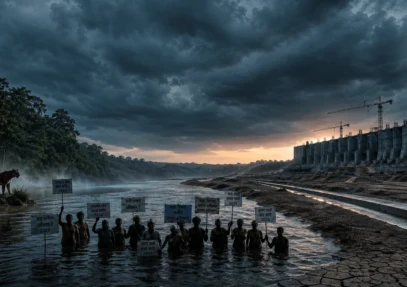
The term ‘Jal Satyagraha’ was first used during the Narmada Bachao Andolan (NBA). This movement, led by activists like Medha Patkar, protested against the displacement of people due to the construction of large dams on the Narmada River. Jal Satyagraha was a form of protest where villagers stood inRead more
The term ‘Jal Satyagraha’ was first used during the Narmada Bachao Andolan (NBA).
This movement, led by activists like Medha Patkar, protested against the displacement of people due to the construction of large dams on the Narmada River. Jal Satyagraha was a form of protest where villagers stood in water for extended periods to oppose rising water levels caused by dam projects.
So, the correct answer is: Narmada Bachao Andolan.
See lessConsider the following statements: Statement-I: India, despite having uranium deposits, depends on coal for most of its electricity production. Statement-II: Uranium, enriched to the extent of at least 60%, is required for the production of electricity. Which one of the following ...Read more
Please login to vote and see the results.
Let's analyze each statement: Statement-I: India, despite having uranium deposits, depends on coal for most of its electricity production. This statement is correct. Although India has some uranium deposits, they are not sufficient to meet the country’s nuclear energy needs. As a result, India imporRead more
Let’s analyze each statement:
Statement-I: India, despite having uranium deposits, depends on coal for most of its electricity production. This statement is correct. Although India has some uranium deposits, they are not sufficient to meet the country’s nuclear energy needs. As a result, India imports uranium and heavily relies on coal, which is abundant and cheaper, for most of its electricity production.
Statement-II: Uranium, enriched to the extent of at least 60%, is required for the production of electricity. This statement is incorrect. For nuclear reactors used in electricity production, uranium is typically enriched to about 3-5% U-235. Enrichment levels of 60% and above are considered high and are used for research reactors or weapons-grade material, not for commercial electricity generation.
Therefore, the correct answer is: Statement-I is correct but Statement-II is incorrect.
See lessHow does an electromagnet work?
An electromagnet works based on the principle that an electric current passing through a conductor generates a magnetic field around it. By utilizing this phenomenon, an electromagnet creates a controllable magnetic field. Here's a detailed explanation of how it works: Components of an ElectromagnetRead more
An electromagnet works based on the principle that an electric current passing through a conductor generates a magnetic field around it. By utilizing this phenomenon, an electromagnet creates a controllable magnetic field. Here’s a detailed explanation of how it works:
An electromagnet is a type of magnet whose magnetic field is produced by an electric current, making it a powerful and adaptable tool in science and engineering.
See lessWhat is the function of the digestive system?
The digestive system is responsible for breaking down food into nutrients, which the body can absorb and use for energy, growth, and cell repair. It also plays a crucial role in eliminating waste. Here's a breakdown of its main functions: Functions of the Digestive System Ingestion: The process begiRead more
The digestive system is responsible for breaking down food into nutrients, which the body can absorb and use for energy, growth, and cell repair. It also plays a crucial role in eliminating waste. Here’s a breakdown of its main functions:
Each part of the digestive system, from the mouth to the anus, plays a specific role in ensuring that the body gets the nutrients it needs and effectively eliminates waste.
See lessWhat role does pop culture play in shaping youth identity?
how to prove that for every non negative n , sqrt(n) is either an integer or an irrational number .
For every non-negative integer \( n \), the square root \( \sqrt{n} \) is either an integer or an irrational number. Proof (by contradiction): Suppose \( \sqrt{n} \) is rational but **not** an integer. Then there exist integers \( a \) and \( b \), with \( \gcd(a, b) = 1 \) and \( b \ne 1 \), such tRead more
For every non-negative integer \( n \), the square root \( \sqrt{n} \) is either an integer or an irrational number.
Proof (by contradiction):
Suppose \( \sqrt{n} \) is rational but **not** an integer.
Then there exist integers \( a \) and \( b \), with \( \gcd(a, b) = 1 \) and \( b \ne 1 \), such that:
\[
\sqrt{n} = \frac{a}{b}
\]
Squaring both sides:
\[
n = \left( \frac{a}{b} \right)^2 = \frac{a^2}{b^2}
\Rightarrow a^2 = n b^2
\]
This implies that \( b^2 \) divides \( a^2 \). But since \( \gcd(a, b) = 1 \), it follows that \( \gcd(a^2, b^2) = 1 \) as well. Hence, the only way \( b^2 \mid a^2 \) can be true is if \( b^2 = 1 \), which means:
\[
b = 1
\Rightarrow \sqrt{n} = \frac{a}{1} = a \in \mathbb{Z}
\]
This contradicts our assumption that \( \sqrt{n} \) is rational **but not** an integer.
Conclusion:
If \( \sqrt{n} \) is rational, then it must be an integer.
Therefore, if \( \sqrt{n} \) is not an integer, it must be irrational.
\[
\boxed{\text{For all } n \in \mathbb{N}_0,\ \sqrt{n} \in \mathbb{Z} \cup (\mathbb{R} \setminus \mathbb{Q})}
\]
What is “chain-of-thought” ?
Chain-of-thought (CoT) is a reasoning technique used in artificial intelligence (AI) and human cognition to break down complex problems into smaller, logical steps. It helps models, like me, generate more accurate and coherent responses by explicitly outlining intermediate reasoning steps rather thaRead more
Chain-of-thought (CoT) is a reasoning technique used in artificial intelligence (AI) and human cognition to break down complex problems into smaller, logical steps. It helps models, like me, generate more accurate and coherent responses by explicitly outlining intermediate reasoning steps rather than jumping directly to an answer.
In AI, Chain-of-Thought prompting refers to a method where a model is guided to think step-by-step before arriving at a conclusion. This improves its ability to solve math problems, logical reasoning tasks, and commonsense reasoning challenges.
For example:
Without CoT:
Q: If a person buys a pencil for $1.50 and an eraser for $0.50, how much do they spend in total?
A: $2.00
With CoT:
Q: If a person buys a pencil for $1.50 and an eraser for $0.50, how much do they spend in total?
By explicitly listing steps, AI reduces errors and enhances interpretability.
In everyday life, people use chain-of-thought reasoning to solve problems, make decisions, and analyze situations methodically. For example, when planning a trip, you might consider:
This structured approach ensures well-thought-out decisions rather than impulsive choices.
Vaccines work by training the immune system to recognize and fight specific pathogens (such as viruses or bacteria) without causing the disease itself. Here's how vaccines typically work: 1. Introduction of Antigen: A vaccine contains a harmless part of a pathogen, known as an antigen, which could bRead more
Vaccines work by training the immune system to recognize and fight specific pathogens (such as viruses or bacteria) without causing the disease itself. Here’s how vaccines typically work:
1. Introduction of Antigen: A vaccine contains a harmless part of a pathogen, known as an antigen, which could be a dead or weakened form of the pathogen, a piece of the pathogen (like a protein), or a blueprint for making that piece (such as messenger RNA in some vaccines). This antigen stimulates the immune system.
2. Immune Response Activation: When the vaccine is administered (usually by injection), the immune system recognizes the antigen as foreign and activates an immune response. This includes the production of antibodies (proteins that can specifically bind to the pathogen) and the activation of T-cells (cells that help destroy infected cells or assist other immune cells).
3. Memory Formation: After the immune response is triggered, the body generates memory cells (memory B-cells and memory T-cells). These cells “remember” the specific antigen and remain in the body long after the vaccination.
4. Protection Upon Exposure: If the person is later exposed to the actual pathogen (e.g., a virus or bacterium), their immune system recognizes it quickly because of the memory cells. The immune system can then mount a rapid and effective response, producing antibodies to neutralize the pathogen and activate immune cells to destroy infected cells, thus preventing illness or reducing the severity of the disease.
In summary, vaccines prime the immune system by exposing it to an antigen without causing illness, helping the body “learn” how to defend itself if it encounters the real pathogen in the future.
See lessWho invented badminton?
Badminton, as a modern sport, was developed by British officers in the mid-19th century in British India. However, its origins can be traced back to ancient games played in various civilizations. Here’s a detailed timeline: Ancient Origins: 1. Battledore and Shuttlecock: Played in ancient Greece, ChRead more
Badminton, as a modern sport, was developed by British officers in the mid-19th century in British India. However, its origins can be traced back to ancient games played in various civilizations. Here’s a detailed timeline:
Ancient Origins:
1. Battledore and Shuttlecock:
Played in ancient Greece, China, and India.
The goal was to keep a shuttlecock (made of feathers) in the air using paddles called battledores.
2. Poona (India):
A game called “Poona” was played in India, using rackets and a shuttlecock.
British officers stationed in India learned and adapted this game.
Modern Badminton:
Invention:
The modern version of badminton was formalized in 1873 at the Duke of Beaufort’s estate in Badminton, Gloucestershire, England. The game was named after this location.
British officers brought the game from India to England and popularized it as a pastime among the elite.
First Rules:
In 1877, the Bath Badminton Club in England established the first official rules of the game.
Governing Body:
In 1934, the International Badminton Federation (IBF) (now known as the Badminton World Federation (BWF)) was founded to standardize and promote the sport globally.
While the roots of badminton lie in ancient games, the British officers in India played a crucial role in its development, and its modern form was established in England in the 19th century.
See less
The Ken-Betwa Link Project (KBLP) is no longer just a blueprint on a map; it is a massive, active engineering reality that serves as the vanguard for India’s National Perspective Plan (NPP) for inter-basin water transfer. Aimed at ending the ...
Patriot vs Nationalist: Introduction The words patriot and nationalist are often used as if they mean the same thing. Both express a strong connection to one’s country, both evoke pride, and both can inspire people to act in the name ...
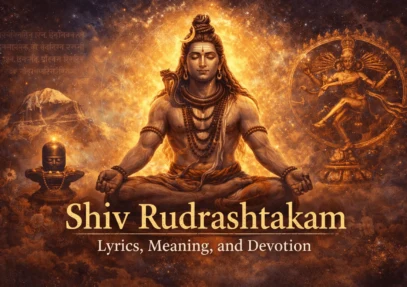
Introduction: The Eternal Hymn of Detachment and Devotion Shiv Rudrashtakam is one of the most profound Sanskrit hymns dedicated to Lord Shiva, the supreme yogi, destroyer of ignorance, and embodiment of pure consciousness. Composed by Adi Shankaracharya, this eight-verse stotra ...
A Prime-Adam Number is defined as a positive number that fulfills two conditions simultaneously: it is a prime number and also an Adam number. For example, take the number 13; its reverse is 31. The square of 13 is 169, and the ...
Introduction The 74th Miss Universe pageant, held on November 21, 2025, at the Impact Challenger Hall in Nonthaburi, Thailand, set a new benchmark in global beauty contests. Not merely a showcase of beauty and fashion, this year’s event stood as ...
A Keith number is an n-digit number that appears as a term in a sequence, where the first n terms are its own digits, and each following term is the sum of the previous n terms. For example, 197 is ...
In the history of India, August 15, 1947, is often referred to as “The Red Letter Day.” This is the day India gained independence from British colonial rule. It marked the end of nearly 200 years of British domination and the beginning of a new chapter as a sovereign nation. The term “Red Letter DayRead more
In the history of India, August 15, 1947, is often referred to as “The Red Letter Day.” This is the day India gained independence from British colonial rule. It marked the end of nearly 200 years of British domination and the beginning of a new chapter as a sovereign nation.
The term “Red Letter Day” is used to highlight the significance of this event, as it was a pivotal moment in India’s history, celebrated annually as Independence Day.
See less