Consider the following statements regarding the Indian squirrels: [2023] 1. They build nests by ...Read more
Poll Results
Please login to vote and see the results.
Sign up to our innovative Q&A platform to pose your queries, share your wisdom, and engage with a community of inquisitive minds.
Log in to our dynamic platform to ask insightful questions, provide valuable answers, and connect with a vibrant community of curious minds.
Forgot your password? No worries, we're here to help! Simply enter your email address, and we'll send you a link. Click the link, and you'll receive another email with a temporary password. Use that password to log in and set up your new one!
Please briefly explain why you feel this question should be reported.
Please briefly explain why you feel this answer should be reported.
Please briefly explain why you feel this user should be reported.
At Qukut, our mission is to bridge the gap between knowledge seekers and knowledge sharers. We strive to unite diverse perspectives, fostering understanding and empowering everyone to contribute their expertise. Join us in building a community where knowledge flows freely and growth is limitless.
What were the major invention of the Elizabethan age??
The Elizabethan Age (1558–1603) was a period of significant cultural, artistic, and technological development. Some of the major inventions and innovations from this time include: 1. The Printing Press: Although invented in the 15th century by Johannes Gutenberg, the printing press saw widespread usRead more
The Elizabethan Age (1558–1603) was a period of significant cultural, artistic, and technological development. Some of the major inventions and innovations from this time include:
1. The Printing Press: Although invented in the 15th century by Johannes Gutenberg, the printing press saw widespread use during the Elizabethan era. It revolutionized the production of books, making literature and knowledge more accessible, contributing to the spread of ideas such as the Renaissance and the Reformation.
2. The Telescope: While the telescope as we know it was developed later, in the late 16th century, the basic principles of the telescope were laid down during the Elizabethan era. This era saw significant advancements in optics, and figures like Thomas Harriot made contributions toward improving early telescopic lenses.
3. The Mariner’s Compass: Though the compass itself was invented earlier, its use in navigation became more prominent during the Elizabethan Age. Improved navigational tools were crucial for the Age of Exploration, as English sailors embarked on voyages to the New World and Asia.
4. The Mechanical Clock: The development of more accurate and portable clocks continued during the Elizabethan period. This period saw the refinement of clock-making, particularly in terms of precision and the creation of clocks that were smaller and more reliable.
5. Firearms: During this era, significant advancements were made in firearms technology, particularly in the design of guns and cannons. The matchlock musket, a key firearm in European warfare, was in use during the period.
6. The Galleon: The development of the galleon, a large, multi-decked sailing ship, was significant during the Elizabethan era. These ships were crucial for trade, exploration, and warfare, particularly in the defeat of the Spanish Armada in 1588.
While the Elizabethan Age is better known for its cultural and artistic achievements (such as Shakespeare’s works), it was also a time of innovation in science, technology, and exploration.
See lessConsider the following statements: ...Read more
Please login to vote and see the results.
Infrastructure Investment Trusts (InVITs) gather funds from investors, which are subsequently directed into infrastructure projects. As pooled investment vehicles, they function similarly to mutual funds. However, while mutual funds predominantly invest in stocks and bonds, InVITs focus on infrastruRead more
Infrastructure Investment Trusts (InVITs) gather funds from investors, which are subsequently directed into infrastructure projects. As pooled investment vehicles, they function similarly to mutual funds. However, while mutual funds predominantly invest in stocks and bonds, InVITs focus on infrastructure-related ventures. The returns generated by InVITs are distributed to investors through four primary methods: interest on capital, dividends, rental income, and repayment of capital. Previously, interest, dividends, and rental income earned by unit holders were taxable, but repayment of capital was exempt from tax. However, the Finance Act of 2023 introduced a provision to tax certain portions of capital repayment in specific cases, making Statement 1 incorrect. Additionally, the Finance Act of 2021 amended the SARFAESI Act of 2002 to recognize pooled investment vehicles, including REITs and InVITs, as borrowers under the Act, making Statement 2 correct.
Therefore, the correct answer is Statement-I is incorrect but Statement-II is correct.
See lessWhat Can a Personal Development Coach in Palm Beach Do for You?
A personal development coach in Palm Beach helps individuals unlock their full potential by providing guidance, motivation, and strategies for self-improvement. Whether you’re looking to enhance your career, build confidence, improve relationships, or set and achieve meaningful goals, a coach can prRead more
A personal development coach in Palm Beach helps individuals unlock their full potential by providing guidance, motivation, and strategies for self-improvement. Whether you’re looking to enhance your career, build confidence, improve relationships, or set and achieve meaningful goals, a coach can provide the clarity and structure needed for success. For more information, please visit: https://www.vanessa-gray.com/
See lessFill in the blank: 15, 30, 45, 60, ___, 90
next term is 75
next term is 75
See lessWhat are the different types of energy transformations?
Energy transformations occur when energy changes from one form to another. These transformations are essential for various processes in nature, technology, and everyday life. Here are the primary types of energy transformations: 1. Mechanical to Thermal Energy Description: Mechanical energy (kineticRead more
Energy transformations occur when energy changes from one form to another. These transformations are essential for various processes in nature, technology, and everyday life. Here are the primary types of energy transformations:
Energy transformations play a fundamental role in enabling technological applications and sustaining life on Earth. Understanding these processes is crucial for improving efficiency in energy use and developing renewable energy technologies.
See lessHomo sapiens first emerged during which period?
Please login to vote and see the results.
Homo sapiens first appeared in the late Paleolithic period, around 300,000 years ago, characterized by advanced tool-making and early forms of symbolic communication.
See lessWhat are the main teachings of Confucianism?
Confucianism, rooted in the teachings of Confucius (551–479 BCE), is a philosophical and ethical system that emphasizes personal development, societal harmony, and moral integrity. Below are its main teachings: Ren (Humaneness or Benevolence) Core Idea: The concept of Ren emphasizes compassion, empaRead more
Confucianism, rooted in the teachings of Confucius (551–479 BCE), is a philosophical and ethical system that emphasizes personal development, societal harmony, and moral integrity. Below are its main teachings:
Confucianism focuses on improving individual character to create a just and harmonious society. Its teachings remain relevant and influential in ethics, governance, and interpersonal relationships worldwide.
See lessWhat are classical languages in India?
The classical languages of India are Sanskrit, Tamil, Telugu, Kannada, Malayalam, Odia, Marathi, Pali, Prakrit, Assamese, and Bengali. How were they recognized? Tamil: The first classical language of India, declared in 2004 Sanskrit: Recognized in 2005 Telugu: Recognized in 2008 Kannada: RecognizedRead more
The classical languages of India are Sanskrit, Tamil, Telugu, Kannada, Malayalam, Odia, Marathi, Pali, Prakrit, Assamese, and Bengali.
How were they recognized?
Tamil: The first classical language of India, declared in 2004
Sanskrit: Recognized in 2005
Telugu: Recognized in 2008
Kannada: Recognized in 2008
Malayalam: Recognized in 2013
Odia: Recognized in 2014
Marathi, Pali, Prakrit, Assamese, and Bengali: Recognized in 2024
What is the theory of relativity?
The theory of relativity, developed by Albert Einstein in the early 20th century, revolutionized our understanding of space, time, and gravity. It consists of two main parts: special relativity and general relativity. Special Relativity (1905) This theory deals with the physics of objects moving atRead more
The theory of relativity, developed by Albert Einstein in the early 20th century, revolutionized our understanding of space, time, and gravity. It consists of two main parts: special relativity and general relativity.
This theory deals with the physics of objects moving at constant speeds, particularly those approaching the speed of light. Its core concepts include:

Source: Physics Magazine
Key consequences of special relativity:
This theory extends special relativity to include acceleration and introduces a new understanding of gravity. Its core ideas are:
Key consequences of general relativity:
Einstein’s theories have been confirmed through numerous experiments and observations, such as the bending of light by gravity and the precise timekeeping of GPS satellites, which must account for both special and general relativity effects. These theories form the foundation of modern physics, especially in understanding the cosmos, from black holes to the expansion of the universe.
See lessWhy is the Sun at a static position and planets revolve around it??
The Sun appears static while the planets revolve around it due to the principles of gravity and inertia as explained by Newton's laws of motion and Kepler's laws of planetary motion. Here’s a detailed explanation: 1. The Sun's Gravity Holds the Planets in Orbit: The Sun has an enormous mass, makingRead more
The Sun appears static while the planets revolve around it due to the principles of gravity and inertia as explained by Newton’s laws of motion and Kepler’s laws of planetary motion. Here’s a detailed explanation:
1. The Sun’s Gravity Holds the Planets in Orbit:
The Sun has an enormous mass, making it the most massive object in the solar system.
Due to its mass, the Sun exerts a strong gravitational pull on all the planets, keeping them in orbit around it.
The force of gravity decreases with distance, so planets farther from the Sun experience a weaker gravitational pull.
2. The Balance of Gravitational Force and Inertia:
Planets are in constant motion due to their inertia (an object’s tendency to keep moving in a straight line unless acted upon by an external force).
The Sun’s gravity continuously pulls the planets towards itself, preventing them from flying off into space.
This balance between the Sun’s gravitational pull and the planets’ inertia creates a stable orbit, causing the planets to revolve around the Sun in elliptical paths.
3. Why the Sun Appears Static:
The Sun is not completely static—it also moves slightly due to the gravitational pull of the planets, particularly massive ones like Jupiter and Saturn. However, this movement is minimal compared to the planets’ orbits.
The center of mass of the solar system (the barycenter) is very close to the Sun due to its massive size, making it seem stationary relative to the planets.
4. Role of Conservation of Angular Momentum:
The solar system was formed from a rotating cloud of gas and dust. As the cloud collapsed under gravity, the conservation of angular momentum caused the planets to form in orbits around the Sun.
This rotation and conservation of angular momentum are why planets continue to revolve around the Sun instead of falling into it.
5. The Heliocentric Model:
This understanding is based on the heliocentric model, proposed by Nicolaus Copernicus and later supported by Galileo and Kepler, which places the Sun at the center of the solar system.
In summary, the combination of the Sun’s gravitational force, the planets’ inertia, and the principles of angular momentum explains why the Sun remains at a relatively static position while planets revolve around it.
See lessHow Can GPS Tracking in Sydney Improve Fleet Efficiency?
GPS tracking in Sydney has become a game-changer for businesses looking to boost their fleet efficiency. With GPS tracking technology, fleet managers gain real-time insight into vehicle locations, allowing them to monitor and manage operations with precision. This technology is especially beneficialRead more
GPS tracking in Sydney has become a game-changer for businesses looking to boost their fleet efficiency. With GPS tracking technology, fleet managers gain real-time insight into vehicle locations, allowing them to monitor and manage operations with precision. This technology is especially beneficial in Sydney, where traffic congestion can lead to significant delays. With GPS tracking, businesses can optimize routes, avoid high-traffic areas, and reduce travel time, ensuring timely deliveries and happier customers.
Beyond navigation, GPS tracking in Sydney also helps cut fuel costs by reducing idle time and ensuring vehicles take the most efficient routes. It enhances driver accountability by monitoring driving behaviors like speed, braking, and acceleration, which can lower accident risks and reduce maintenance needs.
By adopting GPS tracking, companies can also boost customer satisfaction. Real-time tracking allows businesses to provide customers with accurate arrival estimates, enhancing service quality. In summary, GPS tracking in Sydney enables better decision-making, reduces operational costs, and supports safer driving practices, making it a valuable tool for any business managing a fleet in the city.
For more information, please visit: https://www.netcorp.com.au/
See lessWhat will be the output of substring(0,0) in java?
In Java, the substring(int beginIndex, int endIndex) method returns a new string starting from beginIndex (inclusive) and ending at endIndex (exclusive). Example: String str = "example"; System.out.println(str.substring(0, 0)); Output: "" This means an empty string is returned. Explanation: beginIndRead more
In Java, the substring(int beginIndex, int endIndex) method returns a new string starting from beginIndex (inclusive) and ending at endIndex (exclusive).
Example:
String str = “example”;
System.out.println(str.substring(0, 0));
Output: “”
This means an empty string is returned.
Explanation:
beginIndex = 0 (inclusive)
endIndex = 0 (exclusive)
No characters are selected, so the result is an empty string “”.
See lessआजकल, ज़्यादातर युवा सरकारी नौकरी पाने की चाहत रखते हैं, लेकिन सभी को सरकारी नौकरी नहीं मिल पाती. ऐसे में, युवाओं को क्या करना चाहिए ?
Business
Business
See lessHow can advanced control algorithms leveraging machine learning be integrated into multi-agent robotic systems for real-time adaptive path planning in dynamic, uncertain environments, while ensuring robustness, fault tolerance, and minimal computational overhead?
Integrating advanced control algorithms leveraging machine learning (ML) into multi-agent robotic systems for real-time adaptive path planning in dynamic, uncertain environments involves a strategic combination of several techniques to address key challenges such as robustness, fault tolerance, andRead more
Integrating advanced control algorithms leveraging machine learning (ML) into multi-agent robotic systems for real-time adaptive path planning in dynamic, uncertain environments involves a strategic combination of several techniques to address key challenges such as robustness, fault tolerance, and computational efficiency. Here’s a detailed approach to achieve this:
1. Dynamic, Uncertain Environments
In dynamic environments, the obstacles, agent states, and tasks are constantly changing. Uncertainty can arise due to sensor noise, unpredictable agent behavior, or external factors. To handle these challenges:
Reinforcement Learning (RL): Use RL algorithms, such as Deep Q-Learning (DQN) or Proximal Policy Optimization (PPO), for agents to learn optimal path planning strategies based on experience. The RL framework helps adapt the agents’ behavior in response to environmental changes by continuously improving their decision-making policy.
Model Predictive Control (MPC): Incorporate MPC to optimize the agents’ future path while accounting for constraints, dynamic obstacles, and uncertainties. MPC can be adapted by incorporating real-time learning, enabling it to handle unmodeled dynamics and disturbances in the environment.
2. Real-Time Adaptive Path Planning
Real-time path planning is essential to dynamically adjust the agents’ movements to the constantly changing environment.
Federated Learning: Multi-agent systems can adopt federated learning, where agents individually train models based on their local observations and share only the model updates, preserving privacy and reducing communication costs. This ensures that path planning models remain adaptable to each agent’s specific environment.
Multi-Agent Coordination: Use centralized or decentralized coordination algorithms like Consensus-based Approaches, Game Theory, or Distributed Optimization to allow agents to adapt their trajectories in real-time without conflicts while considering global and local objectives.
3. Robustness and Fault Tolerance
Ensuring robustness against environmental disturbances, model inaccuracies, or communication failures is critical.
Adaptive Robust Control: Incorporate adaptive robust control techniques where the system dynamically adjusts to handle model mismatches and external disturbances, improving stability despite uncertainties.
Fault Detection and Recovery: Implement fault detection algorithms using anomaly detection via unsupervised learning techniques like autoencoders or one-class SVM. Once a fault is detected, the system should be able to switch to a backup policy or reconfigure the agent’s path without significant disruption.
Redundancy and Multi-Path Planning: Design algorithms with fault tolerance in mind by allowing agents to fall back on alternate paths or collaboration strategies in case of failure, ensuring continued operation.
4. Minimal Computational Overhead
Reducing the computational burden is crucial for real-time systems, especially in multi-agent setups.
Model Compression and Pruning: Use model compression techniques (e.g., quantization, weight pruning) to reduce the complexity and size of the ML models, making them more computationally efficient without sacrificing performance.
Edge Computing: Instead of relying on a central server, deploy lightweight ML models on edge devices (such as onboard computers or sensors), allowing for decentralized decision-making and reducing latency in path planning.
Event-Driven Execution: Use event-driven algorithms where computations are only triggered when significant changes occur (e.g., when new obstacles are detected or when a deviation from the planned path is necessary), reducing unnecessary computations.
5. Integration of Control Algorithms with ML
The integration of traditional control algorithms with machine learning can further enhance the adaptability and robustness of the multi-agent system.
Control-Learning Hybrid Approaches: Combine classical control algorithms (like PID controllers or LQR) with ML-based strategies. For instance, ML can be used to tune or adapt parameters of traditional controllers based on real-time data to improve path planning performance.
Transfer Learning: Use transfer learning to quickly adapt trained models from one environment to another, enabling faster learning when agents are deployed in different but similar environments, enhancing efficiency in large-scale systems.
Sim-to-Real Transfer: Incorporate simulation-based learning where models are first trained in a simulated environment with known uncertainties and then transferred to the real world using domain adaptation techniques. This approach minimizes the risk of failure in the real-world deployment.
6. Collaborative Learning and Decision Making
Collaboration among multiple agents ensures efficient path planning while mitigating the effects of uncertainties and faults.
Cooperative Path Planning Algorithms: Use swarm intelligence or cooperative control strategies where agents share information and adjust their paths to achieve a common goal, even in the presence of obstacles, environmental uncertainty, and dynamic changes.
Self-Organizing Maps (SOM) and Graph-based Techniques: Incorporate graph-based algorithms such as A or Dijkstra’s algorithm* combined with SOM for spatial reasoning, enabling agents to optimize their trajectories in real-time.
By integrating advanced control algorithms like MPC, RL, and hybrid control-learning approaches with machine learning techniques such as federated learning and reinforcement learning, multi-agent robotic systems can achieve adaptive path planning in dynamic, uncertain environments. Ensuring robustness and fault tolerance is accomplished through fault detection, redundancy, and robust control techniques. To maintain minimal computational overhead, techniques like model pruning, edge computing, and event-driven execution are employed. This combination allows for the real-time, efficient operation of multi-agent systems while ensuring safety and reliability in uncertain environments.
See lessHow does Islam view the concept of predestination?
What would you do if you had unlimited time and resources?
If I had unlimited time and resources, my focus would be on bringing about social reform through education. My goal would be to ensure that every individual, regardless of their economic, social, or geographical background, has access to quality education. I would start by working towards providingRead more
If I had unlimited time and resources, my focus would be on bringing about social reform through education. My goal would be to ensure that every individual, regardless of their economic, social, or geographical background, has access to quality education.
I would start by working towards providing equal educational opportunities, particularly in rural areas, backward regions, and urban slums, where children often miss out on education. I would establish schools and learning centers that not only provide academic education but also teach life skills, moral values, and career guidance, helping children build a holistic future.
Furthermore, I would initiate a strong movement to reform the education system, making it more inclusive, progressive, and adaptable to the changing world. This would involve incorporating practical knowledge, fostering critical thinking, and encouraging creativity. The ultimate aim would be to empower the youth, provide them with the tools to succeed, and create a more enlightened, equal, and progressive society.
One key tool I would use to achieve this vision is Qukut, a platform where individuals can share knowledge, ask questions, and engage in meaningful discussions. Qukut can serve as a bridge to connect experts, teachers, and learners from diverse backgrounds, facilitating a continuous exchange of ideas and knowledge. It would provide an opportunity for people to not only learn from one another but also contribute to the educational growth of society. Through Qukut, I aim to create a global community of learners and educators who are committed to spreading knowledge and creating positive change.
See lessWhat is the role of the nervous system in the body?
The nervous system plays a crucial role in coordinating and regulating various functions of the body. It is responsible for transmitting signals between different parts of the body, allowing for communication, control, and integration of bodily functions. The nervous system consists of the brain, spRead more
The nervous system plays a crucial role in coordinating and regulating various functions of the body. It is responsible for transmitting signals between different parts of the body, allowing for communication, control, and integration of bodily functions. The nervous system consists of the brain, spinal cord, and a network of nerves that spread throughout the body.
The nervous system is essential for nearly all aspects of life, from basic functions like breathing and heart rate regulation to complex cognitive processes like memory, learning, and emotion. It enables the body to react to changes in the environment and maintain a stable internal state, ensuring overall health and survival.
See lessWhat is the water cycle?
The process of change of water from one state to another that occurs naturally in the environment is called the water cycle.The water changes to water vapour from the water bodies like ocean, season, rivers etc due to the radiation of the Sun and the internal heat of the Earth (evaporation ) and cloRead more
The process of change of water from one state to another that occurs naturally in the environment is called the water cycle.The water changes to water vapour from the water bodies like ocean, season, rivers etc due to the radiation of the Sun and the internal heat of the Earth (evaporation ) and clouds get formed and then due to the fall in temperature of the water vapour the process of condensation (change of vapour to liquid) takes place and the water falls back as snow (solidification) and rain back in the earth. It is also called Hydrological cycle
See lessWhat is photosynthesis, and why is it important?
Photosynthesis is a chemical process that plants, algae, and some bacteria use to create food and energy. It's important because it: Provides food and energy Photosynthesis is the primary source of food and energy for all living organisms. Animals that eat plants get their energy from the sugar storRead more
Photosynthesis is a chemical process that plants, algae, and some bacteria use to create food and energy. It’s important because it:
Provides food and energy
Photosynthesis is the primary source of food and energy for all living organisms. Animals that eat plants get their energy from the sugar stored in plants, and animals that eat those animals get the same energy.
Produces oxygen
Photosynthesis releases oxygen into the atmosphere, which all living species need.
Regulates carbon dioxide and oxygen levels
Photosynthesis helps keep the levels of carbon dioxide and oxygen in an ecosystem in check.
Influences agricultural crop productivity
The rate of photosynthesis affects how productive agricultural crops are.
Creates fossil fuels
The energy stored in fossil fuels like petroleum, natural gas, and coal comes from the sun via photosynthesis.
Here’s how photosynthesis works:
1. Light-dependent reactions
Chlorophyll, a pigment in plants, absorbs light energy from the sun. This breaks down water molecules to create energy and oxygen.
2. Calvin cycle
The energy created in the light-dependent reactions fuels the Calvin cycle, a light-independent reaction that converts carbon dioxide into glucose.
What is the continental drift theory??
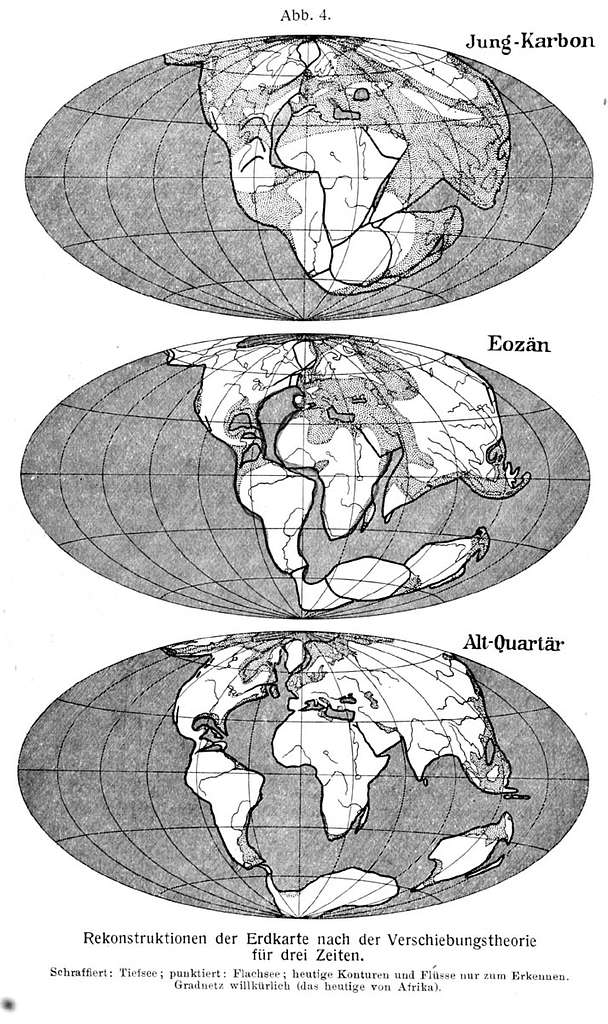
The Continental Drift Theory is a geological hypothesis proposed by Alfred Wegener in 1912. It suggests that the Earth's continents were once part of a single, massive supercontinent called Pangaea, which began to break apart approximately 200 million years ago. Over time, the fragments drifted to tRead more
The Continental Drift Theory is a geological hypothesis proposed by Alfred Wegener in 1912. It suggests that the Earth’s continents were once part of a single, massive supercontinent called Pangaea, which began to break apart approximately 200 million years ago. Over time, the fragments drifted to their current positions on the Earth’s surface.

Source: Cambridge University Press
In essence, the Continental Drift Theory was a groundbreaking idea that transformed geology and paved the way for our current understanding of Earth’s structure and the movement of its continents.
See lessThe Indian city known as the “Scotland of the East” is Shillong, the capital of Meghalaya. Why is Shillong called the Scotland of the East? 1. Natural Beauty: The lush green hills, rolling meadows, and mist-covered landscapes resemble the Scottish Highlands. 2. Climate: Shillong has a cool, pleasantRead more
The Indian city known as the “Scotland of the East” is Shillong, the capital of Meghalaya.
Why is Shillong called the Scotland of the East?
1. Natural Beauty: The lush green hills, rolling meadows, and mist-covered landscapes resemble the Scottish Highlands.
2. Climate: Shillong has a cool, pleasant climate throughout the year, similar to Scotland.
3. Colonial Influence: During British rule, the picturesque beauty and weather of Shillong reminded the British settlers of Scotland, leading to the nickname.
4. Hills and Valleys: The Khasi and Jaintia hills surrounding Shillong add to its charm and scenic appeal.
Shillong remains a popular tourist destination for nature lovers and those seeking a peaceful retreat in Northeast India.
See lessWhat historical and archaeological evidence supports Gudimallam Shiva Lingam as one of the oldest lingams in existence? What is its cultural and spiritual significance, and why is the temple renowned?
The Gudimallam Shiva Lingam, located in Andhra Pradesh, India, is considered one of the oldest and most significant Shiva lingams in existence, with historical, archaeological, cultural, and spiritual importance. Historical and Archaeological Evidence Age and Dating: The Gudimallam Shiva Lingam is bRead more
The Gudimallam Shiva Lingam, located in Andhra Pradesh, India, is considered one of the oldest and most significant Shiva lingams in existence, with historical, archaeological, cultural, and spiritual importance.
Historical and Archaeological Evidence
Cultural and Spiritual Significance
Why the Temple is Renowned
The Gudimallam Shiva Lingam stands as a testament to ancient Shaivite worship, offering valuable insights into the evolution of religious practices, temple architecture, and spiritual iconography. Its archaeological evidence, along with its profound cultural and spiritual significance, makes it one of the oldest and most revered Shiva lingams in existence.
See lessWhat exactly is article 370?
What is the Renaissance period?
The Renaissance is a period of history and a European cultural movement covering the 15th and 16th centuries. It marked the transition from the Middle Ages to modernity and was characterized by an effort to revive and surpass the ideas and achievements of classical antiquity. Associated with great sRead more
The Renaissance is a period of history and a European cultural movement covering the 15th and 16th centuries. It marked the transition from the Middle Ages to modernity and was characterized by an effort to revive and surpass the ideas and achievements of classical antiquity. Associated with great social change in most fields and disciplines, including art, architecture, politics, literature, exploration and science, the Renaissance was first centered in the Republic of Florence, then spread to the rest of Italy and later throughout Europe. The term rinascita (“rebirth”) first appeared in Lives of the Artists (c. 1550) by Giorgio Vasari, while the corresponding French word renaissance was adopted into English as the term for this period during the 1830s.[4][b]
The Renaissance’s intellectual basis was founded in its version of humanism, derived from the concept of Roman humanitas and the rediscovery of classical Greek philosophy, such as that of Protagoras, who said that “man is the measure of all things”. Although the invention of metal movable type sped the dissemination of ideas from the later 15th century, the changes of the Renaissance were not uniform across Europe: the first traces appear in Italy as early as the late 13th century, in particular with the writings of Dante and the paintings of Giotto.
As a cultural movement, the Renaissance encompassed innovative flowering of literary Latin and an explosion of vernacular literatures, beginning with the 14th-century resurgence of learning based on classical sources, which contemporaries credited to Petrarch; the development of linear perspective and other techniques of rendering a more natural reality in painting; and gradual but widespread educational reform. It saw myriad artistic developments and contributions from such polymaths as Leonardo da Vinci and Michelangelo, who inspired the term “Renaissance man”.[5][6] In politics, the Renaissance contributed to the development of the customs and conventions of diplomacy, and in science to an increased reliance on observation and inductive reasoning. The period also saw revolutions in other intellectual and social scientific pursuits, as well as the introduction of modern banking and the field of accounting
See lessThe ‘Buddhist Circuit’ includes which of the following major sites?
Please login to vote and see the results.
What is the difference between AC and DC electricity?
The difference between AC (Alternating Current) and DC (Direct Current) electricity lies in the direction in which the current flows: 1. Alternating Current (AC): Direction: The current reverses direction periodically. Frequency: It has a frequency (e.g., 50 Hz or 60 Hz, depending on the country), mRead more
The difference between AC (Alternating Current) and DC (Direct Current) electricity lies in the direction in which the current flows:
1. Alternating Current (AC):
Direction: The current reverses direction periodically.
Frequency: It has a frequency (e.g., 50 Hz or 60 Hz, depending on the country), meaning the current changes direction multiple times per second.
Voltage: Can be easily transformed to different voltages using transformers.
Usage: Commonly used in households and industries for power supply because it is more efficient for transmitting electricity over long distances.
2. Direct Current (DC):
Direction: The current flows in one constant direction.
Frequency: It has no frequency because the current doesn’t alternate.
Voltage: Typically used in low-voltage applications but can be converted to higher voltages if needed.
Usage: Found in batteries, solar panels, and electronic devices like laptops and smartphones, as they require a stable and consistent voltage.
Each type of current has specific applications based on its characteristics and efficiency in particular scenarios.
See lessHow do sound waves travel through different mediums?
Sound waves travel through different mediums (such as solids, liquids, and gases) by causing particles in the medium to vibrate. The way sound waves propagate depends on the properties of the medium, including its density, elasticity, and temperature. Here's how sound waves travel through each mediuRead more
Sound waves travel through different mediums (such as solids, liquids, and gases) by causing particles in the medium to vibrate. The way sound waves propagate depends on the properties of the medium, including its density, elasticity, and temperature. Here’s how sound waves travel through each medium:
Sound travels fastest in solids (due to close particle proximity and high elasticity), slower in liquids, and slowest in gases (due to greater particle distance and less efficient energy transfer).
See lessWhat is the role of mitochondria in energy production?
Mitochondria, often referred to as the "powerhouses of the cell," play a crucial role in energy production by converting nutrients into a form of energy that cells can use, primarily adenosine triphosphate (ATP). This process occurs through a series of complex biochemical reactions, primarily in theRead more
Mitochondria, often referred to as the “powerhouses of the cell,” play a crucial role in energy production by converting nutrients into a form of energy that cells can use, primarily adenosine triphosphate (ATP). This process occurs through a series of complex biochemical reactions, primarily in the presence of oxygen. Here’s a breakdown of their role:
Mitochondria are the central organelles where cellular respiration occurs, a multi-step process involving the breakdown of glucose, fatty acids, and other nutrients to produce ATP. The key stages include:
a. Glycolysis (Occurs in the Cytoplasm)
Mitochondria are indispensable for efficient energy production in eukaryotic cells. By generating ATP through cellular respiration, they support nearly all energy-dependent processes that sustain life.
See lessWhat is the difference between a physical and a chemical change?
The difference between Physical and chemical changes are:- Physical changes These changes alter the shape, size, or state of a substance, but the substance's chemical composition remains the same. Physical changes are often reversible, and the original matter can be recovered. Examples of physical cRead more
The difference between Physical and chemical changes are:-
Physical changes
These changes alter the shape, size, or state of a substance, but the substance’s chemical composition remains the same. Physical changes are often reversible, and the original matter can be recovered. Examples of physical changes include melting ice, boiling water, and breaking a glass.
Chemical changes
These changes occur when one or more substances combine to create a new substance. Chemical changes are usually irreversible, and the original matter cannot be recovered. Examples of chemical changes include burning wood, cooking, and rusting.
Introduction: 10 most powerful bows In the modern world, we look to particle accelerators and nuclear payloads to define the limits of destructive power. But thousands of years ago, the thinkers of the Indian subcontinent conceptualized a terrifyingly advanced form ...
The Ken-Betwa Link Project (KBLP) is no longer just a blueprint on a map; it is a massive, active engineering reality that serves as the vanguard for India’s National Perspective Plan (NPP) for inter-basin water transfer. Aimed at ending the ...
Patriot vs Nationalist: Introduction The words patriot and nationalist are often used as if they mean the same thing. Both express a strong connection to one’s country, both evoke pride, and both can inspire people to act in the name ...
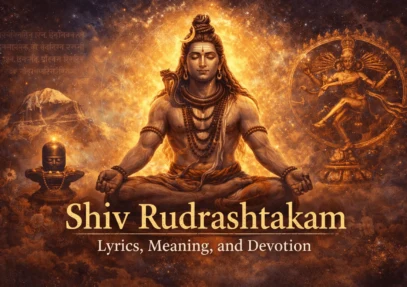
Introduction: The Eternal Hymn of Detachment and Devotion Shiv Rudrashtakam is one of the most profound Sanskrit hymns dedicated to Lord Shiva, the supreme yogi, destroyer of ignorance, and embodiment of pure consciousness. Composed by Adi Shankaracharya, this eight-verse stotra ...
A Prime-Adam Number is defined as a positive number that fulfills two conditions simultaneously: it is a prime number and also an Adam number. For example, take the number 13; its reverse is 31. The square of 13 is 169, and the ...
Introduction The 74th Miss Universe pageant, held on November 21, 2025, at the Impact Challenger Hall in Nonthaburi, Thailand, set a new benchmark in global beauty contests. Not merely a showcase of beauty and fashion, this year’s event stood as ...
It looks like the text is explaining the habits and habitats of Indian squirrels and verifying the correctness of certain statements about them. Here’s a brief summary: Habitat: Indian squirrels are found in India (south of the Vindhyas) and Sri Lanka, living in various environments like forests, grRead more
It looks like the text is explaining the habits and habitats of Indian squirrels and verifying the correctness of certain statements about them. Here’s a brief summary:
Based on this information, the correct answer to the question seems to be option only two.
See less