Sign Up

Sign up to our innovative Q&A platform to pose your queries, share your wisdom, and engage with a community of inquisitive minds.

Sign In

Log in to our dynamic platform to ask insightful questions, provide valuable answers, and connect with a vibrant community of curious minds.

Forgot Password

Forgot your password? No worries, we're here to help! Simply enter your email address, and we'll send you a link. Click the link, and you'll receive another email with a temporary password. Use that password to log in and set up your new one!


Please briefly explain why you feel this question should be reported.

Please briefly explain why you feel this answer should be reported.

Please briefly explain why you feel this user should be reported.

Spread Wisdom, Ignite Growth!

At Qukut, our mission is to bridge the gap between knowledge seekers and knowledge sharers. We strive to unite diverse perspectives, fostering understanding and empowering everyone to contribute their expertise. Join us in building a community where knowledge flows freely and growth is limitless.

Our Blogs

Vaishnavi
  • 1
  • 1

How does the adminstration done on the Public during the Gupta period

  1. During the Gupta period (approximately 320 to 550 CE), administration was characterized by a highly organized and efficient system that contributed to the prosperity and stability of the empire. Here are the main aspects of how administration was conducted: 1. Central Administration Monarchical SystRead more

    During the Gupta period (approximately 320 to 550 CE), administration was characterized by a highly organized and efficient system that contributed to the prosperity and stability of the empire. Here are the main aspects of how administration was conducted:

    1. Central Administration

    Monarchical System: The Gupta Empire was ruled by a king, often considered divine or semi-divine, who held supreme authority. The king was the central figure in governance, with ultimate control over the military, judiciary, and administrative functions.

    Council of Ministers: The king was assisted by a council of ministers (Mantriparishad), who advised on various matters of state. These ministers were often from noble families or scholars well-versed in administrative affairs.

    2. Provincial Administration

    Division into Provinces: The empire was divided into provinces (Bhukti), each governed by a provincial governor (Uparika), who acted as the king’s representative.

    Viceroys: Often, members of the royal family were appointed as viceroys to ensure loyalty and effective governance in these provinces.

    Districts and Villages: Provinces were further divided into districts (Vishaya), governed by district officers (Vishayapati). These districts comprised multiple villages, which were the smallest administrative units.

    3. Local Administration

    Village Autonomy: Villages had a considerable degree of autonomy, with village councils (Grama Sabha) managing local affairs, including the collection of taxes and maintenance of law and order. These councils included elders and local leaders who were respected members of the community.

    Tax Collection: Villages were responsible for collecting taxes, which were then forwarded to the district authorities. Taxes were often paid in kind, such as grains, cattle, or produce.

    4. Judicial Administration

    King as Chief Justice: The king was the highest judicial authority, with the power to pass final judgments. However, local disputes were typically resolved by village assemblies or district courts.

    Dharma and Smriti: The judicial system was based on Dharma (moral law) and Smriti (legal texts), which were interpretations of ancient scriptures and customs.

    Role of Officials: Officers like Mahadandanayaka (chief judicial officer) and Amatya (minister) played significant roles in judicial matters.

    5. Military Administration

    Standing Army: The Gupta Empire maintained a well-organized standing army to protect the empire and expand its territories. The military included infantry, cavalry, chariots, and elephants.

    Feudal Lords: Local chiefs and feudal lords often provided additional military support in exchange for land grants or other privileges.

    6. Revenue Administration

    Land Revenue: The primary source of revenue was land tax, which was usually a share of the produce. The rate could vary depending on the fertility of the land and local customs.

    Other Taxes: In addition to land revenue, taxes were collected on trade, irrigation, and professional services. Merchants and artisans contributed to the state’s income through these levies.

    7. Economic and Trade Administration

    Flourishing Trade: The Gupta period saw significant trade, both inland and overseas, which was facilitated by efficient road networks and ports.

    Regulation: Trade and commerce were regulated to ensure the prosperity of the empire. Guilds played a crucial role in economic administration, managing the production and trade of goods.

    The Gupta administration was a blend of centralization and decentralization, ensuring both control and flexibility, which contributed to the overall stability and prosperity of the empire during its golden age.

    See less
  1. Figure skating routines incorporate a variety of technical elements that showcase a skater's skill, artistry, and athleticism. The main techniques used in figure skating routines include: 1. Jumps Axel Jump: This is the only jump that takes off from a forward edge. It requires an extra half rotationRead more

    Figure skating routines incorporate a variety of technical elements that showcase a skater’s skill, artistry, and athleticism. The main techniques used in figure skating routines include:

    1. Jumps

    Axel Jump: This is the only jump that takes off from a forward edge. It requires an extra half rotation, making it one of the most challenging jumps.

    Toe Jumps: These include the Toe Loop, Flip, and Lutz. They start with a toe pick on the ice for takeoff.

    Edge Jumps: These include the Salchow and Loop jumps, which take off from the edge of the skate without the use of the toe pick.

    Combinations: Skaters often perform combinations of jumps in quick succession to increase the routine’s difficulty and earn more points.

    2. Spins

    Upright Spin: A basic spin where the skater remains upright.

    Sit Spin: The skater’s body is low to the ice, with one leg extended forward.

    Camel Spin: The skater extends one leg behind while spinning, maintaining a parallel position to the ice.

    Flying Spins: Spins that involve a jump into the spinning position, adding complexity.

    3. Footwork Sequences

    Steps and Turns: Skaters perform intricate patterns on the ice using various steps like mohawks, choctaws, and rockers, as well as turns such as three-turns and brackets.

    Edge Work: Precision in using the inside and outside edges of the blades is crucial for control and fluidity.

    4. Lifts (in Pairs Skating)

    Overhead Lifts: The male partner lifts the female partner above his head while skating.

    Twist Lifts: The female partner is thrown into the air, performs twists, and is caught by her partner.

    Death Spiral: The male partner holds the female partner’s hand while she circles around him close to the ice in a deep lean.

    5. Choreographic Elements

    Transitions: Movements that link jumps, spins, and other elements, enhancing the flow and artistry of the routine.

    Interpretation: Skaters express the music’s character and rhythm through their movements and expressions, adding an emotional dimension to the performance.

    6. Pairs and Ice Dance Techniques

    Synchronization: In pairs skating and ice dance, partners must perform in perfect harmony.

    Lifts and Throws (Pairs): Throws involve the male partner launching the female partner into a jump, adding complexity to the performance.

    Dance Spins and Lifts (Ice Dance): These are less about height and more about grace and form, following specific rules to maintain the dance essence.

    These techniques, combined with artistic expression, make figure skating a captivating blend of sport and art.

    See less
Urmila
  • 0
  • 0

How does Sikhism approach the concept of equality?

  1. Sikhism places a strong emphasis on the concept of equality, rooted deeply in its core teachings and practices. Here’s how it approaches equality: 1. Equality of All Humans Universal Brotherhood: Sikhism teaches that all humans are equal, regardless of caste, creed, gender, or race. This belief is fRead more

    Sikhism places a strong emphasis on the concept of equality, rooted deeply in its core teachings and practices. Here’s how it approaches equality:

    1. Equality of All Humans

    Universal Brotherhood: Sikhism teaches that all humans are equal, regardless of caste, creed, gender, or race. This belief is founded on the idea that the same divine spark resides in every individual.

    Rejection of Caste System: Guru Nanak, the founder of Sikhism, openly condemned the caste system, which was prevalent in India during his time. He emphasized that no one is superior or inferior by birth.

    2. Gender Equality

    Empowerment of Women: Sikhism advocates for gender equality. Women are regarded as equal to men in all aspects of life, including spiritual, social, and religious domains.

    Participation in Religious Activities: Women have the right to participate fully in religious ceremonies and can lead prayers and recite from the Guru Granth Sahib, the Sikh holy scripture.

    3. Langar (Community Kitchen)

    Symbol of Social Equality: The institution of Langar serves as a practical manifestation of equality in Sikhism. In Langar, everyone sits together, regardless of social status, to share a common meal prepared and served by volunteers.

    Breaking Social Barriers: This practice breaks down social and economic barriers and reinforces the concept of unity and equality.

    4. Teachings of the Gurus

    Guru Nanak’s Teachings: Guru Nanak preached the message of one God and the equality of all human beings, encouraging his followers to rise above superficial divisions.

    Guru Granth Sahib: The Sikh scripture, Guru Granth Sahib, contains verses from various saints, not just Sikh Gurus, emphasizing the universal message of equality and inclusion.

    5. Equality in Worship

    Open Gurdwaras: Sikh places of worship, called Gurdwaras, are open to everyone, irrespective of their background. There are no restrictions on who can enter and participate in prayers and community services.

    Through these principles and practices, Sikhism actively promotes a society where all individuals are treated with equal respect and dignity.

    See less

Qukut Latest Articles

10 most powerful bows in Indian History

10 most powerful bows in Indian History

Introduction: 10 most powerful bows In the modern world, we look to particle accelerators and nuclear payloads to define the limits of destructive power. But thousands of years ago, the thinkers of the Indian subcontinent conceptualized a terrifyingly advanced form ...

Ken-Betwa Link Project: 2026 Status, Protests, and Strategic Impact

Ken-Betwa Link Project: 2026 Status, Protests, and Strategic Impact

The Ken-Betwa Link Project (KBLP) is no longer just a blueprint on a map; it is a massive, active engineering reality that serves as the vanguard for India’s National Perspective Plan (NPP) for inter-basin water transfer. Aimed at ending the ...

Patriot vs Nationalist: A Deeper Look at Two Powerful Ideas

Patriot vs Nationalist: A Deeper Look at Two Powerful Ideas

Patriot vs Nationalist: Introduction The words patriot and nationalist are often used as if they mean the same thing. Both express a strong connection to one’s country, both evoke pride, and both can inspire people to act in the name ...

Shiv Rudrashtakam: Meaning, Lyrics, and the Timeless Power of Lord Shiva

Shiv Rudrashtakam: Meaning, Lyrics, and the Timeless Power of Lord Shiva

Introduction: The Eternal Hymn of Detachment and Devotion Shiv Rudrashtakam is one of the most profound Sanskrit hymns dedicated to Lord Shiva, the supreme yogi, destroyer of ignorance, and embodiment of pure consciousness. Composed by Adi Shankaracharya, this eight-verse stotra ...

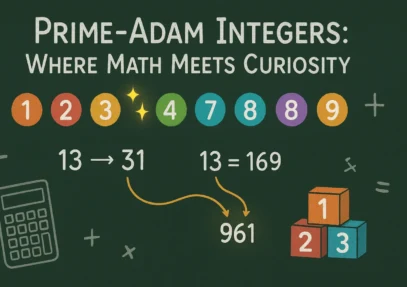
Prime-Adam Integer Explained: Find, Identify, and Program Them in Java

Prime-Adam Integer Explained: Find, Identify, and Program Them in Java

A Prime-Adam Number is defined as a positive number that fulfills two conditions simultaneously: it is a prime number and also an Adam number. For example, take the number 13; its reverse is 31. The square of 13 is 169, and the ...

Miss Universe 2025: A Landmark Edition Blending Glamour, Advocacy, and Global Dialogue

Miss Universe 2025: A Landmark Edition Blending Glamour, Advocacy, and Global Dialogue

Introduction The 74th Miss Universe pageant, held on November 21, 2025, at the Impact Challenger Hall in Nonthaburi, Thailand, set a new benchmark in global beauty contests. Not merely a showcase of beauty and fashion, this year’s event stood as ...

Explore Our Blog