

Consider the following statements: ...Read more
Poll Results
Please login to vote and see the results.
Sign up to our innovative Q&A platform to pose your queries, share your wisdom, and engage with a community of inquisitive minds.
Log in to our dynamic platform to ask insightful questions, provide valuable answers, and connect with a vibrant community of curious minds.
Forgot your password? No worries, we're here to help! Simply enter your email address, and we'll send you a link. Click the link, and you'll receive another email with a temporary password. Use that password to log in and set up your new one!
Please briefly explain why you feel this question should be reported.
Please briefly explain why you feel this answer should be reported.
Please briefly explain why you feel this user should be reported.
At Qukut, our mission is to bridge the gap between knowledge seekers and knowledge sharers. We strive to unite diverse perspectives, fostering understanding and empowering everyone to contribute their expertise. Join us in building a community where knowledge flows freely and growth is limitless.
What is the significance of “Nelson” in cricket?

In cricket, the term "Nelson" refers to scores that are considered unlucky, typically associated with the numbers 111, 222, 333, and so on. These are multiples of 111, and the superstition stems from the belief that these scores resemble a wicketless set of stumps, possibly symbolizing bad luck. OriRead more
In cricket, the term “Nelson” refers to scores that are considered unlucky, typically associated with the numbers 111, 222, 333, and so on. These are multiples of 111, and the superstition stems from the belief that these scores resemble a wicketless set of stumps, possibly symbolizing bad luck.
Origin of the Term:
1. Lord Nelson Connection: The term is often linked to Admiral Lord Nelson, the British naval hero. It is humorously claimed that Nelson had “one eye, one arm, and one leg” during battle, hence the association with 111. However, this claim is historically inaccurate, as Nelson had both legs. Despite this, the superstition persisted in cricket folklore.
2. Superstition in Cricket: The belief is that “Nelson” scores bring bad luck, and a wicket might fall when a team or player reaches such a score.
Practices and Traditions:
Umpire David Shepherd’s Ritual: The superstition gained more attention thanks to David Shepherd, a famous cricket umpire. Whenever the score reached a Nelson (111, 222, etc.), Shepherd would hop on one leg, supposedly to ward off bad luck. This quirky ritual became iconic in cricket.
Fans’ Reactions: Fans and players sometimes exhibit nervousness or perform small superstitions when a team or player is stuck on a Nelson score.
Modern View:
While the “Nelson” superstition is mostly a light-hearted tradition, it remains an entertaining and quirky aspect of cricket culture, highlighting the sport’s blend of historical anecdotes and superstition.
See lessAre aliens more likely to be carbon-based like us or something entirely different?

Aliens are more likely to be carbon-based, like us, but the possibility of life forms based on entirely different chemistries cannot be ruled out. Here's why carbon is considered likely, along with the potential for alternatives: Carbon-Based Life Chemical Versatility: Carbon atoms can form stable bRead more
Aliens are more likely to be carbon-based, like us, but the possibility of life forms based on entirely different chemistries cannot be ruled out. Here’s why carbon is considered likely, along with the potential for alternatives:
While carbon-based life is the most likely due to its chemical advantages, the universe’s vastness means there could be forms of life with completely different biochemical foundations, especially in environments drastically different from Earth. Our search for life often focuses on carbon because it’s the most familiar and understood, but scientists remain open to discovering entirely novel life forms.
See lessBlack holes are created when a massive amount of matter is compressed into a very small area, leading to a gravitational field so strong that the escape velocity exceeds the speed of light. As a result, everything, including electromagnetic radiation, is trapped once it crosses the event horizon—theRead more
Black holes are created when a massive amount of matter is compressed into a very small area, leading to a gravitational field so strong that the escape velocity exceeds the speed of light. As a result, everything, including electromagnetic radiation, is trapped once it crosses the event horizon—the boundary of the black hole.
Though black holes cannot be observed directly (since they emit no light), we detect them through their effects on nearby matter and light:
Black holes remain one of the most intriguing frontiers in astrophysics, with new discoveries constantly reshaping our understanding of the cosmos.
See less“Which skills should I start learning now to stay ahead as a cloud developer in the future?” “भविष्य में एक क्लाउड डेवेलपर के रूप में आगे रहने के लिए मुझे अभी कौन-कौन सी स्किल्स सीखनी चाहिए?”

Skills to Learn Now to Stay Ahead as a Future-Ready Cloud Developer 1. Deep Cloud Platform Expertise Master at least one major cloud provider:Focus on platforms like AWS, Microsoft Azure, or Google Cloud Platform (GCP). Gain proficiency in core services: Compute (EC2, Azure VMs, Compute Engine) StorRead more
Master at least one major cloud provider:
Focus on platforms like AWS, Microsoft Azure, or Google Cloud Platform (GCP). Gain proficiency in core services:
Compute (EC2, Azure VMs, Compute Engine)
Storage (S3, Azure Blob, Cloud Storage)
Networking (VPC, Load Balancers)
Security (IAM, KMS)
Serverless (AWS Lambda, Azure Functions)
Learn multi-cloud strategies:
Understand how to architect and manage applications across multiple cloud platforms to avoid vendor lock-in and improve resilience.
Learn tools like Terraform, AWS CloudFormation, Azure ARM Templates, or Pulumi to automate cloud infrastructure deployment.
IaC enables repeatability, consistency, and scalability — a must-have for efficient cloud operations.
Master Docker for containerizing applications.
Dive deep into Kubernetes — the de facto standard for container orchestration.
Learn Helm Charts for Kubernetes application packaging.
Understand service meshes (e.g., Istio) and cloud-native patterns.
Learn to build automated CI/CD pipelines with tools like Jenkins, GitLab CI, GitHub Actions, Azure DevOps.
Understand continuous integration, continuous delivery, and continuous deployment principles.
Familiarize yourself with monitoring tools like Prometheus, Grafana, and logging with ELK Stack.
Explore serverless computing to build highly scalable, cost-effective applications.
Get hands-on with AWS Lambda, Azure Functions, and Google Cloud Functions.
Understand event-driven architectures and microservices patterns.
Study cloud security fundamentals — identity and access management (IAM), encryption, secure networking, compliance (e.g., GDPR, HIPAA).
Learn about Zero Trust Architecture and how to implement it in cloud environments.
Practice using security tools and services like AWS GuardDuty, Azure Security Center.
Understand how to design cloud-native apps optimized for scalability, availability, and resilience.
Learn about 12-factor app methodology, microservices, API gateways, and service discovery.
Cloud developers increasingly need skills in data pipelines, ETL, and analytics.
Learn cloud data services: AWS Glue, BigQuery, Azure Data Factory.
Explore how to integrate AI/ML services like AWS SageMaker, Azure ML, or Google AI Platform into your applications.
Be proficient in languages commonly used in cloud environments such as Python, Go, JavaScript/TypeScript, or Java.
Automate workflows using shell scripting or Python scripts.
Develop strong problem-solving and communication skills.
Understand business needs and translate them into technical solutions.
Stay adaptable, curious, and ready to learn new technologies quickly.
Edge Computing: Learn how cloud extends to the edge, including IoT integration.
GitOps: Automating infrastructure and deployments via Git repositories.
Cloud Cost Management: Optimizing cloud spend with tools and strategies.
Quantum Computing in Cloud: Early but growing area in providers like AWS Braket.
| Skill Area | Why It Matters | Recommended Tools/Technologies |
|---|---|---|
| Cloud Platform Expertise | Foundation for all cloud development | AWS, Azure, GCP |
| Infrastructure as Code | Automation & scalability | Terraform, CloudFormation |
| Containers & Orchestration | Efficient app deployment & management | Docker, Kubernetes, Helm |
| DevOps & CI/CD | Speed & reliability in software delivery | Jenkins, GitHub Actions, GitLab CI |
| Serverless Architectures | Cost-effective & scalable apps | AWS Lambda, Azure Functions |
| Cloud Security | Protect data & apps | IAM, KMS, GuardDuty, Zero Trust |
| Cloud-Native Development | Build resilient & scalable apps | Microservices, API Gateways |
| Data & AI/ML Integration | Enhance apps with data insights & AI | AWS SageMaker, BigQuery, Azure ML |
| Programming & Scripting | Core development & automation | Python, Go, JavaScript |
| Soft Skills & Business Acumen | Align tech solutions with business needs | Communication, problem-solving |
The cloud landscape evolves rapidly, so continuous learning is vital. Building a strong foundation now with these skills will position you as a versatile, future-proof cloud developer ready to innovate and lead.
See less
Zodiac signs are based on the Earth's orbit around the Sun and are rooted in astrology, an ancient system that divides the sky into 12 sections, each linked to a constellation. Here's a detailed explanation: How Zodiac Signs Are Determined 1. The Ecliptic Path: The Earth revolves around the SuRead more
Zodiac signs are based on the Earth’s orbit around the Sun and are rooted in astrology, an ancient system that divides the sky into 12 sections, each linked to a constellation. Here’s a detailed explanation:
How Zodiac Signs Are Determined
1. The Ecliptic Path: The Earth revolves around the Sun, and from Earth’s perspective, the Sun appears to move across the sky through a path called the ecliptic. Along this path, the sky is divided into 12 equal sections, each associated with a specific zodiac constellation.
2. The 12 Zodiac Signs: Each sign covers 30 degrees of the 360-degree ecliptic. The signs are associated with different dates based on the Sun’s position during the year:
3. Elements and Modalities: Elements: Fire, Earth, Air, and Water describe the core nature of the signs. Modalities: Cardinal (initiators), Fixed (stable), Mutable (adaptable) explain how signs react to life events.
4. Astrological Chart: In a full astrological chart, other planetary bodies like the Moon, Mars, and Venus also play a role, reflecting deeper aspects of personality and life events.
5. The Precession of the Equinoxes: Due to Earth’s axial tilt shifting over thousands of years, the constellations’ positions have moved. This phenomenon means the zodiac constellations in astronomy don’t align exactly with the zodiac signs in astrology.
See lessWhat are the main critiques of social contract theory?

Social contract theory, a cornerstone of political philosophy, posits that individuals consent, either explicitly or implicitly, to form a society and establish a government to protect their rights and ensure order. While influential, the theory has been subjected to various critiques. Below are theRead more
Social contract theory, a cornerstone of political philosophy, posits that individuals consent, either explicitly or implicitly, to form a society and establish a government to protect their rights and ensure order. While influential, the theory has been subjected to various critiques. Below are the main criticisms:
While social contract theory remains influential, these critiques highlight its limitations and encourage more nuanced approaches to understanding society, governance, and justice. Modern theories often incorporate insights from feminist, communitarian, and critical perspectives to address these shortcomings.
See lessWhat were the major invention of the Elizabethan age??

The Elizabethan Age (1558–1603) was a period of significant cultural, artistic, and technological development. Some of the major inventions and innovations from this time include: 1. The Printing Press: Although invented in the 15th century by Johannes Gutenberg, the printing press saw widespread usRead more
The Elizabethan Age (1558–1603) was a period of significant cultural, artistic, and technological development. Some of the major inventions and innovations from this time include:
1. The Printing Press: Although invented in the 15th century by Johannes Gutenberg, the printing press saw widespread use during the Elizabethan era. It revolutionized the production of books, making literature and knowledge more accessible, contributing to the spread of ideas such as the Renaissance and the Reformation.
2. The Telescope: While the telescope as we know it was developed later, in the late 16th century, the basic principles of the telescope were laid down during the Elizabethan era. This era saw significant advancements in optics, and figures like Thomas Harriot made contributions toward improving early telescopic lenses.
3. The Mariner’s Compass: Though the compass itself was invented earlier, its use in navigation became more prominent during the Elizabethan Age. Improved navigational tools were crucial for the Age of Exploration, as English sailors embarked on voyages to the New World and Asia.
4. The Mechanical Clock: The development of more accurate and portable clocks continued during the Elizabethan period. This period saw the refinement of clock-making, particularly in terms of precision and the creation of clocks that were smaller and more reliable.
5. Firearms: During this era, significant advancements were made in firearms technology, particularly in the design of guns and cannons. The matchlock musket, a key firearm in European warfare, was in use during the period.
6. The Galleon: The development of the galleon, a large, multi-decked sailing ship, was significant during the Elizabethan era. These ships were crucial for trade, exploration, and warfare, particularly in the defeat of the Spanish Armada in 1588.
While the Elizabethan Age is better known for its cultural and artistic achievements (such as Shakespeare’s works), it was also a time of innovation in science, technology, and exploration.
See less
first one open the app and go to setting and scroll down with saw the sharing of this app this is feature
first one open the app and go to setting and scroll down with saw the sharing of this app this is feature
See lesshow did the mesopotamian civilization end?
The Mesopotamian civilization, often regarded as one of the cradles of civilization, didn't end abruptly but gradually declined due to a combination of factors over several centuries. Here's an overview of the key reasons for its decline: 1. Environmental Changes: The region suffered from environmenRead more
The Mesopotamian civilization, often regarded as one of the cradles of civilization, didn’t end abruptly but gradually declined due to a combination of factors over several centuries. Here’s an overview of the key reasons for its decline:
1. Environmental Changes: The region suffered from environmental degradation, including soil salinization and deforestation, which reduced agricultural productivity. Over time, this led to food shortages and weakened the economic foundation of Mesopotamian societies.
2. Invasions and Conquests: The Mesopotamian city-states were frequently invaded by outside forces. Key conquests included:
The Akkadian Empire (c. 2334–2154 BCE) was the first to unify the region but eventually collapsed due to internal strife and invasions.
The Babylonian Empire, under Hammurabi, rose and fell due to invasions, particularly by the Hittites and later the Kassites.
The Assyrian Empire (c. 900–612 BCE) eventually fell to a coalition of Medes, Babylonians, and Scythians, who sacked the Assyrian capital, Nineveh, in 612 BCE.
The Neo-Babylonian Empire (c. 626–539 BCE) flourished briefly under leaders like Nebuchadnezzar II but fell to the Persian Empire led by Cyrus the Great in 539 BCE.
3. Political Instability: Continuous power struggles, both internal and external, weakened the states. Shifting alliances and frequent wars drained resources and destabilized the region.
4. Economic Decline: The constant state of war and the burden of maintaining large armies and infrastructure projects strained the economy. Trade routes were disrupted, further exacerbating economic issues.
5. Cultural Assimilation: After the conquest by the Persian Empire, Mesopotamian culture began to merge with Persian culture. Although some Mesopotamian traditions persisted, the distinct identity of the civilization faded over time.
Eventually, the rise of new powers and cultures in the region, such as the Greeks under Alexander the Great and later the Romans, further assimilated and replaced the remaining elements of Mesopotamian culture.
These factors collectively led to the gradual decline of Mesopotamian civilization, marking the end of its dominance in the ancient world.
See lessBecoming rich involves a combination of financial strategies, discipline, and a long-term mindset. Here are some steps to guide you: 1. Develop a Wealth-Building Mindset Set Clear Goals: Define what "rich" means to you—whether it's financial freedom, a specific amount, or a lifestyle. Stay Educated:Read more
Becoming rich involves a combination of financial strategies, discipline, and a long-term mindset. Here are some steps to guide you:
By combining hard work, strategic planning, and a willingness to adapt, you can build wealth and achieve financial independence over time.
See lessWhat is the role of hormones in the human body?
Hormones are chemical messengers produced by various glands in the human body that regulate a wide range of physiological processes. They are secreted into the bloodstream and travel to specific organs and tissues, where they influence a variety of functions. Hormones play a crucial role in maintainRead more
Hormones are chemical messengers produced by various glands in the human body that regulate a wide range of physiological processes. They are secreted into the bloodstream and travel to specific organs and tissues, where they influence a variety of functions. Hormones play a crucial role in maintaining homeostasis (the body’s internal balance) and supporting growth, development, metabolism, and overall health.
Hormones are essential for regulating and coordinating many physiological processes in the human body, including growth, metabolism, reproduction, immune function, stress response, and mood. By acting as chemical messengers, hormones help maintain the body’s internal balance and ensure that different systems function properly. Disruptions in hormonal balance can lead to a variety of health conditions, highlighting the critical importance of hormones in overall health and well-being.
See lessHow Can a Therapist in West Palm Beach Help with Relationships?

A therapist in West Palm Beach offers professional guidance to help couples and families navigate relationship challenges. Whether you're dealing with communication issues, trust concerns, or life transitions, a therapist provides tools to strengthen connections. Relationship therapy focuses on imprRead more
A therapist in West Palm Beach offers professional guidance to help couples and families navigate relationship challenges. Whether you’re dealing with communication issues, trust concerns, or life transitions, a therapist provides tools to strengthen connections.
Relationship therapy focuses on improving understanding, resolving conflicts, and fostering intimacy. Therapists in West Palm Beach use proven techniques, such as the Gottman Method or Emotionally Focused Therapy (EFT), to help couples rebuild and grow together.
Seeking therapy can also be valuable for individuals who want to heal from past relationships or prepare for future ones. With expert guidance, you can achieve healthier, more fulfilling connections.
For more information, please visit: https://www.therapistinwestpalmbeach.com/
See less![[Deleted User]](https://qukut.com/wp-content/uploads/2024/09/anonymous-users-42x42.webp "[Deleted User]")
Lever is the force placed between the fulcrum and the load. If the load is closer to the fulcrum, researchers of movement in the load require less force. If the force is closer to the fulcrum, movement of the load requires more force.
Lever is the force placed between the fulcrum and the load. If the load is closer to the fulcrum, researchers of movement in the load require less force. If the force is closer to the fulcrum, movement of the load requires more force.
See lessWho were the Medici Family and Lollards? How did they contribute to literary development?
The Medici family and the Lollards were huge supporters of artistic and social advancement during their particular times. The Medici Family Overview The Medici family, a strong financial tradition in Florence, overwhelmed the political and social scene of the Italian Renaissance from the fifteenth tRead more
The Medici family and the Lollards were huge supporters of artistic and social advancement during their particular times.
The Medici family, a strong financial tradition in Florence, overwhelmed the political and social scene of the Italian Renaissance from the fifteenth to the seventeenth hundreds of years. They rose to conspicuousness through their financial endeavor, which turned into the biggest in Europe, and their essential relationships and political unions, including associations with the papacy.
The Medici were eminent benefactors of human expression and humanities, subsidizing a considerable lot of the period’s most noteworthy specialists, modelers, and scholars. They laid out libraries, for example, the Laurentian Library, which worked with admittance to old style texts and advanced learning. Lorenzo de’ Medici, known as Lorenzo the Wonderful, was a supporter as well as a writer himself. His court turned into a center point for humanist researchers and craftsmen, encouraging a climate helpful for scholarly development.
One prominent scholarly figure related with the Medici is Niccolò Machiavelli. He committed his fundamental work, The Ruler, to Lorenzo de’ Medici for the purpose of acquiring favor with the decision family. This work is frequently considered fundamental in political hypothesis and mirrors the political environment of Florence during the Renaissance.
The Lollards were supporters of John Wycliffe in fourteenth century Britain, pushing for changes inside the Congregation and advancing thoughts that tested laid out tenets. They are frequently viewed as forerunners to later Protestant developments.
The Lollards fundamentally added to abstract improvement through their accentuation on making an interpretation of the Holy book into vernacular English. Wycliffe’s interpretation made strict texts open to a more extensive crowd, advancing education and empowering individual understanding of sacred writing. This development laid significant foundation for later interpretations and reformist writing during the Reorganization.
Furthermore, Lollard works frequently evaluated clerical power and practices, which impacted resulting strict idea and writing. Their support for change and openness of strict texts added to a developing society of addressing authority that portrayed later scholarly developments.
In synopsis, both the Medici family and the Lollards assumed crucial parts in molding scholarly turn of events: the Medici through their broad support of expressions and writing during the Renaissance, and the Lollards through their push for scriptural interpretations and church change in archaic Britain.
Identify the missing number: 3, 6, 18, 72, ___, 288

360 is the missing number
360 is the missing number
See lessWhat is the function of the skeletal system?
The skeletal system serves several critical functions in the human body: 1. Support: It provides a framework that supports the body and maintains its shape. 2. Protection: It protects vital organs such as the brain (protected by the skull), heart, and lungs (protected by the rib cage). 3. Movement:Read more
The skeletal system serves several critical functions in the human body:
1. Support: It provides a framework that supports the body and maintains its shape.
2. Protection: It protects vital organs such as the brain (protected by the skull), heart, and lungs (protected by the rib cage).
3. Movement: Bones work with muscles to enable movement by acting as levers and attachment points.
4. Mineral Storage: It stores essential minerals, such as calcium and phosphorus, which can be released into the bloodstream as needed.
5. Blood Cell Production: Bone marrow, located within some bones, produces red blood cells, white blood cells, and platelets in a process called hematopoiesis.
6. Energy Storage: Yellow bone marrow stores fats that can be used for energy.
These functions collectively contribute to the body’s overall health and functionality.
See lessWhat makes Robusta coffee stand out from the rest?
Robusta Coffee: The Underdog Brewing a Bold Comeback Robusta coffee, sourced from the Coffea canephora plant, has long been regarded as the less refined sibling of Arabica. But in recent years, this sturdy bean has been gaining newfound respect in both coffee-growing and coffee-drinking communitiesRead more
Robusta Coffee: The Underdog Brewing a Bold Comeback
Robusta coffee, sourced from the Coffea canephora plant, has long been regarded as the less refined sibling of Arabica. But in recent years, this sturdy bean has been gaining newfound respect in both coffee-growing and coffee-drinking communities around the world. So, what’s driving the buzz around Robusta?
A Crop Built for the Future
Robusta plants are notably resilient. They grow well in lower altitudes and warmer climates, can tolerate harsher conditions, and are naturally more resistant to pests and diseases. This durability translates to higher yields and greater crop reliability, which is becoming increasingly important in a world grappling with climate change and unpredictable weather patterns.
A Bold, Caffeinated Kick
Robusta beans pack nearly twice the caffeine of Arabica beans. This gives the coffee a strong, bold flavor—often described as earthy, woody, or nutty, with a characteristic bitterness. While Arabica is praised for its sweetness and complexity, Robusta offers a potent energy boost and a punchy profile that some coffee lovers find irresistible, especially in espresso blends and traditional coffee preparations.
Affordability and Efficiency
From an economic standpoint, Robusta is more cost-effective to cultivate. It requires less intensive care, fewer chemical treatments, and yields more beans per plant. These advantages make it an attractive option for farmers, especially in developing regions where resources are limited. Its lower market price also allows it to be used widely in instant coffee and commercial blends, making it a staple in households across the globe.
Sustainability and Climate Resilience
Because Robusta thrives in environments where Arabica struggles, it plays a critical role in sustaining global coffee supplies. It can grow in areas with higher temperatures and less ideal conditions, which helps diversify and stabilize coffee production amid environmental challenges. This adaptability positions Robusta as a valuable crop for the future of agriculture and food security.
Health and Wellness Benefits
Robusta isn’t just about bold flavor and high yields—it also carries potential health benefits. Its elevated caffeine and antioxidant levels may contribute to enhanced metabolism, improved focus, and greater alertness. Some cultures have even used it traditionally to alleviate ailments such as fatigue and headaches
The Indian Connection
India is one of the leading producers of Robusta coffee, with cultivation centered in the southern states. Indian Robusta is known for its depth, body, and ability to pair beautifully with milk and spices, making it a key ingredient in South Indian filter coffee. The rich soil and climate of these regions contribute to a distinctive quality that’s increasingly appreciated both locally and internationally.
The Evolving Reputation of Robusta
For years, Robusta was dismissed as inferior, mainly used for instant coffee or commercial blends. However, specialty coffee roasters and baristas are now revisiting this bean with fresh eyes. Through better cultivation methods and careful processing, high-quality Robusta beans are revealing complex flavors and offering a whole new tasting experience.
As consumer palates evolve and the demand for sustainable crops grows, Robusta is stepping out of the shadows. It’s not just a filler anymore—it’s a bold, resilient, and increasingly celebrated player in the world of coffee.
In a Nutshell: Robusta coffee is no longer just a backup to Arabica. With its strong flavor, robust nature, climate adaptability, and rising reputation, it is redefining what it means to enjoy a cup of coffee. Whether you’re a casual drinker or a connoisseur, Robusta is a bean worth paying attention to.
See lessWhat are the challenges of balancing love and family responsibilities?
Balancing love and family responsibilities can be challenging as it requires managing time, emotions, and priorities effectively. Here are some key challenges: 1. Time Management Challenge: Juggling between spending quality time with your partner and fulfilling family obligations. Effect: Can lead tRead more
Balancing love and family responsibilities can be challenging as it requires managing time, emotions, and priorities effectively. Here are some key challenges:
1. Time Management
Challenge: Juggling between spending quality time with your partner and fulfilling family obligations.
Effect: Can lead to feelings of neglect or guilt on either side.
2. Conflicting Expectations
Challenge: Balancing the needs and expectations of your partner and family members, which might not always align.
Effect: This can lead to misunderstandings, tension, or feeling torn between the two.
3. Emotional Strain
Challenge: Providing emotional support to both your partner and family while managing your own stress.
Effect: Can lead to burnout or difficulty in maintaining strong relationships.
4. Cultural or Traditional Obligations
Challenge: Meeting cultural or familial expectations, especially in societies where family responsibilities are emphasized.
Effect: Partners may feel sidelined if one person prioritizes family over the relationship.
5. Financial Stress
Challenge: Managing financial responsibilities like supporting family needs while ensuring resources for your partner and shared goals.
Effect: Financial strain can cause conflicts or feelings of inadequacy.
6. Lack of Communication
Challenge: Misunderstandings arise if there is no open dialogue about priorities and responsibilities.
Effect: Resentment or a breakdown in trust between family members and partners.
7. Parenting Responsibilities
Challenge: If you have children, dividing attention between parenting, your partner, and extended family can feel overwhelming.
Effect: Can lead to a lack of personal time and strain the relationship.
8. Balancing Personal and Shared Goals
Challenge: Pursuing individual goals while ensuring they align with the expectations of your family and partner.
Effect: Neglecting either side can create dissatisfaction or conflict.
Tips to Overcome These Challenges:
Effective Communication: Discuss priorities openly with your partner and family.
Set Boundaries: Clearly define your availability and commitments.
Prioritize Quality Time: Spend meaningful time with both your partner and family.
Delegate Responsibilities: Share household and family duties equitably.
Seek Support: Don’t hesitate to ask for help or seek counseling if needed.
Balancing love and family is an ongoing process that requires understanding, flexibility, and mutual respect.
See lessभारत में कौन-कौन सी जगहें भूतिया मानी जाती हैं?

भारत में कई स्थानों को भूतिया या रहस्यमय माना जाता है, जो अपने रहस्यमय किस्सों और कथाओं के लिए प्रसिद्ध हैं। यहां कुछ प्रमुख भूतिया स्थानों की सूची दी गई है: 1. भानगढ़ किला, राजस्थान भानगढ़ किला भारत में सबसे प्रेतवाधित स्थानों में से एक माना जाता है। कहा जाता है कि इस किले को एक तांत्रिक ने श्राप दRead more
भारत में कई स्थानों को भूतिया या रहस्यमय माना जाता है, जो अपने रहस्यमय किस्सों और कथाओं के लिए प्रसिद्ध हैं। यहां कुछ प्रमुख भूतिया स्थानों की सूची दी गई है:
इन स्थानों को लेकर अलग-अलग किस्से और मान्यताएं हैं। ये कहानियां अक्सर स्थानीय संस्कृति और लोककथाओं से जुड़ी होती हैं। यदि आप इनमें से किसी स्थान पर जाएं, तो सतर्क और सम्मानजनक रहें।
See lessFind the next term in the series 10, 14, 18, 22, 26, ?
30
30
See lessStars twinkle because of the atmosphere of Earth, which causes their light to bend as it travels to our eyes. This phenomenon is called atmospheric refraction. Here's how it works: 1. Layers of the Atmosphere: Earth's atmosphere consists of layers with varying temperatures and densities. These layerRead more
Stars twinkle because of the atmosphere of Earth, which causes their light to bend as it travels to our eyes. This phenomenon is called atmospheric refraction. Here’s how it works:
1. Layers of the Atmosphere:
Earth’s atmosphere consists of layers with varying temperatures and densities. These layers constantly move and create turbulence.
2. Light Bending:
As starlight passes through these turbulent layers, it bends (or refracts) in different directions. This bending causes the star’s position to appear to shift slightly.
3. Brightness Fluctuation:
Sometimes more light enters our eyes, and sometimes less, making the star appear to twinkle or flicker.
Interestingly, planets don’t twinkle as much because they appear as larger disks of light, not single points, so the effects of atmospheric turbulence average out.
See lessIn the prenatal stage, your bones undergo a fascinating transformation as part of fetal development. Here's how your bones develop during this time: Mesenchymal Stage (Week 5-7) Formation of Mesenchyme: In early development, your skeleton starts as mesenchyme, a type of loose connective tissue madeRead more
In the prenatal stage, your bones undergo a fascinating transformation as part of fetal development. Here’s how your bones develop during this time:
This step-by-step transformation ensures that your bones are well-formed, strong, and capable of supporting your body after birth, while still allowing flexibility for growth and development.
See lessWhat emerging technologies (e.g., quantum computing, metaverse) will dominate the next decade?
Difference between the psychologist and psychiatrist
A psychologist is one who gives therapies and prepared a case study about the conditions encountered by the patient and gives counselling sessions while a psychiatrist is one who gives medicines and is considered to be superior to psycholgist
A psychologist is one who gives therapies and prepared a case study about the conditions encountered by the patient and gives counselling sessions while a psychiatrist is one who gives medicines and is considered to be superior to psycholgist
See lessPeople make money on YouTube by turning views into cash through ads, sponsorships, and merch sales. Ads pay creators for making you sit through commercials you can't skip, while sponsorships have them promoting everything from gadgets to oddly specific vitamins. They sell merch with catchy phrases,Read more
People make money on YouTube by turning views into cash through ads, sponsorships, and merch sales. Ads pay creators for making you sit through commercials you can’t skip, while sponsorships have them promoting everything from gadgets to oddly specific vitamins. They sell merch with catchy phrases, making fans into walking billboards. During live streams, viewers even pay to have their comments noticed—like paying for VIP access to a digital shoutout. And let’s not forget affiliate links, where creators earn commissions by convincing you that a fancy blender will change your life (and their bank balance).
See lessHow can you find unique local experiences while traveling?

The ways to find unique local experiences while traveling, actively engage with locals by asking for their favorite places to eat, visit, or hang out, explore neighborhood markets, attend local festivals and events, consider taking a class or workshop, and use social media to find local recommendatiRead more
The ways to find unique local experiences while traveling, actively engage with locals by asking for their favorite places to eat, visit, or hang out, explore neighborhood markets, attend local festivals and events, consider taking a class or workshop, and use social media to find local recommendations and hidden gems through location-specific hashtags.
Key strategies:
Talk to locals:
Ask hotel staff, Airbnb hosts, taxi drivers, shopkeepers, and people you meet at cafes about their favorite local spots.
Visit local markets:
Explore farmers’ markets, street food stalls, and bazaars to experience authentic cuisine and local products.
Attend festivals and events:
Research and participate in local festivals, celebrations, and cultural gatherings.
Take a local class or workshop:
Learn a traditional skill like cooking, crafting, or art from a local expert.
Explore off the beaten path:
Venture beyond tourist areas to discover hidden gems and neighborhoods locals frequent.
Use social media:
Search for location-specific hashtags on platforms like Instagram and Facebook to find local recommendations.
Consider local accommodation:
Stay in a guesthouse or Airbnb hosted by a local to gain insights into their everyday life.
Go on a walking tour with a local guide:
Local guides can share unique stories and hidden aspects of a place.
Volunteer in the community:
Engage with locals through volunteer activities to experience their culture on a deeper level.
The DJI drones are banned in India due to:-Union Minister of Civil Aviation K Ram Mohan Naidu on Tuesday said India has totally banned the import of drones to encourage local talent to manufacture them. Addressing the two-day national drone summit at Amaravati in Andhra Pradesh, the Civil Aviation MRead more
The DJI drones are banned in India due to:-Union Minister of Civil Aviation K Ram Mohan Naidu on Tuesday said India has totally banned the import of drones to encourage local talent to manufacture them.
Addressing the two-day national drone summit at Amaravati in Andhra Pradesh, the Civil Aviation Minister noted that the government banned drone imports as it does not want some other country or company to benefit at the cost of India.
We have banned the total import of drones, why did we do it? We want to encourage more startups to come in this drone sector. We want the people of this country to manufacture drones. We don’t want to import drones and let the benefit go to some other country or some other countries.
India banned drone imports to encourage local startups: Ram Mohan Naidu
Likewise, he noted that the banning of drone imports was a major step to promote self-reliance and indigenous manufacture, design and development of the unmanned aerial vehicles (UAV)
Advertisement
K Rammohan Naidu, Kinjarapu Ram Mohan Naidu, Kinjarapu RamMohan, Kinjarapu, Ram mohan
The Drone Didi programme trains eligible women as drone pilots for their use in agriculture.
Union Minister of Civil Aviation K Ram Mohan Naidu on Tuesday said India has totally banned the import of drones to encourage local talent to manufacture them.
Addressing the two-day national drone summit at Amaravati in Andhra Pradesh, the Civil Aviation Minister noted that the government banned drone imports as it does not want some other country or company to benefit at the cost of India.
We have banned the total import of drones, why did we do it? We want to encourage more startups to come in this drone sector. We want the people of this country to manufacture drones. We don’t want to import drones and let the benefit go to some other country or some other company, said Naidu.
According to the union minister, the government wants the young and bright minds of the country to develop new types of drones to cater to solutions which are indigenous to the country, so, with that mindset we banned imports’.
The aviation minister highlighted that the Centre has liberalised rules for the drone ecosystem and enabled 27 companies to benefit from the Production Linked Incentive (PLI) scheme of Rs 120 crore.
He also highlighted that the liberalised regime was aimed at attracting more R&D and investments.
See less
A nested class is a member of its enclosing class. It establishes a structural relationship where one class is entirely contained within the declaration of another. This allows the nested class to be closely associated with the functionality of the outer class and can even grant it special access prRead more
A nested class is a member of its enclosing class. It establishes a structural relationship where one class is entirely contained within the declaration of another. This allows the nested class to be closely associated with the functionality of the outer class and can even grant it special access privileges (especially inner classes) to the outer class’s private members.
See lessConsider the following actions: ...Read more
Please login to vote and see the results.
The correct answer is All three. Here’s how an accelerometer is involved in each action: 1. Detection of Car Crash/Collision An accelerometer detects rapid deceleration or impact forces, which triggers the deployment of airbags almost instantaneously. Function of accelerometer: Required. 2. DetectioRead more
The correct answer is All three.
Here’s how an accelerometer is involved in each action:
An accelerometer is required in all three actions, as it plays a crucial role in detecting motion, orientation, or force changes in each scenario. Thus, the correct answer is All three.
See less
A few years ago, “content creation” meant a writer staring at a blank document, a designer starting from a blank canvas, or a video editor sifting through hours of raw footage to shape into something watchable. Today, a growing share ...

The expression ” You Can’t Step in a Boat Twice “, credited to the old Greek logician Heraclitus, highlights a significant truth about the idea of presence: the main consistent in life is change. By stretching out this relationship to ...
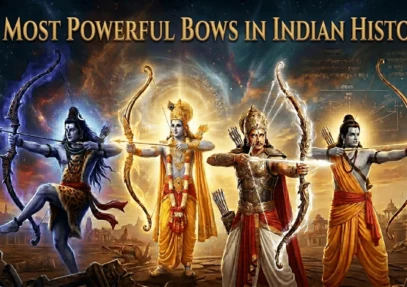
Introduction: 10 most powerful bows In the modern world, we look to particle accelerators and nuclear payloads to define the limits of destructive power. But thousands of years ago, the thinkers of the Indian subcontinent conceptualized a terrifyingly advanced form ...

The Ken-Betwa Link Project (KBLP) is no longer just a blueprint on a map; it is a massive, active engineering reality that serves as the vanguard for India’s National Perspective Plan (NPP) for inter-basin water transfer. Aimed at ending the ...
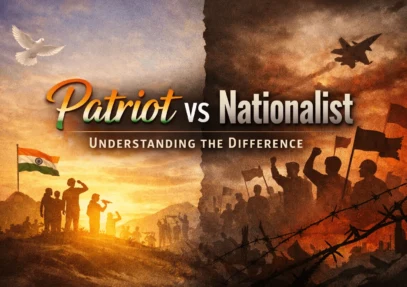
Patriot vs Nationalist: Introduction The words patriot and nationalist are often used as if they mean the same thing. Both express a strong connection to one’s country, both evoke pride, and both can inspire people to act in the name ...
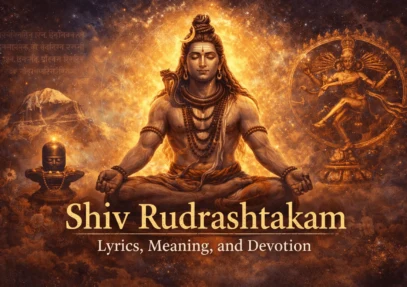
Introduction: The Eternal Hymn of Detachment and Devotion Shiv Rudrashtakam is one of the most profound Sanskrit hymns dedicated to Lord Shiva, the supreme yogi, destroyer of ignorance, and embodiment of pure consciousness. Composed by Adi Shankaracharya, this eight-verse stotra ...


Let's analyze the statements: Statement I: The Supreme Court of India has held in some judgments that reservation policies made under Article 16(4) would be limited by Article 335 to maintain the efficiency of administration. This is correct. The Supreme Court, in various rulings (such as the IndraRead more
Let’s analyze the statements:
Statement I:
The Supreme Court of India has held in some judgments that reservation policies made under Article 16(4) would be limited by Article 335 to maintain the efficiency of administration.
This is correct. The Supreme Court, in various rulings (such as the Indra Sawhney case), has emphasized that while Article 16(4) provides for reservations in public employment, it must be balanced with Article 335, which states that the claims of Scheduled Castes and Scheduled Tribes must be consistent with maintaining the efficiency of administration.
Statement II:
Article 335 defines the term “efficiency of administration.”
This is incorrect. Article 335 does not define “efficiency of administration.” It only mentions that the claims of Scheduled Castes and Scheduled Tribes should be taken into consideration, consistent with the maintenance of efficiency of administration. However, it does not provide a definition of “efficiency.”
Correct answer:
See lessStatement-I is correct but Statement-II is incorrect