


Could humans survive on Mars without terraforming?
Steve Jobes
Steve Jobes
See lessSign up to our innovative Q&A platform to pose your queries, share your wisdom, and engage with a community of inquisitive minds.
Log in to our dynamic platform to ask insightful questions, provide valuable answers, and connect with a vibrant community of curious minds.
Forgot your password? No worries, we're here to help! Simply enter your email address, and we'll send you a link. Click the link, and you'll receive another email with a temporary password. Use that password to log in and set up your new one!
Please briefly explain why you feel this question should be reported.
Please briefly explain why you feel this answer should be reported.
Please briefly explain why you feel this user should be reported.
At Qukut, our mission is to bridge the gap between knowledge seekers and knowledge sharers. We strive to unite diverse perspectives, fostering understanding and empowering everyone to contribute their expertise. Join us in building a community where knowledge flows freely and growth is limitless.
Could humans survive on Mars without terraforming?

Steve Jobes
Steve Jobes
See lessWhat is the role of nitrogen in the ecosystem?

Nitrogen plays a critical role in the ecosystem as an essential element for life. It is a key component of biological molecules and is involved in processes that sustain living organisms. Here's an overview of its role: 1. Building Block of Life Proteins: Nitrogen is a part of amino acids, which areRead more
Nitrogen plays a critical role in the ecosystem as an essential element for life. It is a key component of biological molecules and is involved in processes that sustain living organisms. Here’s an overview of its role:
Nitrogen moves through the ecosystem in a process called the nitrogen cycle, which involves several steps:
| Function | Description |
|---|---|
| Building Proteins | Forms amino acids, the building blocks of proteins. |
| Supporting DNA/RNA | Integral to nucleic acids for genetic material. |
| Enabling Photosynthesis | Part of chlorophyll for energy production in plants. |
| Driving the Nitrogen Cycle | Maintains ecosystem balance by cycling nitrogen through forms. |
| Supporting Food Chains | Transfers nitrogen through trophic levels for organism survival. |
| Fertilizer Use | Enhances soil fertility and agricultural productivity. |
Nitrogen is indispensable to the ecosystem, supporting life by cycling through various forms and maintaining ecological balance. Managing nitrogen efficiently is critical for both environmental health and food security.
See lessमनुष्य के व्यक्तित्व को विकसित करने के लिए कौन-कौन से कारक जिम्मेदार हैं?

Several factors contribute to the development of an individual's personality. These include: Genetic Factors: Hereditary traits passed from parents play a significant role in shaping personality, such as temperament, intelligence, and physical characteristics. Family Environment: Early childhood expRead more
Several factors contribute to the development of an individual’s personality. These include:
These factors interact dynamically, making personality development a complex and lifelong process.
See lessConsider the following statements: ...Read more
Please login to vote and see the results.

The correct answer is Both Statement-I and Statement-II are correct and Statement-II is the correct explanation for Statement-I. Explanation: Statement-I is correct because prisons in India are managed by State Governments, and each state has its own rules and regulations for the administration of pRead more
The correct answer is Both Statement-I and Statement-II are correct and Statement-II is the correct explanation for Statement-I.
Explanation:
what are trade tarriffs and how do they work?
Trade tariffs are taxes or duties imposed by a government on goods and services imported from other countries. They are a common tool in international trade policy and serve various economic and political purposes. Here's a detailed breakdown of what tariffs are and how they work: Types of Tariffs ARead more
Trade tariffs are taxes or duties imposed by a government on goods and services imported from other countries. They are a common tool in international trade policy and serve various economic and political purposes. Here’s a detailed breakdown of what tariffs are and how they work:
Trade tariffs are a powerful but often controversial tool in economic policy. While they can protect domestic industries and generate revenue, they may also lead to higher consumer costs and strained international relations.
See lessमानव का विकास (Evolution) कैसे हुआ और इसके मुख्य चरण क्या हैं?
The evolution of humans (Evolution) is a long and complex process that traces back millions of years. It explains how modern humans (Homo sapiens) evolved from ancient ancestors. The primary stages of human evolution, based on scientific findings, are as follows: Evolution of Life on Earth: TRead more
The evolution of humans (Evolution) is a long and complex process that traces back millions of years. It explains how modern humans (Homo sapiens) evolved from ancient ancestors. The primary stages of human evolution, based on scientific findings, are as follows:
Human evolution is a gradual process driven by natural selection, adaptation, and environmental changes. It highlights the remarkable journey of humans from primitive ancestors to the dominant species shaping the world today.
See lessWith reference to India’s projects on connectivity, consider the following statements: [2023] 1. East-West Corridor under Golden Quadrilateral Project connects Dibrugarh and Surat. 2. Trilateral Highway connects Moreh in Manipur and Chiang Mai in Thailand ...Read more
Please login to vote and see the results.
Let's analyze each statement one by one: East-West Corridor under Golden Quadrilateral Project connects Dibrugarh and Surat: The East-West Corridor under the Golden Quadrilateral project connects Silchar in Assam to Porbandar in Gujarat, not Dibrugarh to Surat. So, this statement is incorrect. TrilaRead more
Consider the following: ...Read more
Please login to vote and see the results.

The correct answer is Only three. For horizontal tax devolution, the Fifteenth Finance Commission used the following criteria in addition to population, area, and income distance: Demographic performance: Yes, this was used as a criterion. Forest and ecology: Yes, this was used as a criterion. GoverRead more
The correct answer is Only three. For horizontal tax devolution, the Fifteenth Finance Commission used the following criteria in addition to population, area, and income distance:
Thus, three of the given criteria (Demographic performance, Forest and ecology, Tax and fiscal efforts) were used.
See lessWhat is the role of the sun in the water cycle?

The Sun plays a crucial role in the water cycle (also known as the hydrological cycle) by providing the energy necessary for several key processes that move and transform water throughout Earth's atmosphere and surface. Here's how the Sun is involved: Evaporation Heat from the Sun causes water fromRead more
The Sun plays a crucial role in the water cycle (also known as the hydrological cycle) by providing the energy necessary for several key processes that move and transform water throughout Earth’s atmosphere and surface. Here’s how the Sun is involved:
In essence, the Sun is the primary energy source that drives the water cycle, making it possible for water to move through different phases (liquid, vapor, and solid) and be redistributed across the Earth’s surface.
See lessWhat were the reasons for the Great Revolt of 1857 in India???
Causes Behind the Great Revolt of 1857 The Great Revolt of 1857 was a watershed moment in Indian history, caused by a combination of political, economic, social, cultural, and military factors. However, it is debated whether it can truly be called the "First War of Independence" since the movement lRead more
The Great Revolt of 1857 was a watershed moment in Indian history, caused by a combination of political, economic, social, cultural, and military factors. However, it is debated whether it can truly be called the “First War of Independence” since the movement lacked nationalistic unity, and most leaders fought for local or personal reasons rather than a unified national cause. Below is a detailed account of the causes, with a discussion on why it was not a nationalist movement.
Each of these leaders had localized ambitions, and there was no concerted effort or vision to overthrow British rule across the subcontinent.
Conclusion
While the Great Revolt of 1857 was a significant challenge to British authority, it lacked the ideological and organizational unity required to be termed a “war of independence.” The rebellion reflected widespread grievances against British policies, but the absence of a cohesive nationalist agenda and the localized ambitions of its leaders underscore why it cannot be seen as India’s first unified fight for freedom. Nonetheless, it laid the foundation for future struggles, which eventually culminated in the Indian independence movement led by a united nationalist front.
See lessWhy is df.corr() giving “ValueError: could not convert string to float” ?
To get rid of this error use: numeric_only=True df.corr(numeric_only=True) This is ignoring the columns that are 'object' type while calculating correlation.
To get rid of this error use: numeric_only=True
df.corr(numeric_only=True)This is ignoring the columns that are ‘object’ type while calculating correlation.
See lessHow does the Doppler effect explain the change in sound frequency?

The Doppler effect explains the change in sound frequency as a result of the relative motion between a sound source and an observer. Here's how it works: Principle The Doppler effect describes how sound waves are compressed or stretched depending on the movement of the source or the observer: CompreRead more
The Doppler effect explains the change in sound frequency as a result of the relative motion between a sound source and an observer. Here’s how it works:
The Doppler effect describes how sound waves are compressed or stretched depending on the movement of the source or the observer:
The observed frequency is given by:
Where:
The Doppler effect explains how motion alters the perceived sound frequency due to the compression or stretching of sound waves. This phenomenon is not only a fundamental concept in wave physics but also a practical tool in various fields.
See lessConsider the following statements: ...Read more
Please login to vote and see the results.
On evaluating each statement one by one: Jhelum River passes through Wular Lake: This is correct. The Jhelum River flows into the Wular Lake, which is one of the largest freshwater lakes in India, located in Jammu and Kashmir. Krishna River directly feeds Kolleru Lake: This is incorrect. Kolleru LakRead more
On evaluating each statement one by one:
Based on the evaluation, two of the statements are correct. The correct answer is: Only two
See lessHow does the playing surface affect performance in tennis?
Which one of the following best describes the concept of ‘Small Farmer Large Field? [2023]
Please login to vote and see the results.
The concept of 'Small Farmer Large Field' involves small and marginal farmers coming together to coordinate their farming practices, often synchronizing key operations like sowing, irrigation, and harvesting to achieve economies of scale. While they retain individual ownership of their land, this coRead more
The concept of ‘Small Farmer Large Field’ involves small and marginal farmers coming together to coordinate their farming practices, often synchronizing key operations like sowing, irrigation, and harvesting to achieve economies of scale. While they retain individual ownership of their land, this collective approach helps them gain the benefits typically associated with larger-scale farming, such as improved efficiency, better access to resources, and reduced costs. The correct answer is Many marginal farmers in an area organize themselves into groups and synchronize and harmonize selected agricultural operations.
See lessWhat are the main components of the Earth’s atmosphere?

Nitrogen, oxygen, argon, and carbon dioxide are the main components.
Nitrogen, oxygen, argon, and carbon dioxide are the main components.
See less
Select any one of options given above.
Please login to vote and see the results.
The largest island in the Indian Ocean is Madagascar. It is located off the southeastern coast of Africa and is the fourth largest island in the world by land area.
The largest island in the Indian Ocean is Madagascar. It is located off the southeastern coast of Africa and is the fourth largest island in the world by land area.
See lessHow did the planets in our solar system get their names?
The names of the planets in our solar system are rooted in ancient mythology and cultural traditions. Here’s a breakdown: Mercury: Named after the Roman messenger god, Mercury, known for his speed, because the planet moves quickly across the sky. Venus: Named after the Roman goddess of love and beauRead more
The names of the planets in our solar system are rooted in ancient mythology and cultural traditions. Here’s a breakdown:
The tradition of naming planets after Roman and Greek gods reflects the influence of ancient astronomers, who sought to connect celestial objects with divine figures from their mythologies. This convention continues today for newly discovered celestial bodies.
See lessIn which year was the Indian Independence Act passed?
Please login to vote and see the results.
The Indian Independence Act was passed on 18th July 1947 by the British Parliament. This act paved the way for the partition of India and the creation of two independent dominions, India and Pakistan, effective from 15th August 1947. It marked the end of British rule in India and granted both nationRead more
The Indian Independence Act was passed on 18th July 1947 by the British Parliament. This act paved the way for the partition of India and the creation of two independent dominions, India and Pakistan, effective from 15th August 1947. It marked the end of British rule in India and granted both nations the power to govern themselves.
See lessHow do plants grow towards light (phototropism)?
Plants grow toward light through a process called phototropism, which is a directional growth response where plants orient themselves toward or away from a light source. This behavior is primarily controlled by plant hormones and cellular mechanisms. Steps of Phototropism Perception of Light: SpeciaRead more
Plants grow toward light through a process called phototropism, which is a directional growth response where plants orient themselves toward or away from a light source. This behavior is primarily controlled by plant hormones and cellular mechanisms.
Phototropism enables plants to optimize their growth for sunlight by detecting light direction, redistributing auxin, and bending shoots toward the light source. This adaptive mechanism is vital for a plant’s survival and efficient energy production.
See lessThe true nature of free will is a deeply philosophical and debated topic, encompassing perspectives from metaphysics, neuroscience, psychology, and theology. It primarily concerns whether humans have the ability to make choices independently of external constraints or predetermined factors. Here areRead more
The true nature of free will is a deeply philosophical and debated topic, encompassing perspectives from metaphysics, neuroscience, psychology, and theology. It primarily concerns whether humans have the ability to make choices independently of external constraints or predetermined factors. Here are the main views on the nature of free will:
The true nature of free will remains unresolved, blending elements of autonomy, causality, and perception. Whether free will exists in an absolute sense or is a subjective experience, it plays a crucial role in how humans understand morality, agency, and existence. The question may ultimately depend on personal beliefs and interpretations of reality.
See lessWhat is the difference between speed and velocity?

speed is a scalar quantity and velocity is a vector quantity so that is different.
speed is a scalar quantity and velocity is a vector quantity so that is different.
See lessशिक्षित युवाओं में बेरोजगारी क्यों बढ़ रही है?
Unemployment among educated individuals is increasing due to a combination of structural, economic, and societal factors. Here are the key reasons contributing to this trend: 1. Skill Mismatch Overqualification: Many individuals are overqualified for the jobs available, leading to underemployment orRead more
Unemployment among educated individuals is increasing due to a combination of structural, economic, and societal factors. Here are the key reasons contributing to this trend:
1. Skill Mismatch
Overqualification: Many individuals are overqualified for the jobs available, leading to underemployment or unemployment.
Irrelevant Education: Academic curricula often do not align with market demands, leaving graduates without the skills employers seek.
Rapid Technological Changes: The rise of automation and artificial intelligence has made certain skills obsolete, increasing competition for fewer roles.
2. Economic Factors
Slow Job Creation: Economic slowdowns or stagnation in certain industries reduce the number of available jobs, even as the number of graduates increases.
Globalization: Outsourcing of jobs to countries with cheaper labor markets reduces opportunities in certain sectors.
Startup Failures: While entrepreneurship is encouraged, many startups fail, leading to job losses for educated employees.
3. Over-Supply of Graduates
Mass Education Expansion: An increase in higher education institutions has led to more graduates than the job market can absorb.
Field Saturation: Certain fields, like engineering or business management, produce far more graduates than there are jobs available.
4. Lack of Practical Experience
Focus on Theoretical Knowledge: Many educational systems prioritize theory over hands-on experience, leaving graduates ill-prepared for real-world challenges.
Internship Gaps: Limited opportunities for internships or practical training further widen the experience gap.
5. Inflexibility and Unrealistic Expectations
Preference for White-Collar Jobs: Many educated individuals avoid blue-collar or less prestigious jobs, even if they offer good pay and growth.
High Salary Expectations: Graduates often expect higher salaries than employers are willing to pay for entry-level roles.
6. Economic Disparities and Regional Imbalances
Urban Concentration of Opportunities: Jobs are often concentrated in urban areas, leaving educated individuals in rural or remote areas unemployed.
Economic Inequality: Limited access to networks and resources can prevent qualified individuals from finding suitable roles.
7. Impact of COVID-19 and Other Crises
Job Market Disruption: The pandemic led to layoffs and a slowdown in hiring, disproportionately affecting recent graduates.
Shift to Remote Work: While remote work has created opportunities, it also requires digital skills that some educated individuals may lack.
8. Societal and Policy Issues
Lack of Career Counseling: Poor guidance during education results in students pursuing degrees in low-demand fields.
Government Policies: Inadequate job creation policies and weak labor market reforms exacerbate unemployment rates.
Solutions to Address the Issue
Align Education with Market Needs: Revamp curricula to focus on in-demand skills like digital literacy, data analytics, and critical thinking.
Promote Skill Development: Invest in vocational training and lifelong learning programs.
Encourage Entrepreneurship: Provide support for startups and small businesses to generate employment.
Enhance Career Guidance: Offer professional counseling to help students choose career paths based on market trends.
Regional Development: Create opportunities in rural areas to reduce regional disparities.
The increasing unemployment rate among educated individuals is a complex issue requiring coordinated efforts by governments, educational institutions, and industries to ensure a better match between education and employment opportunities.
See lessOperation Sagar Bandhu (translated as "Friend of the Seas") is a major humanitarian mission launched by India on November 28, 2025, to assist Sri Lanka in the aftermath of the devastating Cyclone Ditwah. The operation is a prime example of India's "Neighbourhood First" policy and its Vision MAHASAGARead more
Operation Sagar Bandhu (translated as “Friend of the Seas”) is a major humanitarian mission launched by India on November 28, 2025, to assist Sri Lanka in the aftermath of the devastating Cyclone Ditwah. The operation is a prime example of India’s “Neighbourhood First” policy and its Vision MAHASAGAR (Mutual and Holistic Advancement for Security and Growth Across Regions), positioning India as the primary “first responder” for natural disasters in the Indian Ocean.
Humanitarian Aid: India has delivered over 1,134 tonnes of essential supplies, including dry rations, fresh food, medicines, surgical equipment, tents, and water purification units.
Search and Rescue (SAR): Indian helicopters (Chetak and MI-17) have rescued hundreds of stranded individuals, including pregnant women, infants, and foreign nationals from over a dozen countries.
Infrastructure Restoration: An Engineer Task Force from the Indian Army was deployed with Bailey bridges and heavy machinery to restore critical road connectivity in flood-hit regions like Kilinochchi.
Medical Assistance: The Indian Army’s 60 Parachute Field Hospital treated more than 7,000 patients, providing surgical, dental, and general medical care in severely affected areas.
The mission saw a massive, coordinated effort between the Indian Navy, Air Force, and Army:
Indian Navy: Deployed the aircraft carrier INS Vikrant, the frigate INS Udaygiri, and several other ships including INS Sukanya and INS Gharial.
Indian Air Force: Utilized C-130J Super Hercules and C-17 Globemaster transport aircraft for rapid airlifting of personnel and heavy equipment.
Indian Coast Guard: The ship ICGS Shaurya delivered significant consignments of dry rations.
NDRF: Specialized teams from the National Disaster Response Force assisted in ground-level search and recovery operations.
Consider the following statements: ...Read more
Please login to vote and see the results.

Statement 1 is incorrect because, as per Article 71(2) of the Indian Constitution, the actions performed by a person in the capacity of President or Vice-President remain valid even if their election is declared void by the Supreme Court. Article 71(2) explicitly states that such acts shall not be iRead more
Statement 1 is incorrect because, as per Article 71(2) of the Indian Constitution, the actions performed by a person in the capacity of President or Vice-President remain valid even if their election is declared void by the Supreme Court. Article 71(2) explicitly states that such acts shall not be invalidated due to the court’s declaration. It reads: “If the election of a person as President or Vice-President is declared void by the Supreme Court, acts done by him in the exercise and performance of the powers and duties of the office of President or Vice-President, as the case may be, on or before the date of the decision of the Supreme Court shall not be invalidated by reason of that declaration.”
Statement 2 is also incorrect. The Constitution of India does not have any provision allowing for the postponement of the Presidential election due to the dissolution of some Legislative Assemblies. The election must be held within the prescribed time, regardless of such dissolutions.
Statement 3 is incorrect because Article 111 of the Constitution, which outlines the process of granting or withholding assent to bills, does not impose a specific time limit for the President to act on a bill. Article 111 states: “When a Bill has been passed by the Houses of Parliament, it shall be presented to the President, and the President shall declare either that he assents to the Bill, or that he withholds assent therefrom.” There is no mention of a time frame within which the President is required to make this decision. The President may, however, return a non-Money Bill for reconsideration by Parliament, but even here, the Constitution does not set a specific deadline for the President’s assent.
See less
Select any one of the options given above.
Please login to vote and see the results.
The term "black magic capital of India" is often associated with Mayong, a village located in the Morigaon district of Assam. Mayong has gained this title due to its historical association with mystical practices, black magic, and witchcraft, which are deeply rooted in its cultural heritage. Why MayRead more
The term “black magic capital of India” is often associated with Mayong, a village located in the Morigaon district of Assam. Mayong has gained this title due to its historical association with mystical practices, black magic, and witchcraft, which are deeply rooted in its cultural heritage.
While Mayong’s association with black magic has faded over time, its historical and cultural significance remains a point of interest for historians, spiritual seekers, and tourists. Today, it is also seen as a mystical and enchanting place rather than a center of feared practices.
See lessKinetic Energy is the energy that an object possesses due to its motion. It is a type of mechanical energy and depends on two factors: the mass of the object and the velocity (speed) at which it is moving. The mathematical formula for kinetic energy (KEKE) is: K.E = $\frac{1}{2}mv^{2}$ where: mm isRead more
Kinetic Energy is the energy that an object possesses due to its motion. It is a type of mechanical energy and depends on two factors: the mass of the object and the velocity (speed) at which it is moving. The mathematical formula for kinetic energy () is:
K.E = $\frac{1}{2}mv^{2}$
where:
Physics is a vast field that explores the fundamental principles governing the natural world. It is divided into various branches, each focusing on specific aspects of physical phenomena. Here are some of the major branches of physics: Classical Mechanics Focus: The study of the motion of objects anRead more
Physics is a vast field that explores the fundamental principles governing the natural world. It is divided into various branches, each focusing on specific aspects of physical phenomena. Here are some of the major branches of physics:
These branches often overlap, and advancements in one area can lead to discoveries in another, demonstrating the interconnected nature of physics.
See less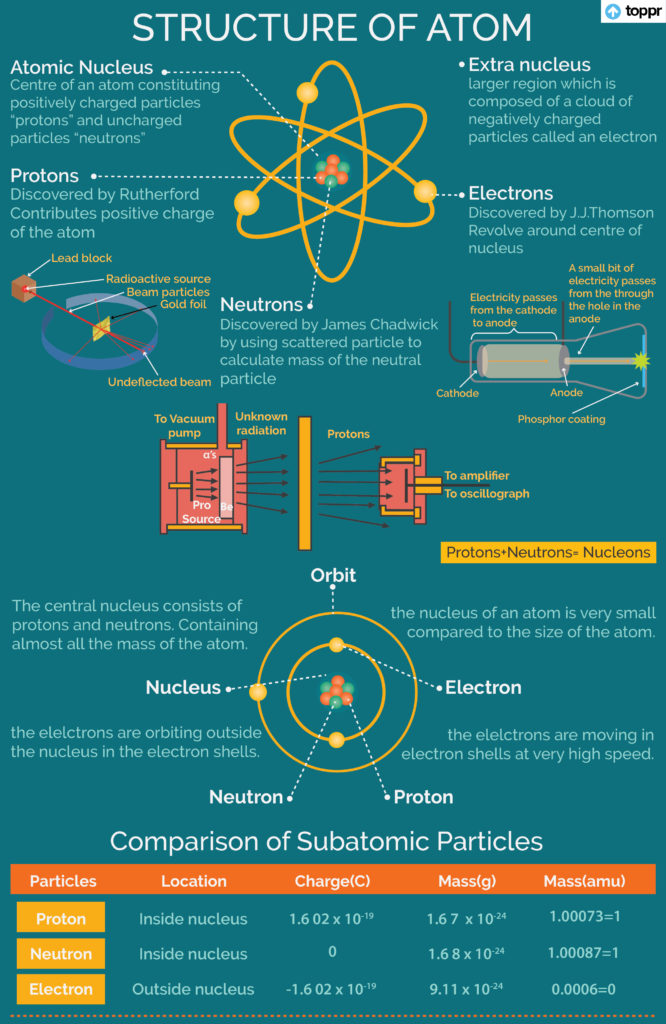
The structure of an atom is made up of three particles: protons, neutrons, and electrons: Protons: Positively charged particles located in the nucleus Neutrons: Uncharged particles located in the nucleus Electrons: Negatively charged particles that orbit the nucleus in shells The nucleus is a dense,Read more
The structure of an atom is made up of three particles: protons, neutrons, and electrons:
Protons: Positively charged particles located in the nucleus
Neutrons: Uncharged particles located in the nucleus
Electrons: Negatively charged particles that orbit the nucleus in shells
The nucleus is a dense, positively charged part of the atom that contains more than 99.9% of its mass, even though it’s usually less than one ten-thousandth the size of the atom.
The arrangement and number of these particles in an atom determine its properties. For example, a hydrogen atom has one proton, one electron, and no neutrons.
To draw an atom structure, you can:
Draw a small circle to represent the nucleus
Write the number of protons and neutrons in the nucleus
Calculate the number of electrons in the atom
Draw the atom’s shells
Fill the shells with the correct number of electrons for the element
The number of protons and neutrons in an atom can be found on the periodic table. The top number is the mass number, which is the sum of the number of protons and neutrons. The bottom number is the atomic number, which is the number of protons.
Introduction: The Eternal Hymn of Detachment and Devotion Shiv Rudrashtakam is one of the most profound Sanskrit hymns dedicated to Lord Shiva, the supreme yogi, destroyer of ignorance, and embodiment of pure consciousness. Composed by Adi Shankaracharya, this eight-verse stotra ...
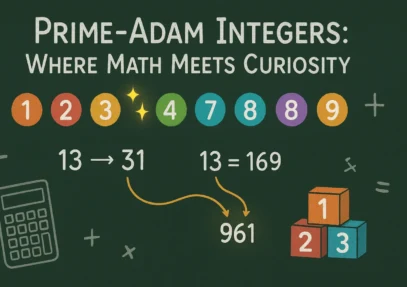
A Prime-Adam Number is defined as a positive number that fulfills two conditions simultaneously: it is a prime number and also an Adam number. For example, take the number 13; its reverse is 31. The square of 13 is 169, and the ...

Introduction The 74th Miss Universe pageant, held on November 21, 2025, at the Impact Challenger Hall in Nonthaburi, Thailand, set a new benchmark in global beauty contests. Not merely a showcase of beauty and fashion, this year’s event stood as ...
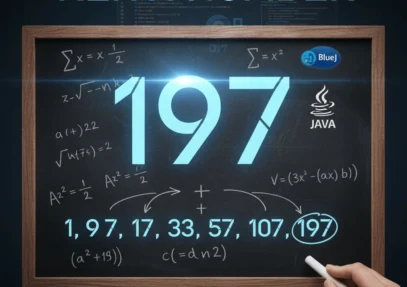
A Keith number is an n-digit number that appears as a term in a sequence, where the first n terms are its own digits, and each following term is the sum of the previous n terms. For example, 197 is ...
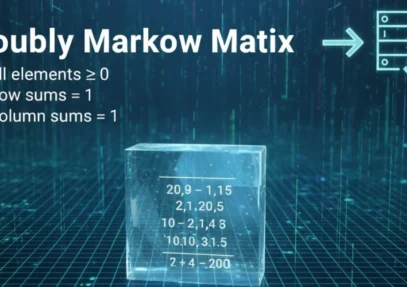
A matrix is called Doubly Markov if it satisfies the following conditions: All elements are greater than or equal to 0. The sum of each row is equal to 1. The sum of each column is equal to 1. The program should ...

The Dawn of a Clean Energy Revolution Imagine a world where air pollution is history, industries run clean, and the very fuel that powers our lives leaves nothing behind but water vapor. Sounds like science fiction? It’s the promise of ...


Humans cannot survive on Mars without significant life-support systems. The planet’s thin atmosphere (95% carbon dioxide), extreme cold, lack of liquid water, and harmful radiation make it inhospitable. Terraforming would be required for long-term, large-scale habitation.
Humans cannot survive on Mars without significant life-support systems. The planet’s thin atmosphere (95% carbon dioxide), extreme cold, lack of liquid water, and harmful radiation make it inhospitable. Terraforming would be required for long-term, large-scale habitation.
See less