

Who among the following was the first woman to win a Nobel Prize?
Poll Results
Please login to vote and see the results.
Sign up to our innovative Q&A platform to pose your queries, share your wisdom, and engage with a community of inquisitive minds.
Log in to our dynamic platform to ask insightful questions, provide valuable answers, and connect with a vibrant community of curious minds.
Forgot your password? No worries, we're here to help! Simply enter your email address, and we'll send you a link. Click the link, and you'll receive another email with a temporary password. Use that password to log in and set up your new one!
Please briefly explain why you feel this question should be reported.
Please briefly explain why you feel this answer should be reported.
Please briefly explain why you feel this user should be reported.
At Qukut, our mission is to bridge the gap between knowledge seekers and knowledge sharers. We strive to unite diverse perspectives, fostering understanding and empowering everyone to contribute their expertise. Join us in building a community where knowledge flows freely and growth is limitless.
Who among the following was the first woman to win a Nobel Prize?
Please login to vote and see the results.
Who was the first recipient of the Bharat Ratna award?
Please login to vote and see the results.

The first recipients of the Bharat Ratna, India's highest civilian award, were C. Rajagopalachari, Dr. Sarvepalli Radhakrishnan, and C.V. Raman in 1954. Among the given options, the correct answer is C. Rajagopalachari.
The first recipients of the Bharat Ratna, India’s highest civilian award, were C. Rajagopalachari, Dr. Sarvepalli Radhakrishnan, and C.V. Raman in 1954.
Among the given options, the correct answer is C. Rajagopalachari.
See lessWhich ancient Indian text is considered the first comprehensive work on Ayurveda?
Please login to vote and see the results.
The Charaka Samhita is considered the first comprehensive work on Ayurveda. It is an ancient Indian text attributed to Acharya Charaka, who is regarded as one of the principal contributors to Ayurvedic medicine. The text primarily focuses on internal medicine (Kaya Chikitsa) and provides detailed knRead more
The Charaka Samhita is considered the first comprehensive work on Ayurveda. It is an ancient Indian text attributed to Acharya Charaka, who is regarded as one of the principal contributors to Ayurvedic medicine. The text primarily focuses on internal medicine (Kaya Chikitsa) and provides detailed knowledge about diagnosis, treatment, pharmacology, and preventive healthcare. It is believed to have been compiled around the 2nd century BCE and is one of the foundational texts of Ayurveda, alongside the Sushruta Samhita (which focuses on surgery) and the Ashtanga Hridaya.
See lessThe ‘Higgs Boson’ particle was confirmed in which year?
Please login to vote and see the results.
The Higgs Boson particle was confirmed in 2012 by scientists at CERN using the Large Hadron Collider.
The Higgs Boson particle was confirmed in 2012 by scientists at CERN using the Large Hadron Collider.
See lessThe term ‘Jal Satyagraha’ was first used during which movement?
Please login to vote and see the results.
The term ‘Jal Satyagraha’ was first used during the Narmada Bachao Andolan (NBA). This movement, led by activists like Medha Patkar, protested against the displacement of people due to the construction of large dams on the Narmada River. Jal Satyagraha was a form of protest where villagers stood inRead more
The term ‘Jal Satyagraha’ was first used during the Narmada Bachao Andolan (NBA).
This movement, led by activists like Medha Patkar, protested against the displacement of people due to the construction of large dams on the Narmada River. Jal Satyagraha was a form of protest where villagers stood in water for extended periods to oppose rising water levels caused by dam projects.
So, the correct answer is: Narmada Bachao Andolan.
See lessIn which year was the Indian Independence Act passed?
Please login to vote and see the results.
The Indian Independence Act was passed on 18th July 1947 by the British Parliament. This act paved the way for the partition of India and the creation of two independent dominions, India and Pakistan, effective from 15th August 1947. It marked the end of British rule in India and granted both nationRead more
The Indian Independence Act was passed on 18th July 1947 by the British Parliament. This act paved the way for the partition of India and the creation of two independent dominions, India and Pakistan, effective from 15th August 1947. It marked the end of British rule in India and granted both nations the power to govern themselves.
See lessThe Doctrine of Lapse was introduced by which British Governor-General?
Please login to vote and see the results.
The Doctrine of Lapse was introduced by Lord Dalhousie, who served as the Governor-General of India from 1848 to 1856. This policy allowed the British East India Company to annex Indian princely states if a ruler died without a natural male heir, disregarding the traditional practice of adopting heiRead more
The Doctrine of Lapse was introduced by Lord Dalhousie, who served as the Governor-General of India from 1848 to 1856. This policy allowed the British East India Company to annex Indian princely states if a ruler died without a natural male heir, disregarding the traditional practice of adopting heirs. Under this doctrine, several states, including Satara (1848), Jaitpur (1849), Sambalpur (1850), Udaipur (1852), Jhansi (1853), and Nagpur (1854), were annexed by the British. The policy was widely resented and became one of the causes of the Revolt of 1857.
See less
Green Taxonomy is a classification system that defines which economic activities are environmentally sustainable. It serves as a guideline for businesses, investors, and policymakers to direct capital towards projects and industries that contribute to environmental goals such as climate change mitigRead more
Green Taxonomy is a classification system that defines which economic activities are environmentally sustainable. It serves as a guideline for businesses, investors, and policymakers to direct capital towards projects and industries that contribute to environmental goals such as climate change mitigation, pollution reduction, and biodiversity conservation.
Green taxonomies are a crucial tool in achieving a sustainable and low-carbon economy by directing capital towards projects that genuinely benefit the environment.
See lessA Mixture of Experts (MoE) is a machine learning architecture designed to improve model performance and efficiency by combining specialized "expert" sub-models. Instead of using a single monolithic neural network, MoE systems leverage multiple smaller networks (the "experts") and a gating mechanism Read more
A Mixture of Experts (MoE) is a machine learning architecture designed to improve model performance and efficiency by combining specialized “expert” sub-models. Instead of using a single monolithic neural network, MoE systems leverage multiple smaller networks (the “experts”) and a gating mechanism that dynamically routes inputs to the most relevant experts. Here’s a breakdown:
MoE is a cornerstone of cost-effective AI scaling. For example:
What are the main advantages of using cold-start data in DeepSeek-R1’s training process

The integration of cold-start data into DeepSeek-R1’s training process offers several strategic advantages, enhancing both performance and adaptability. Here’s a structured breakdown of the key benefits: Enhanced Generalization: Cold-start data introduces the model to novel, unseen scenarios, enabliRead more
The integration of cold-start data into DeepSeek-R1’s training process offers several strategic advantages, enhancing both performance and adaptability. Here’s a structured breakdown of the key benefits:
Cold-start data empowers DeepSeek-R1 to be more versatile, fair, and resilient, ensuring it performs effectively across diverse and evolving challenges.
See lessCold-start data refers to data used to train or adapt a machine learning model in scenarios where there is little to no prior information available about a new task, user, domain, or context. The term originates from the "cold-start problem"—a common challenge in systems like recommendation engines,Read more
Cold-start data refers to data used to train or adapt a machine learning model in scenarios where there is little to no prior information available about a new task, user, domain, or context. The term originates from the “cold-start problem”—a common challenge in systems like recommendation engines, where a model struggles to make accurate predictions for new users, items, or environments due to insufficient historical data. In the context of AI training (e.g., DeepSeek-R1), cold-start data is strategically incorporated to address similar challenges and improve the model’s adaptability and robustness.
Cold-start data is critical for building AI systems that remain effective in dynamic, unpredictable environments. By training models to handle “unknowns,” it ensures they stay relevant, fair, and robust—even when faced with novel challenges.
See lessHow does the “mixture of experts” technique contribute to DeepSeek-R1’s efficiency?
The "mixture of experts" (MoE) technique significantly enhances DeepSeek-R1's efficiency through several innovative mechanisms that optimize resource utilization and improve performance. Here’s how this architecture contributes to the model's overall effectiveness: Selective Activation of Experts: DRead more
The “mixture of experts” (MoE) technique significantly enhances DeepSeek-R1’s efficiency through several innovative mechanisms that optimize resource utilization and improve performance. Here’s how this architecture contributes to the model’s overall effectiveness:
The “mixture of experts” technique is central to DeepSeek-R1’s design, allowing it to achieve remarkable efficiency and performance in handling complex AI tasks. By leveraging selective activation, specialization, intelligent routing through gating networks, and effective load balancing, DeepSeek-R1 not only reduces computational costs but also enhances its ability to deliver precise and contextually relevant outputs across various domains. This innovative architecture positions DeepSeek-R1 as a competitive player in the AI landscape, challenging established models with its advanced capabilities.
See less
Chain-of-thought (CoT) is a reasoning technique used in artificial intelligence (AI) and human cognition to break down complex problems into smaller, logical steps. It helps models, like me, generate more accurate and coherent responses by explicitly outlining intermediate reasoning steps rather thaRead more
Chain-of-thought (CoT) is a reasoning technique used in artificial intelligence (AI) and human cognition to break down complex problems into smaller, logical steps. It helps models, like me, generate more accurate and coherent responses by explicitly outlining intermediate reasoning steps rather than jumping directly to an answer.
In AI, Chain-of-Thought prompting refers to a method where a model is guided to think step-by-step before arriving at a conclusion. This improves its ability to solve math problems, logical reasoning tasks, and commonsense reasoning challenges.
For example:
Without CoT:
Q: If a person buys a pencil for $1.50 and an eraser for $0.50, how much do they spend in total?
A: $2.00
With CoT:
Q: If a person buys a pencil for $1.50 and an eraser for $0.50, how much do they spend in total?
By explicitly listing steps, AI reduces errors and enhances interpretability.
In everyday life, people use chain-of-thought reasoning to solve problems, make decisions, and analyze situations methodically. For example, when planning a trip, you might consider:
This structured approach ensures well-thought-out decisions rather than impulsive choices.
DeepSeek R1 is an advanced AI language model developed by the Chinese startup DeepSeek. It is designed to enhance problem-solving and analytical capabilities, demonstrating performance comparable to leading models like OpenAI's GPT-4. Key Features: Reinforcement Learning Approach: DeepSeek R1 employRead more
DeepSeek R1 is an advanced AI language model developed by the Chinese startup DeepSeek. It is designed to enhance problem-solving and analytical capabilities, demonstrating performance comparable to leading models like OpenAI’s GPT-4. Key Features:
Performance Highlights:
Accessing DeepSeek R1:
DeepSeek R1 represents a significant advancement in AI language models, combining innovative training methods with open-source accessibility and cost-effectiveness.
See lessHow did the planets in our solar system get their names?
The names of the planets in our solar system are rooted in ancient mythology and cultural traditions. Here’s a breakdown: Mercury: Named after the Roman messenger god, Mercury, known for his speed, because the planet moves quickly across the sky. Venus: Named after the Roman goddess of love and beauRead more
The names of the planets in our solar system are rooted in ancient mythology and cultural traditions. Here’s a breakdown:
The tradition of naming planets after Roman and Greek gods reflects the influence of ancient astronomers, who sought to connect celestial objects with divine figures from their mythologies. This convention continues today for newly discovered celestial bodies.
See lessThe word ‘Denisovan’ is sometimes mentioned in media in reference to?
The word Denisovan refers to an extinct group of archaic humans that lived in parts of Asia around 50,000 to 200,000 years ago. They are named after the Denisova Cave in Siberia, where their fossils and genetic material were first discovered in 2008. Denisovans are closely related to Neanderthals anRead more
The word Denisovan refers to an extinct group of archaic humans that lived in parts of Asia around 50,000 to 200,000 years ago. They are named after the Denisova Cave in Siberia, where their fossils and genetic material were first discovered in 2008. Denisovans are closely related to Neanderthals and modern humans, and their DNA has been found in some modern populations, particularly among Melanesians, Aboriginal Australians, and some Southeast Asian groups.
In media, the term is often mentioned in discussions about human evolution, genetics, and the interbreeding between different human species in ancient times.
See lessWhat is empty nest syndrome? How to cope with ENS?
Empty Nest Syndrome (ENS) is a psychological condition characterized by feelings of sadness, loneliness, or loss experienced by parents or caregivers when their children leave home, usually for reasons such as going to college, getting married, or moving out for work. Although it is not a clinicallyRead more
Empty Nest Syndrome (ENS) is a psychological condition characterized by feelings of sadness, loneliness, or loss experienced by parents or caregivers when their children leave home, usually for reasons such as going to college, getting married, or moving out for work. Although it is not a clinically diagnosed mental health condition, it can have a significant emotional impact.
Key Symptoms of ENS:
Sadness and Loneliness: A profound sense of emptiness and isolation.
Loss of Purpose: Feeling as if life has lost meaning after children leave.
Depression or Anxiety: Persistent feelings of unhappiness or worry.
Identity Crisis: Struggling to adapt to a new identity beyond being a caregiver.
How to Cope with Empty Nest Syndrome
Coping with ENS involves emotional adjustment and finding new ways to create purpose and joy in life. Here are practical strategies:
1. Reframe Your Perspective
View your child’s independence as a positive milestone in their growth.
Celebrate their achievements and focus on the successful role you played in shaping their future.
2. Rediscover Your Identity
Reconnect with personal passions or hobbies that were set aside during parenting years.
Explore activities such as painting, writing, gardening, or traveling.
3. Strengthen Relationships
Focus on nurturing your relationship with your partner or spouse.
Spend quality time with friends or build new social connections.
4. Pursue New Goals
Take up a new skill, enroll in a course, or volunteer in your community.
Revisit career aspirations or start a new project.
5. Stay Connected with Your Children
Maintain regular communication, but respect their independence.
Use technology like video calls, messaging, or emails to stay in touch.
6. Practice Self-Care
Focus on physical and mental well-being through exercise, healthy eating, and mindfulness practices.
Consider meditation, yoga, or therapy to manage stress or overwhelming emotions.
7. Seek Support
Talk to friends, family, or support groups who understand what you’re going through.
Consider speaking with a therapist if ENS leads to prolonged depression or anxiety.
8. Embrace the Opportunity
Use this phase as an opportunity to travel, explore new cultures, or build experiences that enrich your life.
By focusing on personal growth and maintaining positive connections, parents can successfully navigate this transitional phase and find fulfillment beyond their caregiving role.
See lessWhat is the difference between modernization and westernization?
Modernization and Westernization are related but distinct concepts, often confused due to their overlapping effects in many societies. Here’s how they differ: 1. Definition Modernization refers to the process of adopting new technologies, institutions, and practices to improve economic, political, aRead more
Modernization and Westernization are related but distinct concepts, often confused due to their overlapping effects in many societies. Here’s how they differ:
1. Definition
Modernization refers to the process of adopting new technologies, institutions, and practices to improve economic, political, and social development. It is a broad and universal concept that can occur in any society without necessarily adopting Western cultural values.
Westernization is the adoption of cultural, social, political, and economic norms associated with Western countries (primarily Europe and North America). It involves embracing Western lifestyles, clothing, language, governance models, and sometimes even ideologies.
2. Scope
Modernization focuses on technological advancement, industrialization, urbanization, and improved governance. It includes scientific progress, efficient administration, infrastructure development, and better healthcare and education.
Westernization involves cultural aspects such as wearing Western attire, eating fast food, speaking English, celebrating Western festivals, and following Western entertainment and social norms.
3. Dependency on Western Influence
Modernization does not necessarily mean adopting Western values. Countries like Japan, China, and South Korea have modernized while maintaining their unique cultural identities.
Westernization implies a shift towards Western culture, often replacing or overshadowing indigenous traditions.
4. Examples
Modernization Example: India’s use of digital banking, advancements in space technology, and smart city projects without losing its cultural heritage.
Westernization Example: The influence of Hollywood movies, Western fashion brands, and fast-food chains changing local habits and traditions.
5. Impact on Society
Modernization leads to progress in infrastructure, governance, and economic growth, allowing a country to compete globally while preserving its identity.
Westernization may result in cultural erosion, where local traditions and languages decline in favor of Western lifestyles.
Conclusion
Modernization is a global and necessary phenomenon for progress, while Westernization is a cultural shift that is optional and varies by society. A country can modernize without being Westernized, but Westernization often accompanies modernization due to globalization.
See lessWhy is Indian Cinema moving on the path of Propaganda Movies?
Indian cinema, particularly Bollywood, has seen a noticeable increase in propaganda-driven films in recent years. Several factors contribute to this shift, including political influence, audience demand, economic interests, and the changing role of cinema in shaping public opinion. Here’s a breakdowRead more
Indian cinema, particularly Bollywood, has seen a noticeable increase in propaganda-driven films in recent years. Several factors contribute to this shift, including political influence, audience demand, economic interests, and the changing role of cinema in shaping public opinion. Here’s a breakdown of why Indian cinema is moving in this direction:
1. Political Influence and Government Support
Many films today align with the ideology of the ruling party, often glorifying historical and political figures in a manner that supports the government’s narrative.
Filmmakers who create content that aligns with government interests may receive indirect benefits such as tax exemptions, easier clearances, or promotional support.
The rise of nationalism has led to an increase in movies that promote patriotic and religious sentiments, often blurring the line between history and fiction.
2. Audience Demand and Market Trends
There is a growing appetite for films with nationalist themes, especially in small towns and rural areas, where audiences connect with patriotic and religious narratives.
Movies like The Kashmir Files, URI: The Surgical Strike, and The Kerala Story have performed well at the box office, proving that such films have a strong market.
In contrast, socially critical or politically neutral films often struggle to gain traction in today’s polarized environment.
3. Shift from Art to Ideology-Driven Cinema
Bollywood once had a strong tradition of socially conscious films (Mother India, Anand, Jaane Bhi Do Yaaro), but today, ideological films are more prominent.
The industry has increasingly leaned towards dramatizing real-life events with a selective or exaggerated narrative, often prioritizing a specific viewpoint over nuanced storytelling.
4. Economic and Business Interests
Many production houses see propaganda films as a safe bet because they generate controversy, which increases media coverage and ultimately boosts box office collections.
Political-themed movies often benefit from mass screenings, political endorsements, and viral social media campaigns.
Some filmmakers may also align with the ruling establishment to ensure smooth operations in an industry heavily dependent on government regulations.
5. Changing Role of Cinema in Public Discourse
Historically, cinema was a medium for artistic and cultural expression, but today it plays a significant role in shaping public opinion.
Social media amplifies the reach of propaganda movies, making them more influential than ever before.
With the decline of independent journalism and intellectual debate in mainstream media, cinema is filling the void by becoming a tool for ideological storytelling.
6. Suppression of Alternative Narratives
Movies that challenge dominant narratives or criticize the government often face censorship, legal trouble, or public backlash.
Films like Udta Punjab and Lipstick Under My Burkha struggled with censorship, whereas films with a nationalist agenda often receive a smooth release.
Filmmakers may self-censor to avoid controversies, leading to a lack of diverse storytelling in mainstream cinema.
Conclusion
Indian cinema’s tilt towards propaganda films is driven by a combination of political alignment, economic incentives, audience preferences, and the broader role of media in shaping public discourse. While propaganda films have always existed, their increasing dominance raises concerns about artistic freedom and the future of diverse storytelling in Indian cinema.
See lessWhat are the ecological benefits of water hyacinth?
Water hyacinth (Eichhornia crassipes) is often considered an invasive aquatic plant, but it also has several ecological benefits. Here are some key ways it contributes positively to the environment: 1. Water Purification Phytoremediation: Water hyacinth absorbs heavy metals like lead, mercury, and cRead more
Water hyacinth (Eichhornia crassipes) is often considered an invasive aquatic plant, but it also has several ecological benefits. Here are some key ways it contributes positively to the environment:
Despite its ecological benefits, uncontrolled water hyacinth growth can disrupt ecosystems. Proper management and controlled cultivation can help harness its positive attributes while minimizing its negative impacts.
See lessWhat is the future of Artificial Intelligence in FinTech?
The Future of Artificial Intelligence in FinTech Artificial Intelligence (AI) is revolutionizing the financial technology (FinTech) industry, enhancing efficiency, security, and customer experiences. As AI continues to evolve, its future in FinTech looks promising, with several transformative trendsRead more
The Future of Artificial Intelligence in FinTech
Artificial Intelligence (AI) is revolutionizing the financial technology (FinTech) industry, enhancing efficiency, security, and customer experiences. As AI continues to evolve, its future in FinTech looks promising, with several transformative trends and innovations.
1. Hyper-Personalization in Banking and Financial Services
AI-driven chatbots and virtual assistants will provide real-time, personalized financial advice tailored to individual user behavior.
Robo-advisors will become more advanced, helping users make smarter investment decisions based on real-time market trends and personal risk appetite.
2. Enhanced Fraud Detection and Cybersecurity
AI and machine learning (ML) algorithms will continuously analyze financial transactions to detect fraudulent activities.
Biometric authentication (facial recognition, fingerprint scanning, voice verification) will further strengthen security measures.
3. AI-Driven Risk Assessment and Credit Scoring
AI will revolutionize loan approvals and credit scoring by analyzing alternative data sources like social media activity, purchase history, and online behavior.
Traditional credit models will become more inclusive, allowing individuals with limited credit history to access financial services.
4. Algorithmic Trading and Wealth Management
AI-powered algorithmic trading will become more sophisticated, enabling real-time investment strategies with minimal human intervention.
Hedge funds and financial institutions will rely on AI-driven analytics to optimize portfolios and predict market movements.
5. Automation of Regulatory Compliance (RegTech)
AI will streamline regulatory compliance by automatically analyzing legal requirements and ensuring that financial institutions adhere to global regulations.
Natural Language Processing (NLP) will help banks process complex legal documents efficiently.
6. Conversational AI and Voice Banking
AI-powered voice assistants will enable customers to perform banking transactions through voice commands, improving accessibility and convenience.
Natural Language Understanding (NLU) will enhance chatbots to handle complex financial queries more effectively.
7. Blockchain and AI Integration for Secure Transactions
AI and blockchain will work together to provide tamper-proof, automated financial contracts (smart contracts).
Decentralized AI-powered fraud detection will help secure cryptocurrency transactions and digital payments.
8. AI-Powered Insurance (InsurTech)
AI will help insurers assess risks more accurately, leading to dynamic pricing models for insurance policies.
Automated claims processing and AI-driven underwriting will speed up approval times and reduce fraud.
9. Financial Inclusion and Microfinance
AI will facilitate microloans and financial services for unbanked populations by analyzing behavioral and digital transaction data.
Mobile AI-driven financial solutions will empower emerging markets and rural areas with better banking access.
10. Quantum Computing and AI in FinTech
The combination of AI and quantum computing will significantly enhance risk modeling, financial forecasting, and fraud detection.
Quantum algorithms will revolutionize financial markets by processing massive amounts of data in real-time.
The future of AI in FinTech is dynamic and transformative, driving innovation in banking, insurance, investment, and cybersecurity. As AI models become more sophisticated and ethical, financial services will become more secure, efficient, and customer-centric. However, addressing data privacy, AI bias, and regulatory challenges will be critical to ensuring sustainable AI adoption in FinTech.
See lesswhat are trade tarriffs and how do they work?
Trade tariffs are taxes or duties imposed by a government on goods and services imported from other countries. They are a common tool in international trade policy and serve various economic and political purposes. Here's a detailed breakdown of what tariffs are and how they work: Types of Tariffs ARead more
Trade tariffs are taxes or duties imposed by a government on goods and services imported from other countries. They are a common tool in international trade policy and serve various economic and political purposes. Here’s a detailed breakdown of what tariffs are and how they work:
Trade tariffs are a powerful but often controversial tool in economic policy. While they can protect domestic industries and generate revenue, they may also lead to higher consumer costs and strained international relations.
See lessIs artificial intelligence good for Society?

Artificial Intelligence (AI) has the potential to be both beneficial and challenging for society, depending on how it is developed and applied. Here are some aspects to consider: Positive Impacts: Healthcare: AI can help with early diagnosis, personalized treatments, and drug development. It can assRead more
Artificial Intelligence (AI) has the potential to be both beneficial and challenging for society, depending on how it is developed and applied. Here are some aspects to consider:
Positive Impacts:
Healthcare:
AI can help with early diagnosis, personalized treatments, and drug development. It can assist doctors in identifying conditions that may not be easily detectable, improving health outcomes.
Automation and Productivity:
AI can automate repetitive tasks, allowing humans to focus on more complex, creative, or strategic work. This can increase productivity and innovation.
Environmental Sustainability:
AI can optimize energy usage, predict climate patterns, and improve waste management, all of which contribute to environmental protection and sustainability.
Education and Accessibility:
AI can personalize learning experiences for students, helping those with disabilities and providing access to education in remote areas.
Safety and Security:
AI systems can be used in areas like cybersecurity, fraud detection, and disaster response, enhancing safety and security in society.
Challenges and Concerns:
Job Displacement:
Automation driven by AI could displace many jobs, especially in sectors like manufacturing, transportation, and customer service. This can lead to unemployment and income inequality.
Bias and Discrimination:
AI systems may perpetuate biases if they are trained on biased data. This can lead to unfair outcomes, particularly in areas like hiring, law enforcement, and lending.
Privacy and Surveillance:
AI can be used for surveillance, potentially infringing on individual privacy. There are concerns about how personal data is collected, stored, and used by AI systems.
Ethical and Moral Issues:
AI systems make decisions based on algorithms, but these decisions might lack empathy and moral consideration. Determining who is responsible for an AI’s actions (such as in autonomous vehicles) is also a complex issue.
Security Risks:
AI can be used maliciously, such as for creating deepfakes, cyberattacks, or autonomous weapons, posing threats to security.
Conclusion:
AI has the potential to greatly benefit society, but its implementation needs careful regulation, ethical considerations, and societal awareness. If developed responsibly, AI could help tackle some of humanity’s greatest challenges, but it also requires safeguards to minimize the risks and negative consequences.
The Buddha’s teachings are related to:
Please login to vote and see the results.
The Buddha's teachings are primarily related to practice and sanctity of conduct (moral and ethical living). His philosophy emphasizes right conduct, mindfulness, wisdom, and compassion as the path to enlightenment. Why Practice and Sanctity of Conduct? The Buddha taught the Noble Eightfold Path, whRead more
The Buddha’s teachings are primarily related to practice and sanctity of conduct (moral and ethical living). His philosophy emphasizes right conduct, mindfulness, wisdom, and compassion as the path to enlightenment.
Why Practice and Sanctity of Conduct?
The Buddha taught the Noble Eightfold Path, which includes right speech, right action, and right livelihood— all focusing on ethical and moral behavior.
His teachings emphasize Sīla (moral discipline), which is the foundation for spiritual progress.
The Five Precepts (not killing, not stealing, not lying, not indulging in sexual misconduct, and not consuming intoxicants) highlight the importance of purity in conduct.
Why Not the Other Options?
Self-relating dispute: While Buddhist philosophy addresses conflict resolution through mindfulness and compassion, it does not focus on “self-relating disputes” as a core teaching.
Brahmachari (Celibacy): Though Buddhist monks follow celibacy, lay followers are not required to, making it just one aspect of the monastic path, not the essence of Buddhism.
Religious rituals or practices: Buddhism de-emphasizes rituals, focusing more on wisdom and self-realization rather than external ceremonies.
Conclusion
The Buddha’s teachings primarily focus on the peactice and sanctity of conduct, encouraging ethical living, compassion, and wisdom as the means to liberation.
See lessKinetic Energy is the energy that an object possesses due to its motion. It is a type of mechanical energy and depends on two factors: the mass of the object and the velocity (speed) at which it is moving. The mathematical formula for kinetic energy (KEKE) is: K.E = $\frac{1}{2}mv^{2}$ where: mm isRead more
Kinetic Energy is the energy that an object possesses due to its motion. It is a type of mechanical energy and depends on two factors: the mass of the object and the velocity (speed) at which it is moving. The mathematical formula for kinetic energy () is:
K.E = $\frac{1}{2}mv^{2}$
where:
How does Sikhism approach the concept of equality?
Sikhism places a strong emphasis on the concept of equality, rooted deeply in its core teachings and practices. Here’s how it approaches equality: 1. Equality of All Humans Universal Brotherhood: Sikhism teaches that all humans are equal, regardless of caste, creed, gender, or race. This belief is fRead more
Sikhism places a strong emphasis on the concept of equality, rooted deeply in its core teachings and practices. Here’s how it approaches equality:
1. Equality of All Humans
Universal Brotherhood: Sikhism teaches that all humans are equal, regardless of caste, creed, gender, or race. This belief is founded on the idea that the same divine spark resides in every individual.
Rejection of Caste System: Guru Nanak, the founder of Sikhism, openly condemned the caste system, which was prevalent in India during his time. He emphasized that no one is superior or inferior by birth.
2. Gender Equality
Empowerment of Women: Sikhism advocates for gender equality. Women are regarded as equal to men in all aspects of life, including spiritual, social, and religious domains.
Participation in Religious Activities: Women have the right to participate fully in religious ceremonies and can lead prayers and recite from the Guru Granth Sahib, the Sikh holy scripture.
3. Langar (Community Kitchen)
Symbol of Social Equality: The institution of Langar serves as a practical manifestation of equality in Sikhism. In Langar, everyone sits together, regardless of social status, to share a common meal prepared and served by volunteers.
Breaking Social Barriers: This practice breaks down social and economic barriers and reinforces the concept of unity and equality.
4. Teachings of the Gurus
Guru Nanak’s Teachings: Guru Nanak preached the message of one God and the equality of all human beings, encouraging his followers to rise above superficial divisions.
Guru Granth Sahib: The Sikh scripture, Guru Granth Sahib, contains verses from various saints, not just Sikh Gurus, emphasizing the universal message of equality and inclusion.
5. Equality in Worship
Open Gurdwaras: Sikh places of worship, called Gurdwaras, are open to everyone, irrespective of their background. There are no restrictions on who can enter and participate in prayers and community services.
Through these principles and practices, Sikhism actively promotes a society where all individuals are treated with equal respect and dignity.
See lessWhat are the key rituals and practices of Shinto?

Shinto, the indigenous religion of Japan, is characterized by rituals and practices that focus on reverence for nature, ancestors, and kami (spiritual beings or deities). Here are the key rituals and practices: Kami Worship Shrines (Jinja): Shinto shrines are the physical spaces where kami are enshrRead more
Shinto, the indigenous religion of Japan, is characterized by rituals and practices that focus on reverence for nature, ancestors, and kami (spiritual beings or deities). Here are the key rituals and practices:
These practices emphasize purity, respect for nature, and the deep connection between humans and the spiritual realm, forming the foundation of Shinto beliefs.
See lessWhat is the role of the Pope in the Catholic Church?
The Pope holds a pivotal role in the Catholic Church, serving as the spiritual leader and the highest authority within the Church. Here are the key aspects of the Pope's role: Spiritual Leader Supreme Pontiff: The Pope is regarded as the supreme spiritual leader of Catholics worldwide, guiding the CRead more
The Pope holds a pivotal role in the Catholic Church, serving as the spiritual leader and the highest authority within the Church. Here are the key aspects of the Pope’s role:
Through these roles, the Pope ensures the Church remains steadfast in its mission, adapting to changing times while preserving its core teachings.
See lessWhat are the main teachings of Confucianism?
Confucianism, rooted in the teachings of Confucius (551–479 BCE), is a philosophical and ethical system that emphasizes personal development, societal harmony, and moral integrity. Below are its main teachings: Ren (Humaneness or Benevolence) Core Idea: The concept of Ren emphasizes compassion, empaRead more
Confucianism, rooted in the teachings of Confucius (551–479 BCE), is a philosophical and ethical system that emphasizes personal development, societal harmony, and moral integrity. Below are its main teachings:
Confucianism focuses on improving individual character to create a just and harmonious society. Its teachings remain relevant and influential in ethics, governance, and interpersonal relationships worldwide.
See lessWhat are the core beliefs of Zoroastrianism?
Zoroastrianism, one of the world's oldest monotheistic religions, is based on the teachings of the prophet Zarathustra (Zoroaster) and centers around a dualistic worldview of good and evil. Its core beliefs include: 1. Monotheism: Ahura Mazda as the Supreme God Zoroastrians believe in Ahura Mazda, tRead more
Zoroastrianism, one of the world’s oldest monotheistic religions, is based on the teachings of the prophet Zarathustra (Zoroaster) and centers around a dualistic worldview of good and evil. Its core beliefs include:
1. Monotheism: Ahura Mazda as the Supreme God
Zoroastrians believe in Ahura Mazda, the all-powerful, benevolent creator and the source of truth, order, and light.
Ahura Mazda is in a cosmic struggle against Angra Mainyu (Ahriman), the evil spirit of chaos and destruction.
2. Dualism: The Battle Between Good and Evil
The world is a battleground between the forces of Asha (truth, order, righteousness) and Druj (falsehood, disorder, evil).
Humans must choose between these forces through their thoughts, words, and actions.
3. The Threefold Path: Good Thoughts, Good Words, Good Deeds
The guiding ethical principle of Zoroastrianism is “Humata, Hukhta, Huvarshta” (good thoughts, good words, good deeds).
Following this path leads one closer to Ahura Mazda.
4. Free Will and Moral Responsibility
Humans have the freedom to choose between good and evil, and their choices shape their fate in this life and the afterlife.
5. The Afterlife: Judgment and Resurrection
After death, the soul crosses the Chinvat Bridge (Bridge of Judgment).
The righteous enter paradise, while the wicked fall into darkness and suffering.
At the end of time, a savior (Saoshyant) will come, leading to a final judgment and the resurrection of all souls.
6. Fire as a Symbol of Divine Light
Fire represents Ahura Mazda’s wisdom and purity and is a central element in Zoroastrian worship.
Temples contain an eternal flame, signifying the presence of the divine.
7. Environmental Stewardship
Nature is sacred, and Zoroastrians emphasize protecting the earth, water, and fire from pollution.
8. The Coming of the Saoshyant (Savior)
A messianic figure will appear to defeat evil, bring about resurrection, and establish eternal righteousness.
9. Ritual Purity and Sacredness of Elements
Purity in physical and spiritual aspects is essential, and rituals ensure cleanliness and order in life.
10. Community and Social Responsibility
Zoroastrians emphasize honesty, charity, and helping others as a way to promote Asha (truth and righteousness).
These principles make Zoroastrianism a deeply ethical and philosophical religion, with an emphasis on individual responsibility and the cosmic struggle between good and evil.
See less
A few years ago, “content creation” meant a writer staring at a blank document, a designer starting from a blank canvas, or a video editor sifting through hours of raw footage to shape into something watchable. Today, a growing share ...

The expression ” You Can’t Step in a Boat Twice “, credited to the old Greek logician Heraclitus, highlights a significant truth about the idea of presence: the main consistent in life is change. By stretching out this relationship to ...
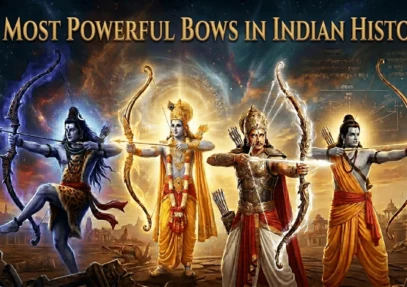
Introduction: 10 most powerful bows In the modern world, we look to particle accelerators and nuclear payloads to define the limits of destructive power. But thousands of years ago, the thinkers of the Indian subcontinent conceptualized a terrifyingly advanced form ...

The Ken-Betwa Link Project (KBLP) is no longer just a blueprint on a map; it is a massive, active engineering reality that serves as the vanguard for India’s National Perspective Plan (NPP) for inter-basin water transfer. Aimed at ending the ...

Patriot vs Nationalist: Introduction The words patriot and nationalist are often used as if they mean the same thing. Both express a strong connection to one’s country, both evoke pride, and both can inspire people to act in the name ...

Introduction: The Eternal Hymn of Detachment and Devotion Shiv Rudrashtakam is one of the most profound Sanskrit hymns dedicated to Lord Shiva, the supreme yogi, destroyer of ignorance, and embodiment of pure consciousness. Composed by Adi Shankaracharya, this eight-verse stotra ...


The first woman to win a Nobel Prize was Marie Curie. She won the Nobel Prize in Physics in 1903, which she shared with her husband Pierre Curie and physicist Henri Becquerel for their work on radioactivity. Later, she won the Nobel Prize in Chemistry in 1911 for her discovery of radium and poloniumRead more
The first woman to win a Nobel Prize was Marie Curie. She won the Nobel Prize in Physics in 1903, which she shared with her husband Pierre Curie and physicist Henri Becquerel for their work on radioactivity. Later, she won the Nobel Prize in Chemistry in 1911 for her discovery of radium and polonium, making her the first person to win two Nobel Prizes in different scientific fields.
See less