Who was the first Indian cricketer to score a double century in Tests?
Poll Results
Please login to vote and see the results.
Sign up to our innovative Q&A platform to pose your queries, share your wisdom, and engage with a community of inquisitive minds.
Log in to our dynamic platform to ask insightful questions, provide valuable answers, and connect with a vibrant community of curious minds.
Forgot your password? No worries, we're here to help! Simply enter your email address, and we'll send you a link. Click the link, and you'll receive another email with a temporary password. Use that password to log in and set up your new one!
Please briefly explain why you feel this question should be reported.
Please briefly explain why you feel this answer should be reported.
Please briefly explain why you feel this user should be reported.
At Qukut, our mission is to bridge the gap between knowledge seekers and knowledge sharers. We strive to unite diverse perspectives, fostering understanding and empowering everyone to contribute their expertise. Join us in building a community where knowledge flows freely and growth is limitless.
Who was the first Indian cricketer to score a double century in Tests?
Please login to vote and see the results.
Why is preserving cultural heritage important for societies?
Given that dark matter interacts gravitationally but not electromagnetically, how could future quantum field theories reconcile the existence of a hypothetical dark matter particle with the Standard Model of particle physics, considering gauge symmetry, supersymmetry constraints, and potential interactions through ...Read more
What is the difference between plant and animal cells?
Differences between plant cells and animal cells are: Feature Plant Cell Animal Cell Cell Shape Rectangular or box-like Irregular or round Cell Wall Present, made of cellulose Absent Chloroplasts Present, for photosynthesis Absent Vacuole Large central vacuole, stores water, and waste Small vacuolesRead more
Differences between plant cells and animal cells are:
| Feature | Plant Cell | Animal Cell |
|---|---|---|
| Cell Shape | Rectangular or box-like | Irregular or round |
| Cell Wall | Present, made of cellulose | Absent |
| Chloroplasts | Present, for photosynthesis | Absent |
| Vacuole | Large central vacuole, stores water, and waste | Small vacuoles, if present, for storage |
| Plasma Membrane | Present, controls the movement of substances | Present, controls the movement of substances |
| Cytoplasm | Present | Present |
| Nucleus | Present, typically located at the edge of the cell | Present, typically centralized |
| Mitochondria | Present | Present |
| Ribosomes | Present | Present |
| Centrioles | Absent (except in some lower plants) | Present, involved in cell division |
| Lysosomes | Rare (some plant cells have them) | Present, involved in digestion and waste removal |
| Photosynthesis | Capable, using sunlight, chloroplasts, and chlorophyll | Not capable, relies on external food sources |
What are the different types of energy?
There are many types of energy, which can be classified into two main types: potential and kinetic: Potential energy: Stored energy, such as chemical, gravitational, mechanical, and nuclear energy Kinetic energy: Energy in motion, such as electrical, heat, light, and sound energy Here are some exampRead more
There are many types of energy, which can be classified into two main types: potential and kinetic:
Potential energy: Stored energy, such as chemical, gravitational, mechanical, and nuclear energy
Kinetic energy: Energy in motion, such as electrical, heat, light, and sound energy
Here are some examples of different types of energy:
Chemical energy
Energy stored in the bonds of atoms and molecules, such as in batteries, biomass, petroleum, natural gas, and coal
Mechanical energy
Energy stored in objects by tension, such as in compressed springs and stretched rubber bands
Nuclear energy
Energy stored in the nucleus of an atom, which holds the nucleus together
Gravitational energy
Energy stored in an object’s height, such as when a person rides a bicycle down a steep hill
Radiant energy
Electromagnetic energy that travels in transverse waves, such as visible light and infrared radiation
What are the stages of the water cycle?
The water cycle, also known as the hydrological cycle, is a continuous process through which water moves through the Earth's atmosphere, land, and oceans. It consists of the following key stages: Stage Description 1. Evaporation - Water from oceans, rivers, lakes, and other water bodies turns into wRead more
The water cycle, also known as the hydrological cycle, is a continuous process through which water moves through the Earth’s atmosphere, land, and oceans. It consists of the following key stages:
| Stage | Description |
|---|---|
| 1. Evaporation | – Water from oceans, rivers, lakes, and other water bodies turns into water vapor due to heat from the Sun. – Plants contribute through transpiration, releasing water vapor from their leaves. |
| 2. Condensation | – Water vapor rises and cools in the atmosphere, forming tiny droplets that combine to create clouds. – This process releases heat, helping regulate atmospheric temperature. |
| 3. Precipitation | – When water droplets in clouds become heavy, they fall back to Earth as rain, snow, sleet, or hail. – Precipitation replenishes water in rivers, lakes, and soil. |
| 4. Runoff | – Water flows over land surfaces into streams, rivers, and eventually into larger water bodies like oceans. – Runoff also carries sediments and nutrients, shaping landscapes. |
| 5. Infiltration | – Part of the precipitation seeps into the ground, replenishing groundwater aquifers. – This process is crucial for underground water storage and plant root absorption. |
| 6. Groundwater Flow | – Groundwater moves slowly through soil and rock layers, eventually feeding into rivers, lakes, and oceans. |
| 7. Sublimation | – In some areas, ice and snow directly convert into water vapor without becoming liquid, especially in cold, dry conditions. |
| 8. Deposition | – Water vapor can directly turn into ice without passing through the liquid stage, forming frost or snow. |
The water cycle is an interconnected system ensuring the continuous movement of water, essential for all forms of life on Earth.
See lessWhat is the process of osmosis in cells?
Osmosis is the movement of water molecules across a semi-permeable membrane from an area of lower solute concentration to an area of higher solute concentration. This process occurs in cells to maintain equilibrium, balance fluid levels, and support various physiological functions. Here's a breakdowRead more
Osmosis is the movement of water molecules across a semi-permeable membrane from an area of lower solute concentration to an area of higher solute concentration. This process occurs in cells to maintain equilibrium, balance fluid levels, and support various physiological functions. Here’s a breakdown of how osmosis works in cells:
In the context of a cell, osmosis plays a vital role in maintaining homeostasis, or the stability of the cell’s internal environment. The direction of water movement depends on the relative concentrations of solutes inside the cell compared to outside the cell. The solution outside the cell can be classified as:
Osmosis is a vital process that enables cells to maintain water balance, support metabolic functions, and adapt to changes in their environment.
See lessConsider the following statements: ...Read more
Please login to vote and see the results.
Let's evaluate the two statements: Statement 1: Ballistic missiles are typically rocket-propelled and follow a parabolic trajectory that reaches the upper atmosphere before re-entering and hitting the target at high speeds, often supersonic or hypersonic. Cruise missiles, on the other hand, are typiRead more
Let’s evaluate the two statements:
The statement that ballistic missiles are jet-propelled at subsonic speeds throughout their flight and cruise missiles are rocket-powered only in the initial phase is incorrect. In fact, it should be the other way around: Ballistic missiles are rocket-propelled throughout their flight, while cruise missiles are jet-powered for most of their flight.
Therefore, Statement 2 is also incorrect.
Both statements are incorrect.
The correct answer is: Neither 1 nor 2.
See lessWhat is a money bill??
A Money Bill is a specific type of bill in a legislative system that deals exclusively with national revenue or expenditure. In the context of India, a Money Bill is defined under Article 110 of the Indian Constitution and can only be introduced in the Lok Sabha, not the Rajya Sabha. Features of a MRead more
A Money Bill is a specific type of bill in a legislative system that deals exclusively with national revenue or expenditure. In the context of India, a Money Bill is defined under Article 110 of the Indian Constitution and can only be introduced in the Lok Sabha, not the Rajya Sabha.
Understanding these features helps differentiate a Money Bill from other types of bills in the legislative process.
See lessHow does altitude affect endurance in long-distance running?
Altitude significantly affects endurance in long-distance running due to the reduced availability of oxygen. Here's a detailed breakdown of how altitude impacts performance: Reduced Oxygen Availability At higher altitudes, the atmospheric pressure is lower, which leads to a decrease in the partial pRead more
Altitude significantly affects endurance in long-distance running due to the reduced availability of oxygen. Here’s a detailed breakdown of how altitude impacts performance:
Altitude poses a challenge to endurance in long-distance running by limiting oxygen availability, but with proper acclimatization, athletes can adapt and potentially gain a competitive edge when returning to lower altitudes.
See lessWhat specific challenges did DeepSeek-R1-Zero face during its development ?
What Can a Personal Development Coach in Palm Beach Do for You?
A personal development coach in Palm Beach helps individuals unlock their full potential by providing guidance, motivation, and strategies for self-improvement. Whether you’re looking to enhance your career, build confidence, improve relationships, or set and achieve meaningful goals, a coach can prRead more
A personal development coach in Palm Beach helps individuals unlock their full potential by providing guidance, motivation, and strategies for self-improvement. Whether you’re looking to enhance your career, build confidence, improve relationships, or set and achieve meaningful goals, a coach can provide the clarity and structure needed for success. For more information, please visit: https://www.vanessa-gray.com/
See lessWhat is primary amebic meningoencephalitis ?
Primary amebic meningoencephalitis (PAM) is a rare, usually fatal brain infection caused by the amoeba Naegleria fowleri. This free-living amoeba is commonly found in warm freshwater environments like lakes, rivers, and hot springs, as well as in poorly maintained pools or contaminated water supplieRead more
Primary amebic meningoencephalitis (PAM) is a rare, usually fatal brain infection caused by the amoeba Naegleria fowleri. This free-living amoeba is commonly found in warm freshwater environments like lakes, rivers, and hot springs, as well as in poorly maintained pools or contaminated water supplies.
PAM occurs when the amoeba enters the body through the nose, typically during activities like swimming or diving. From there, it travels to the brain, causing severe inflammation of the brain and its surrounding membranes (meningoencephalitis). Symptoms usually start within 1–9 days and include headache, fever, nausea, vomiting, stiff neck, confusion, seizures, and coma. The infection progresses rapidly, often leading to death within days if untreated.
Diagnosis is challenging and typically involves detecting the amoeba in cerebrospinal fluid or brain tissue, often confirmed posthumously. Treatment is difficult due to the rapid progression and limited effective drugs, but regimens may include antifungal and antimicrobial agents like amphotericin B, miltefosine, and others, with supportive care. Survival is rare, with only a few documented cases globally.
Prevention focuses on avoiding exposure: using nose clips while swimming in warm freshwater, ensuring proper pool maintenance, and avoiding untreated water for nasal irrigation. The CDC and WHO emphasize that PAM is not contagious and cannot be contracted from drinking contaminated water.
See lessA comet is a small celestial body that orbits the Sun, composed mainly of ice, dust, and rock. Comets are often referred to as "dirty snowballs" because of their icy composition mixed with other materials. They are most notable for their spectacular tails that form when they approach the Sun. Key FeRead more
A comet is a small celestial body that orbits the Sun, composed mainly of ice, dust, and rock. Comets are often referred to as “dirty snowballs” because of their icy composition mixed with other materials. They are most notable for their spectacular tails that form when they approach the Sun.
Key Features of Comets:
1. Nucleus: The solid, central part of a comet, made of a mixture of water ice, carbon dioxide, ammonia, methane, and dust. This is the core of the comet, typically a few kilometers in diameter.
2. Coma: As the comet nears the Sun, the heat causes the icy nucleus to sublimate, releasing gas and dust. This creates a glowing coma (a cloud of gas and dust) around the nucleus, which can be hundreds of thousands of kilometers in diameter.
3. Tail: A comet develops one or two tails that point away from the Sun. The dust tail is made of small particles that are pushed away from the Sun by solar radiation, while the ion tail is made of charged particles that are influenced by the solar wind. Both tails always face away from the Sun due to the influence of solar radiation and wind.
4. Orbit: Comets follow elongated orbits around the Sun, taking them from the outer regions of the solar system to the inner solar system. Some comets have long-period orbits, taking them hundreds or even thousands of years to complete one orbit, while others follow shorter paths.
Origin:
Comets are believed to originate from two main regions of the solar system:
Kuiper Belt: Located beyond the orbit of Neptune, this region contains many icy bodies and short-period comets (comets with orbits that take less than 200 years).
Oort Cloud: A distant, spherical cloud surrounding the solar system, containing long-period comets that can take thousands to millions of years to complete their orbits.
Importance:
Comets are thought to be remnants from the early solar system, and studying them can provide insight into the conditions that existed during its formation.
Their behavior and orbits have been studied for centuries, making them important in the field of astronomy.
Some famous comets include Halley’s Comet, which appears roughly once every 76 years, and Comet NEOWISE, which was visible in 2020.
See lessWhat is the concept of homeostasis in biology?
Homeostasis is the biological process by which living organisms regulate their internal environment to maintain a stable, constant condition necessary for survival, despite changes in the external environment. It ensures that critical parameters like temperature, pH, hydration, and ion concentrationRead more
Homeostasis is the biological process by which living organisms regulate their internal environment to maintain a stable, constant condition necessary for survival, despite changes in the external environment. It ensures that critical parameters like temperature, pH, hydration, and ion concentrations remain within optimal ranges.
Homeostasis is a cornerstone of biological stability, allowing organisms to thrive in varying conditions while maintaining internal equilibrium.
See lessWhere is Sanchi stupa?
The Sanchi Stupa is located in Sanchi, a town in the Raisen district of the state of Madhya Pradesh, India. It is one of the oldest stone structures in India and is renowned for its great historical and architectural significance, particularly in Buddhism. The stupa was originally commissioned by EmRead more
The Sanchi Stupa is located in Sanchi, a town in the Raisen district of the state of Madhya Pradesh, India. It is one of the oldest stone structures in India and is renowned for its great historical and architectural significance, particularly in Buddhism. The stupa was originally commissioned by Emperor Ashoka in the 3rd century BCE.
See lessFind the next term in the series 5, 10, 20, 40, 80, ?
160
160
See lessThe Doctrine of Lapse was introduced by which British Governor-General?
Please login to vote and see the results.
The Doctrine of Lapse was introduced by Lord Dalhousie, who served as the Governor-General of India from 1848 to 1856. This policy allowed the British East India Company to annex Indian princely states if a ruler died without a natural male heir, disregarding the traditional practice of adopting heiRead more
The Doctrine of Lapse was introduced by Lord Dalhousie, who served as the Governor-General of India from 1848 to 1856. This policy allowed the British East India Company to annex Indian princely states if a ruler died without a natural male heir, disregarding the traditional practice of adopting heirs. Under this doctrine, several states, including Satara (1848), Jaitpur (1849), Sambalpur (1850), Udaipur (1852), Jhansi (1853), and Nagpur (1854), were annexed by the British. The policy was widely resented and became one of the causes of the Revolt of 1857.
See lessHow Might AI Content Generators Contribute to Enhancing Creative Processes?
What is Nested Class in Java?
A nested class is a member of its enclosing class. It establishes a structural relationship where one class is entirely contained within the declaration of another. This allows the nested class to be closely associated with the functionality of the outer class and can even grant it special access prRead more
A nested class is a member of its enclosing class. It establishes a structural relationship where one class is entirely contained within the declaration of another. This allows the nested class to be closely associated with the functionality of the outer class and can even grant it special access privileges (especially inner classes) to the outer class’s private members.
See lessHow do chemical reactions occur?
Chemical reactions occur when atoms or molecules interact to form new substances. This process involves the breaking and forming of chemical bonds, leading to changes in the arrangement of atoms. Here’s a step-by-step overview of how chemical reactions happen: 1. Collision of Reactants: For a chemicRead more
Chemical reactions occur when atoms or molecules interact to form new substances. This process involves the breaking and forming of chemical bonds, leading to changes in the arrangement of atoms. Here’s a step-by-step overview of how chemical reactions happen:
1. Collision of Reactants: For a chemical reaction to occur, the reactant molecules or atoms must collide with one another. These collisions provide the opportunity for bonds to break and form new ones.
2. Activation Energy: Not all collisions lead to a reaction. The colliding particles must have enough energy to overcome the activation energy, which is the minimum energy required to initiate the reaction. This energy barrier must be surpassed for the reaction to proceed.
3. Formation of Transition State: When the reactants collide with sufficient energy, they form an intermediate structure called the transition state. In this state, bonds in the reactants are partially broken, and new bonds in the products are partially formed.
4. Breaking and Forming Bonds: In the transition state, existing bonds are broken, and new bonds are formed, resulting in the conversion of reactants into products. The arrangement of atoms changes, leading to the creation of new substances with different properties.
5. Energy Change: Chemical reactions either release energy (exothermic reactions) or absorb energy (endothermic reactions). In exothermic reactions, energy is released, usually as heat or light, while in endothermic reactions, energy is absorbed from the surroundings.
6. Products Formation: Once the reaction is complete, the transition state collapses into the final products. These products are the new substances formed as a result of the chemical reaction.
7. Equilibrium (in Reversible Reactions): Some reactions are reversible, meaning they can proceed in both forward and backward directions. Over time, these reactions may reach a state of equilibrium, where the rates of the forward and reverse reactions are equal, and the concentrations of reactants and products remain constant.
Chemical reactions are fundamental to all biological and chemical processes, driving everything from the metabolism in living organisms to industrial manufacturing processes.
See lessHow does an electric circuit work?
An electric circuit works by allowing electric current to flow through a closed loop of conductive materials, enabling devices to operate. Here's a breakdown of how it functions: 1. Basic Components of an Electric Circuit Power Source: Provides the energy needed to move electrons (e.g., a battery orRead more
An electric circuit works by allowing electric current to flow through a closed loop of conductive materials, enabling devices to operate. Here’s a breakdown of how it functions:
An electric circuit operates based on the principles of voltage, current, and resistance, as described by Ohm’s Law:
Where is voltage, is current, and is resistance. This relationship helps in designing and understanding circuits.
What is a gene, and how does it influence traits?
A gene is a basic unit of heredity made up of DNA (deoxyribonucleic acid) that contains the instructions for building and maintaining an organism. Genes are located on chromosomes within the nucleus of cells and serve as blueprints for the production of proteins, which play critical roles in the strRead more
A gene is a basic unit of heredity made up of DNA (deoxyribonucleic acid) that contains the instructions for building and maintaining an organism. Genes are located on chromosomes within the nucleus of cells and serve as blueprints for the production of proteins, which play critical roles in the structure and function of the body.
Genes influence traits through the following processes:
Genes influence traits by directing the production of proteins that determine the structure and function of an organism. The expression of these traits can be shaped by both genetic and environmental factors, leading to the diversity seen in living organisms.
See lessक्या भूत वास्तव में अस्तित्व में होते हैं, या यह केवल मान्यताओं पर आधारित है?
The existence of ghosts is a widely debated topic, with opinions varying based on cultural beliefs, personal experiences, and scientific perspectives. From a scientific standpoint, there is no concrete evidence to prove the existence of ghosts. Many alleged ghost sightings can be explained by psychoRead more
The existence of ghosts is a widely debated topic, with opinions varying based on cultural beliefs, personal experiences, and scientific perspectives. From a scientific standpoint, there is no concrete evidence to prove the existence of ghosts. Many alleged ghost sightings can be explained by psychological factors, illusions, or environmental causes. For instance, fear, stress, or phenomena like sleep paralysis can make people believe they have encountered supernatural entities. Unexplained noises, shadows, or movements are often attributed to natural causes such as wind, old structures, or electromagnetic fields.
On the other hand, many cultures and religions around the world hold a strong belief in spirits or supernatural entities, often tied to the idea of life after death or the notion of spirits interacting with the living to fulfill unfinished business or provide guidance. Personal experiences also play a significant role in shaping beliefs, as many individuals claim to have encountered or felt the presence of ghosts. Paranormal investigations and ghost-hunting groups attempt to provide evidence, but findings are often inconclusive.
Psychological and social factors also contribute to belief in ghosts. The placebo effect can lead people to interpret normal events as supernatural, while cultural influences such as stories, movies, and traditions shape perceptions of the paranormal. While there is no scientific proof of their existence, belief in ghosts persists due to cultural traditions, personal experiences, and psychological interpretations. Whether ghosts are real or not remains a mystery, captivating and intriguing people across the world.
See lessWhat exactly is article 370?
How does one prepare for a long-term travel adventure?
Why is Indian Cinema moving on the path of Propaganda Movies?
Indian cinema, particularly Bollywood, has seen a noticeable increase in propaganda-driven films in recent years. Several factors contribute to this shift, including political influence, audience demand, economic interests, and the changing role of cinema in shaping public opinion. Here’s a breakdowRead more
Indian cinema, particularly Bollywood, has seen a noticeable increase in propaganda-driven films in recent years. Several factors contribute to this shift, including political influence, audience demand, economic interests, and the changing role of cinema in shaping public opinion. Here’s a breakdown of why Indian cinema is moving in this direction:
1. Political Influence and Government Support
Many films today align with the ideology of the ruling party, often glorifying historical and political figures in a manner that supports the government’s narrative.
Filmmakers who create content that aligns with government interests may receive indirect benefits such as tax exemptions, easier clearances, or promotional support.
The rise of nationalism has led to an increase in movies that promote patriotic and religious sentiments, often blurring the line between history and fiction.
2. Audience Demand and Market Trends
There is a growing appetite for films with nationalist themes, especially in small towns and rural areas, where audiences connect with patriotic and religious narratives.
Movies like The Kashmir Files, URI: The Surgical Strike, and The Kerala Story have performed well at the box office, proving that such films have a strong market.
In contrast, socially critical or politically neutral films often struggle to gain traction in today’s polarized environment.
3. Shift from Art to Ideology-Driven Cinema
Bollywood once had a strong tradition of socially conscious films (Mother India, Anand, Jaane Bhi Do Yaaro), but today, ideological films are more prominent.
The industry has increasingly leaned towards dramatizing real-life events with a selective or exaggerated narrative, often prioritizing a specific viewpoint over nuanced storytelling.
4. Economic and Business Interests
Many production houses see propaganda films as a safe bet because they generate controversy, which increases media coverage and ultimately boosts box office collections.
Political-themed movies often benefit from mass screenings, political endorsements, and viral social media campaigns.
Some filmmakers may also align with the ruling establishment to ensure smooth operations in an industry heavily dependent on government regulations.
5. Changing Role of Cinema in Public Discourse
Historically, cinema was a medium for artistic and cultural expression, but today it plays a significant role in shaping public opinion.
Social media amplifies the reach of propaganda movies, making them more influential than ever before.
With the decline of independent journalism and intellectual debate in mainstream media, cinema is filling the void by becoming a tool for ideological storytelling.
6. Suppression of Alternative Narratives
Movies that challenge dominant narratives or criticize the government often face censorship, legal trouble, or public backlash.
Films like Udta Punjab and Lipstick Under My Burkha struggled with censorship, whereas films with a nationalist agenda often receive a smooth release.
Filmmakers may self-censor to avoid controversies, leading to a lack of diverse storytelling in mainstream cinema.
Conclusion
Indian cinema’s tilt towards propaganda films is driven by a combination of political alignment, economic incentives, audience preferences, and the broader role of media in shaping public discourse. While propaganda films have always existed, their increasing dominance raises concerns about artistic freedom and the future of diverse storytelling in Indian cinema.
See lessThe term ‘Jal Satyagraha’ was first used during which movement?
Please login to vote and see the results.
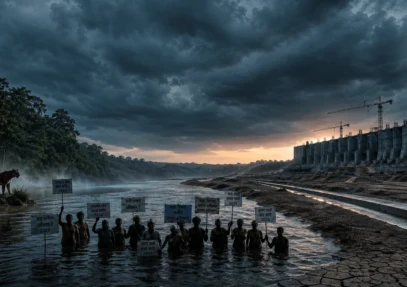
The term ‘Jal Satyagraha’ was first used during the Narmada Bachao Andolan (NBA). This movement, led by activists like Medha Patkar, protested against the displacement of people due to the construction of large dams on the Narmada River. Jal Satyagraha was a form of protest where villagers stood inRead more
The term ‘Jal Satyagraha’ was first used during the Narmada Bachao Andolan (NBA).
This movement, led by activists like Medha Patkar, protested against the displacement of people due to the construction of large dams on the Narmada River. Jal Satyagraha was a form of protest where villagers stood in water for extended periods to oppose rising water levels caused by dam projects.
So, the correct answer is: Narmada Bachao Andolan.
See lessWhat are the differences between freestyle and Greco-Roman wrestling?
This question delves into deep philosophical and existential speculation. The last thought of the last conscious being in the universe before existence ends could encompass various profound themes: Reflection on Existence: A contemplation on the nature of existence itself—what it meant to be, to livRead more
This question delves into deep philosophical and existential speculation. The last thought of the last conscious being in the universe before existence ends could encompass various profound themes:
Introduction: The Eternal Hymn of Detachment and Devotion Shiv Rudrashtakam is one of the most profound Sanskrit hymns dedicated to Lord Shiva, the supreme yogi, destroyer of ignorance, and embodiment of pure consciousness. Composed by Adi Shankaracharya, this eight-verse stotra ...
A Prime-Adam Number is defined as a positive number that fulfills two conditions simultaneously: it is a prime number and also an Adam number. For example, take the number 13; its reverse is 31. The square of 13 is 169, and the ...
Introduction The 74th Miss Universe pageant, held on November 21, 2025, at the Impact Challenger Hall in Nonthaburi, Thailand, set a new benchmark in global beauty contests. Not merely a showcase of beauty and fashion, this year’s event stood as ...
A Keith number is an n-digit number that appears as a term in a sequence, where the first n terms are its own digits, and each following term is the sum of the previous n terms. For example, 197 is ...
A matrix is called Doubly Markov if it satisfies the following conditions: All elements are greater than or equal to 0. The sum of each row is equal to 1. The sum of each column is equal to 1. The program should ...
The Dawn of a Clean Energy Revolution Imagine a world where air pollution is history, industries run clean, and the very fuel that powers our lives leaves nothing behind but water vapor. Sounds like science fiction? It’s the promise of ...
Reconciling the existence of dark matter with the Standard Model (SM) of particle physics involves extending the current framework to account for new particles and interactions. Here are some key approaches future quantum field theories might take, considering gauge symmetry, supersymmetry (SUSY) coRead more
Reconciling the existence of dark matter with the Standard Model (SM) of particle physics involves extending the current framework to account for new particles and interactions. Here are some key approaches future quantum field theories might take, considering gauge symmetry, supersymmetry (SUSY) constraints, and potential new forces or mediators:
1. Gauge Symmetry Extensions
2. Supersymmetry (SUSY)
3. New Fundamental Forces
4. Non-WIMP Models
5. Hidden or Secluded Sectors
Each of these approaches integrates dark matter into the broader framework of particle physics by either extending the symmetry structure, introducing new particles, or proposing novel interactions that maintain consistency with existing observations while providing pathways to detect dark matter. Future experiments in astrophysics, cosmology, and high-energy physics will be crucial in distinguishing which, if any, of these theoretical frameworks correctly describe the nature of dark matter.
See less