


What is the difference between an atom and a molecule?


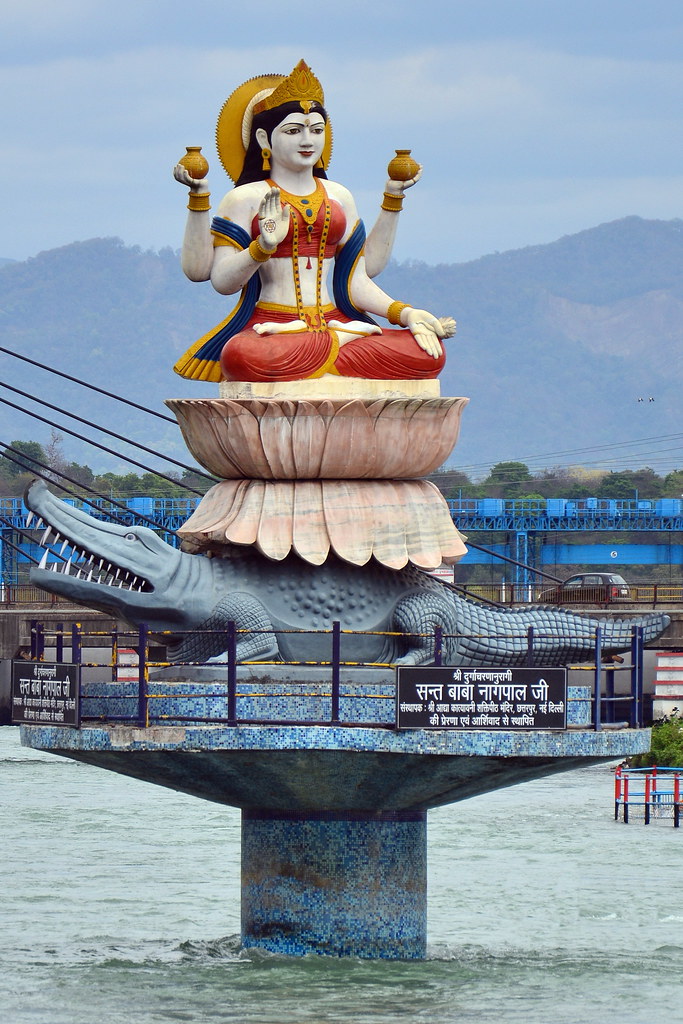
Varying myths of Ganga's birth is found in Hindu scriptures. According to the Bhagavata Purana, Vishnu, in his incarnation as Vamana, extended his left foot to the end of the universe, and pierced a hole in its covering with the nail of his big toe. Through the hole, the pure water of the causal oceRead more
Varying myths of Ganga’s birth is found in Hindu scriptures. According to the Bhagavata Purana, Vishnu, in his incarnation as Vamana, extended his left foot to the end of the universe, and pierced a hole in its covering with the nail of his big toe. Through the hole, the pure water of the causal ocean entered this universe as the Ganges river. Having washed the lotus feet of the lord, which are covered with reddish saffron, the water of the Ganga acquired a very beautiful pink colour. Because the Ganges directly touches the lotus feet of Vishnu (Narayana) before descending within this universe, it is known as Bhagavat-Padi or Vishnupadi, which means emanating from the feet of Bhagavan (God). It finally settles in Brahmaloka or Brahmapura, the abode of the Brahma, before descending to the planet earth at the request of Bhagiratha, and held safely by Shiva on his head, to prevent the destruction of Bhumi Devi (the earth goddess). Then, Ganga was released from Shiva’s hair to meet the needs of the country.[3]
The Ramayana narrates a different version of the myth. Ganga is described as the eldest child of Himavat, son of Brahma and the king of the Himalayas, and his Menavati, the daughter of Meru. Her younger sister is Parvati, who latter marries Shiva. When Ganga attained youth, the devas took her to Svarga, where she took a form of a river and flowed.The Ganges River is considered the holiest river in Hinduism and is central to Hindu spirituality and cultural heritage:
Sacred water
The Ganges is worshipped as the goddess Ganga and is considered the most sacred body of water in Hinduism. Hindus believe that bathing in the Ganges, touching it, or naming it cleanses sins.
Salvation
Hindus believe that immersing the ashes of their dead in the Ganges, a custom known as asthi visarjan, gives the deceased direct passage to heaven and freedom from the cycle of birth and death.
Pilgrimage sites
Many places along the banks of the Ganges are considered sacred and are sites of Hindu pilgrimage, including Haridwar, Prayagraj (Allahabad), and Varanasi (Benares).
Festivals
Festivals such as Ganga Dussehra and Ganga Jayanti are celebrated at sacred sites along the Ganges.
Rituals
Many rituals are performed on the banks of the Ganges, including floating clay cradle boats, releasing aquatic life, and performing evening aartis.
Water in homes
Many Hindu families keep a vial of water from the Ganges in their homes. It is also customary to give a sip of Ganga water to someone who is dying. The Ganges, also known as the Ganga River, originates from the Bhagirathi River, which flows from Gaumukh at the base of the Gangotri Glacier in the western Himalayas of Uttarakhand, India. Gaumukh is about 13 miles (21 km) southeast of Gangotri.
The Bhagirathi and Alaknanda rivers meet at Devprayag, where the river is named the Ganga. The Ganga flows through India and Bangladesh and eventually empties into the Bay of Bengal.
The Ganga is considered the longest holy river by Hindus and is worshipped as the goddess Ganga.










Here is the difference between an atom and a molecule in tabular form: Aspect Atom Molecule Definition The smallest unit of an element that retains its chemical properties. A group of two or more atoms chemically bonded together. Composition Consists of protons, neutrons, and electrons. Consists ofRead more
Here is the difference between an atom and a molecule in tabular form:
This table highlights the primary differences in structure, composition, and behavior between atoms and molecules.
See less