Patriot vs Nationalist: Introduction
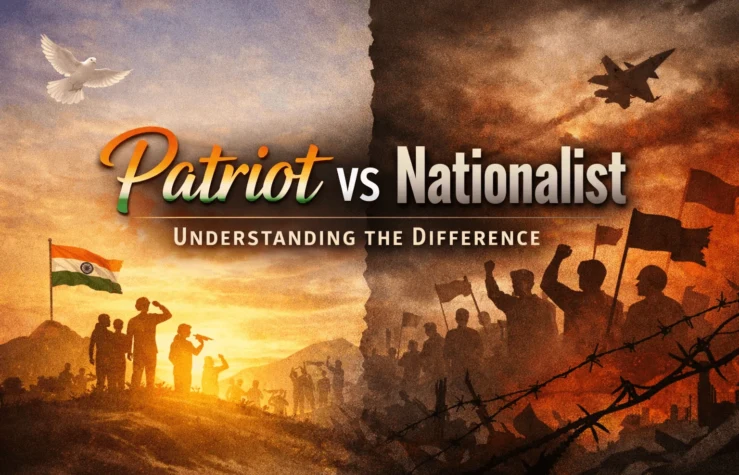
The words patriot and nationalist are often used as if they mean the same thing. Both express a strong connection to one’s country, both evoke pride, and both can inspire people to act in the name of their nation. Yet, when examined closely, these two ideas reveal distinct philosophies about love for one’s country and its role in the world.
Understanding this difference is not merely academic—it shapes how societies evolve, how citizens engage with their nation, and how countries relate to one another in an increasingly interconnected world.
Patriotism: Love Rooted in Responsibility
It is best understood as a balanced and thoughtful devotion to one’s country. It is not blind admiration, but a form of love that includes responsibility, reflection, and a commitment to improvement. A patriot takes pride in their country’s heritage, culture, and achievements, but also recognizes that no nation is perfect. This awareness does not weaken their loyalty; instead, it strengthens it. By acknowledging flaws, a patriot contributes to the nation’s growth.
This mindset is visible in actions such as:
- Participating in democratic processes
- Advocating for fairness, justice, and equality
- Supporting reforms that strengthen institutions
- Encouraging unity while respecting diversity
Therefore, it is not passive. It is an active engagement with the nation’s present and future. It encourages citizens to ask difficult questions, propose solutions, and work toward a more inclusive and progressive society. At its heart, patriotism reflects the belief: True love for a country means helping it improve.
“Patriotism means to stand by the country. It does not mean to stand by the president or any other public official.” — Theodore Roosevelt
Nationalism: Identity Intensified
It also stems from a deep attachment to one’s country, but it often carries a stronger emotional intensity and a more rigid outlook. A nationalist tends to place the nation at the center of their identity, sometimes elevating it above all other considerations. This can foster unity and pride, especially in times of struggle, but it may also lead to a narrower perspective. It is often associated with:
- A strong emphasis on national identity and unity
- Deep emotional attachment to symbols, history, and traditions
- A tendency to prioritize national interests above global cooperation
- Resistance to criticism or alternative viewpoints
In its moderate form, it can serve as a unifying force, bringing people together and preserving cultural identity. However, when it becomes extreme, it may result in:
- Intolerance toward differing opinions
- Dismissal of constructive criticism
- A sense of superiority over other nations
- Social or political divisions
Thus, it can shift from a source of pride to a force that limits openness and dialogue, depending on how it is expressed.
A Comparative Perspective
While both involve love for one’s country, the nature of that love differs significantly.
| Aspect | Patriotism | Nationalism |
| Nature of loyalty | Balanced and reflective | Intense and absolute |
| Attitude toward criticism | Accepts and uses it for improvement | Often rejects or resists it |
| View of other nations | Respectful and cooperative | Can be competitive or superior |
| Focus | Growth and progress | Protection and dominance |
This distinction highlights that patriotism is inclusive and forward-looking, while nationalism can sometimes become exclusive and inward-focused.
Historical and Contemporary Relevance
History provides numerous examples of both patriotism and nationalism shaping societies. Patriotism has often been a driving force behind:
- Democratic movements
- Social reforms
- Efforts toward equality and justice
Nationalism, on the other hand, has played a dual role. It has:
- United people during independence struggles
- Strengthened collective identity
But it has also, at times:
- Contributed to conflicts
- Fostered divisions when taken to extremes
In modern times, this distinction becomes even more important. With globalization connecting economies, cultures, and ideas, nations must balance pride in their identity with openness to collaboration.
The Psychological Dimension
From a psychological perspective, patriotism and nationalism reflect different forms of identity. Patriotism is generally secure and confident. It allows individuals to appreciate their country without feeling threatened by criticism or diversity. Nationalism, particularly in its extreme form, can be defensive and rigid, where questioning the nation may be perceived as disloyalty. This difference explains why patriots tend to engage in dialogue, while nationalists may resist opposing viewpoints.
Why the Distinction Matters
In today’s world, the way citizens express their love for their country has real consequences. A society guided by patriotism is more likely to:
- Encourage innovation and critical thinking
- Promote inclusivity and social harmony
- Build strong democratic institutions
In contrast, unchecked nationalism may:
- Limit open discussion
- Create internal and external conflicts
- Prioritize emotion over reason
This does not mean nationalism is entirely negative. When balanced, it can inspire unity and pride. However, it must be tempered with critical thinking and respect for others.
Toward a Balanced Approach
The goal is not to reject national pride, but to channel it in a constructive way.
A healthy national outlook includes:
- Celebrating achievements while addressing shortcomings
- Valuing identity without rejecting diversity
- Encouraging dialogue instead of silencing dissent
- Focusing on long-term progress rather than short-term dominance
Such an approach ensures that love for one’s country becomes a force for positive transformation rather than division.
Conclusion
The difference between a patriot and a nationalist lies not just in the intensity of their feelings, but in how those feelings are expressed and directed. Patriotism represents love guided by responsibility, openness, and a desire for progress. Nationalism, while rooted in pride, can become limiting if it turns rigid or exclusionary.
Ultimately, the question is not whether one loves their country—but how that love contributes to its future. A nation grows strongest not through unquestioned loyalty, but through thoughtful, engaged, and responsible citizens who strive to make it better with each passing day.