Introduction: The Eternal Hymn of Detachment and Devotion
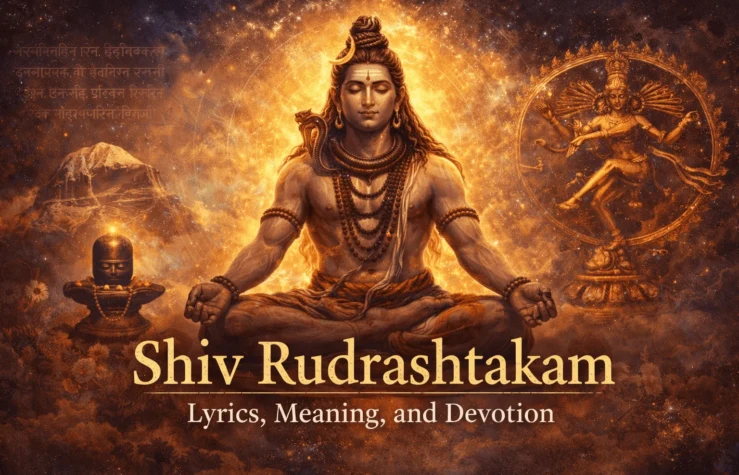
Shiv Rudrashtakam is one of the most profound Sanskrit hymns dedicated to Lord Shiva, the supreme yogi, destroyer of ignorance, and embodiment of pure consciousness. Composed by Adi Shankaracharya, this eight-verse stotra is not merely a prayer—it is a powerful declaration of spiritual detachment and self-realization.
Unlike many devotional hymns that ask for boons or protection, Shiv Rudrashtakam strips everything down to its essence. It repeatedly reminds us that Shiva is beyond form, beyond desire, beyond fear—and that liberation lies in recognizing this truth.
Who Composed Shiv Rudrashtakam?
Shiv Rudrashtakam was composed by Adi Shankaracharya, the great 8th-century philosopher and proponent of Advaita Vedanta (non-dualism).
The hymn reflects Shankara’s core philosophy:
- The soul is not the body or mind
- The ultimate reality is formless consciousness
- Shiva represents that supreme truth
Each verse negates worldly identity and affirms spiritual freedom.
Shiv Rudrashtakam (Sanskrit Text)
नमामीशमीशान निर्वाणरूपं
विभुं व्यापकं ब्रह्मवेदस्वरूपम्।
निजं निर्गुणं निर्विकल्पं निरीहं
चिदाकाशमाकाशवासं भजेऽहम्॥
निराकारमोंकारमूलं तुरीयं
गिराज्ञानगोतीतमीशं गिरीशम्।
करालं महाकालकालं कृपालं
गुणागारसंसारपारं नतोऽहम्॥
तुषाराद्रिसंकाशगौरं गभीरं
मनोभूतकोटिप्रभाश्री शरीरम्।
स्फुरन्मौलिकल्लोलिनी चारुगङ्गा
लसद्भालबालेन्दु कण्ठे भुजङ्गा॥
चलत्कुण्डलं भ्रूसुनेत्रं विशालं
प्रसन्नाननं नीलकण्ठं दयालम्।
मृगाधीशचर्माम्बरं मुण्डमालं
प्रियं शंकरं सर्वनाथं भजामि॥
प्रचण्डं प्रकृष्टं प्रगल्भं परेशं
अखण्डं अजं भानुकोटिप्रकाशम्।
त्रयःशूलनिर्मूलनं शूलपाणिं
भजेऽहं भवानीपतिं भावगम्यम्॥
कलातीतकल्याणकल्पान्तकारी
सदा सज्जनानन्ददाता पुरारी।
चिदानन्दसन्दोह मोहापहारी
प्रसीद प्रसीद प्रभो मन्मथारी॥
न यावत्त उमानाथ पादारविन्दं
भजन्तीह लोके परे वा नराणाम्।
न तावत्सुखं शान्ति सन्तापनाशं
प्रसीद प्रभो सर्वभूताधिवासम्॥
न जानामि योगं जपं नैव पूजां
नतोऽहं सदा सर्वदा शम्भु तुभ्यम्।
जरा जन्म दुःखौघ तातप्यमानं
प्रभो पाहि आपन्नमामीश शम्भो॥
Meaning and Interpretation (Verse-Wise Insight)
- Shiva as the Form of Liberation: Shiva is described as nirvana-swaroopa—the very form of liberation. He is not confined to temples or idols but exists as all-pervading consciousness.
- Beyond Time, Form, and Fear: Shiva is Mahakaal, beyond even time itself. He destroys ignorance just as time destroys all illusions of permanence.
- The Compassionate Ascetic: The imagery of the Ganga flowing from his hair and the moon adorning his forehead symbolizes control over emotions and the flow of wisdom.
- The Protector of All Beings: Despite his fearsome appearance, Shiva is deeply compassionate protector of devotees, destroyer of ego.
- The Light Beyond Creation: He shines brighter than millions of suns, reminding us that truth does not originate from the external world but from within.
- Destroyer of Desire and Delusion: Shiva burns desire (Manmatha) and dissolves attachment, leading the seeker toward clarity and peace.
- True Peace Lies in Devotion: Without surrendering to Shiva’s feet, true peace and freedom from suffering remain elusive.
- The Ultimate Surrender: The final verse is pure humility—acknowledging human limitations and surrendering completely to divine grace.
Why Shiv Rudrashtakam Still Matters Today
In a world obsessed with identity, achievement, and constant noise, Shiv Rudrashtakam offers a radical message:
- You are not your fears
- You are not your failures
- You are not your desires
True peace begins when ego dissolves.
This hymn resonates deeply with:
- Spiritual seekers
- People dealing with anxiety or restlessness
- Readers drawn to minimalism and detachment
- Anyone seeking inner stability in a chaotic world
When and How to Chant Shiv Rudrashtakam
Best Time
- Early morning (Brahma Muhurta)
- Mondays
- Maha Shivratri
- During meditation or fasting
Benefits
- Mental calm and clarity
- Reduction in fear and anxiety
- Deep spiritual grounding
- Strengthens devotion and focus
Even listening with awareness can be transformative.
Final Thoughts: A Hymn That Frees the Soul
Shiv Rudrashtakam is not about ritual perfection—it is about honest surrender. It reminds us that we don’t need to know everything, do everything, or control everything. Sometimes, all we need is to bow our head and let go.
In that surrender lies freedom.
“Na janami yogam japam naiva poojam…”
I know neither yoga nor worship—
I only surrender.
And perhaps, that is enough.